1960s Maps of Boone County, West Virginia
Explore 19 historic maps of Boone County from the 1960s. These maps offer a rare glimpse into what life looked like during the 1960s — showing old roads, neighborhoods, homes, and landmarks that have changed or disappeared over time.
Whether you're researching your family's past, planning a metal detecting trip, or studying how Boone County's landscape evolved across the 1960s, these high-resolution maps are a powerful tool for exploring the history of this region.
- Focus on a specific era: All maps on this page are from the 1960s, giving you a focused view of this time period.
- See what’s changed: Compare century-old streets, trails, and buildings to today's modern landscape using overlays and satellite layers.
- Research with precision: Use these maps for genealogy, historical research, land use analysis, or educational projects.
- View, download, or print: Maps are fully viewable online in high resolution, and can be downloaded or printed for your own records.
Start exploring Boone County's history through authentic maps from the 1960s. This is your window into the past.
Boone County, WV maps
(19)- 1961 Map of Charleston
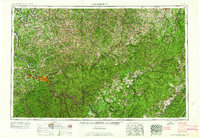 1961 Charleston1961 Print · USGSWest Virginia's capital region and the highlands to the east are shown in detail during the early sixties. Genealogists and historians can trace rail networks like the Baltimore and Ohio RR and find early state parks such as Watoga State Park.
 - 1961 Map of Bluefield
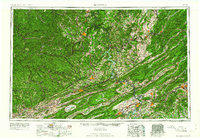 1961 Bluefield1961 Print · USGSThe coalfields and mountain ridges of southern West Virginia and southwest Virginia are captured in the early sixties. Genealogists can trace family ties through rail-linked towns like Princeton and Richlands or along the shores of Bluestone Reservoir.
 - 1962 Map of Madison, 1964 Print
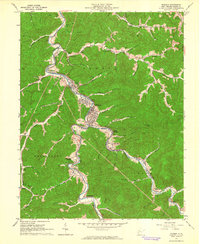 1962 Madison1964 Print · USGSBoone County's river valleys were centers of industry and community during the early sixties, as coal and gas production shaped the local landscape. Genealogists can trace family roots through numerous sites like Ballard Cem, Quinland Ch, and the streets of Danville.4 unique versions available
 - 1962 Map of Julian, 1964 Print
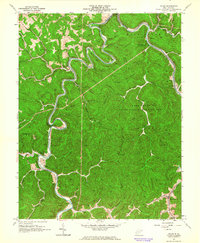 1962 Julian1964 Print · USGSBoone and Lincoln Counties are shown in the early sixties as the rail-and-river economy hummed along the Little Coal River. Researchers can trace family history at the White Cem or locate former landmarks like McCorkle School and Horse Creek Junction.4 unique versions available
 - 1962 Map of Griffithsville, 1964 Print
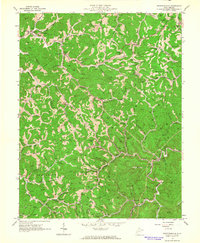 1962 Griffithsville1964 Print · USGSThe rural hollows of Lincoln and Boone counties are shown here in the early sixties during an era of intensive oil and gas development. Researchers can trace family history through dozens of named plots like Pauley Cem or locate community centers like Yawkey Sch and Morrisvale.3 unique versions available
 - 1962 Map of Mud, 1964 Print
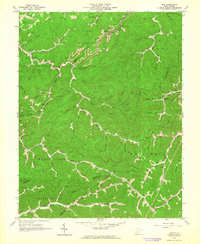 1962 Mud1964 Print · USGSBoone County and its neighboring hollows are shown during the early 1960s, a time when coal and gas extraction deeply shaped the mountain landscape. Genealogists can locate family landmarks like Stanley Cem and Vickers Cem, or trace early community sites such as Mud Sch and North Fork Ch.2 unique versions available
 - 1963 Map of Henlawson, 1964 Print
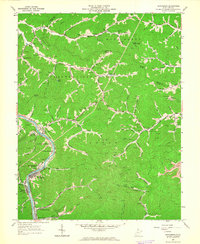 1963 Henlawson1964 Print · USGSCoal mining and rail commerce define the Logan County landscape during the early 1960s, as the Chesapeake and Ohio follows the Guyandotte River. Researchers can locate family-named landmarks like Miller Cem, Justice Addition, and the Lane Sch.3 unique versions available
 - 1963 Map of Clothier, 1964 Print
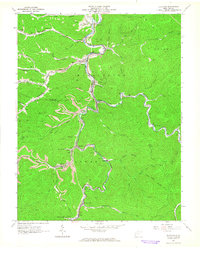 1963 Clothier1964 Print · USGSThe coal-river valleys of Boone and Logan Counties are captured here during the peak of the mid-century mining era. Genealogists and historians can trace family plots like Browning Cem and Ferrell Cem alongside rail-side towns like Clothier and Sharples.3 unique versions available
 - 1963 Map of Amherstdale, 1964 Print
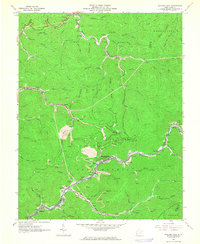 1963 Amherstdale1964 Print · USGSLogan County coal country is shown here in the early 1960s, documenting the dense network of mining towns along Buffalo Creek. Researchers can locate family sites and industrial history at Amherstdale, Accoville, and the Riley Cemetery near Becco.4 unique versions available
 - 1965 Map of Belle, 1966 Print
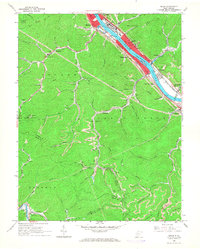 1965 Belle1966 Print · USGSMid-century industry and coal mining define the Kanawha valley in the 1960s as river traffic and railroads converge near Belle and Marmet. Genealogists and historians can trace the steep hollows to find local landmarks like Lens Creek Ch, Mitchell Cem, and the specialized Opera House Hol.4 unique versions available
 - 1965 Map of Eskdale, 1966 Print
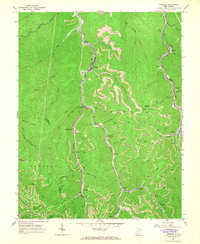 1965 Eskdale1966 Print · USGSCoal valley life in the mid-sixties is centered on the winding Cabin Creek corridor and its surrounding ridges. Genealogists and researchers can trace family-named sites like Perry Cem and Johnson Cem alongside railroad hubs at Cane Fork Yards.2 unique versions available
 - 1965 Map of Dorothy, 1966 Print
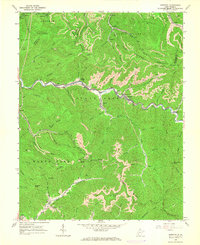 1965 Dorothy1966 Print · USGSThe Coal River region in the mid-sixties is a complex network of industrial mining and valley settlements. Genealogists and historians can trace the foundations of coal-camp life through labels like Township High Sch, Stanley Cems, and the Chesapeake and Ohio railroad.3 unique versions available
 - 1965 Map of Racine, 1966 Print
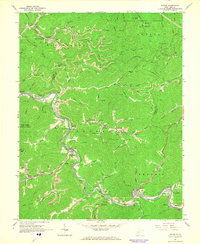 1965 Racine1966 Print · USGSThe Coal River valley in the mid-sixties reveals a landscape shaped by coal production and rail transport. Genealogists can trace family names at Snodgrass Cem and Barker Cem, while mapping the community of Brushton (Costa PO).3 unique versions available
 - 1965 Map of Williams Mountain, 1966 Print
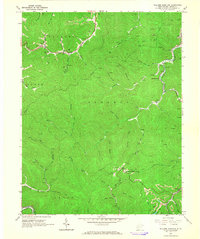 1965 Williams Mountain1966 Print · USGSBoone County's coal-country landscape is captured here in the mid-1960s, showing the intersection of industrial mining and deep-hollow settlement. Genealogists and historians can trace family locations through Atha Chapel, Jarrells Cem, and the winding Chesapeake and Ohio rail lines.3 unique versions available
 - 1965 Map of Sylvester, 1966 Print
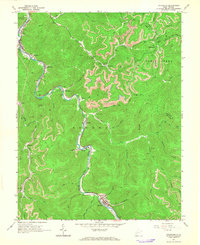 1965 Sylvester1966 Print · USGSBoone and Kanawha counties are shown in the mid-1960s as the coal industry transformed the high ridges and valley floors. Genealogists and historians can trace family names at White Oak Cem and Seth Cem or locate the Drive-in Theater and numerous Strip Mines.2 unique versions available
 - 1968 Map of Lorado, 1971 Print
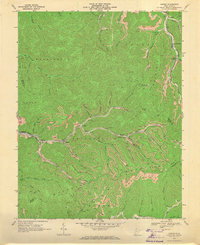 1968 Lorado1971 Print · USGSCoal towns and industrial rail lines dominate the West Virginia mountains in the late sixties. Genealogists and historians can trace families and operations in Lorado, Lundale, and Pardee along the winding Buffalo Creek.3 unique versions available
 - 1968 Map of Whitesville, 1971 Print
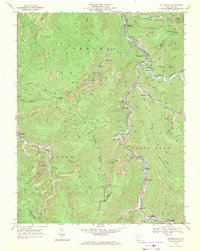 1968 Whitesville1971 Print · USGSIn the late sixties, the Coal River valley was a dense network of mining hamlets and rail lines. You can trace the family legacies of Boone and Raleigh counties through landmarks like Jarrolds Cem, Lindytown, and the Marsh Fork High Sch.3 unique versions available
 - 1968 Map of Pilot Knob, 1971 Print
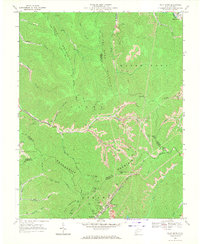 1968 Pilot Knob1971 Print · USGSThe West Virginia coalfields are in full operation during the late sixties, showing a landscape defined by ridgeline mining and deep hollow settlements. Genealogists and historians can trace rail infrastructure and local landmarks like Kopperston, Ringwood Ch, and Pettry Bottom.3 unique versions available
 - 1968 Map of Wharton, 1971 Print
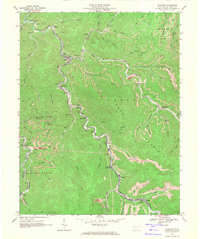 1968 Wharton1971 Print · USGSBoone County's coal-and-rail corridor is mapped in detail here during the late sixties, tracing the narrow valleys of Crook Mountain. Genealogists and historians can locate family landmarks like Mid Ferrell Cem and vanished-era settlements including Bob White, Kohlsaat, and Marthatown.3 unique versions available
End of results
Showing maps 1-19 of 19
Top cities of Boone County
Frequently asked questions
- What are the different types of historical maps available for Boone County?
- What is the oldest map of Boone County?
- Where can I purchase historical maps of Boone County for my home or office?
- Where can I download high-res historical maps of Boone County?
- Are there historical topographic maps available for Boone County?
- Is there historical aerial imagery available for Boone County?
- Where are historical maps of Boone County sourced from?