1960s Maps of Braxton County, West Virginia
Explore 18 historic maps of Braxton County from the 1960s. These maps offer a rare glimpse into what life looked like during the 1960s — showing old roads, neighborhoods, homes, and landmarks that have changed or disappeared over time.
Whether you're researching your family's past, planning a metal detecting trip, or studying how Braxton County's landscape evolved across the 1960s, these high-resolution maps are a powerful tool for exploring the history of this region.
- Focus on a specific era: All maps on this page are from the 1960s, giving you a focused view of this time period.
- See what’s changed: Compare century-old streets, trails, and buildings to today's modern landscape using overlays and satellite layers.
- Research with precision: Use these maps for genealogy, historical research, land use analysis, or educational projects.
- View, download, or print: Maps are fully viewable online in high resolution, and can be downloaded or printed for your own records.
Start exploring Braxton County's history through authentic maps from the 1960s. This is your window into the past.
Braxton County, WV maps
(18)- 1961 Map of Charleston
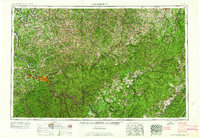 1961 Charleston1961 Print · USGSWest Virginia's capital region and the highlands to the east are shown in detail during the early sixties. Genealogists and historians can trace rail networks like the Baltimore and Ohio RR and find early state parks such as Watoga State Park.
 - 1965 Map of Gassaway, 1967 Print
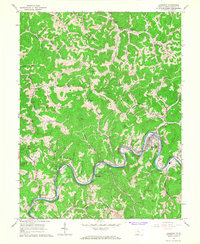 1965 Gassaway1967 Print · USGSBraxton County's river-and-rail corridor is captured here in the mid-sixties, centered on the deep bends of the Elk River. Genealogists and local historians can trace family names at Bealls Mill Cem and Huston-Carr Cem or locate the old Skidmore Sch.2 unique versions available
 - 1965 Map of Herold, 1967 Print
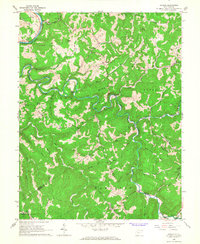 1965 Herold1967 Print · USGSBraxton and Nicholas Counties appear here in the mid-1960s, showing a landscape defined by the serpentining Birch River and rugged ridge-top settlements. Genealogists can locate family landmarks like Cox Cemetery, Row Bill Sch, and several rural churches including Eureka Ch.2 unique versions available
 - 1965 Map of Strange Creek, 1967 Print
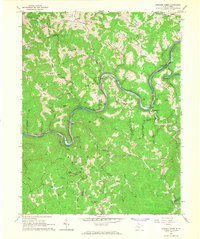 1965 Strange Creek1967 Print · USGSThe Elk River valley at the Braxton and Clay county line is captured here in the mid-1960s during a period of active natural gas extraction. Researchers can locate small mountain communities and family landmarks such as Strange Creek, Villanova Ch, and the Flat Fork School.2 unique versions available
 - 1965 Map of Orlando, 1967 Print
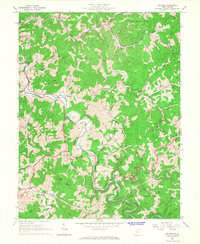 1965 Orlando1967 Print · USGSCentral West Virginia's river valleys and rail lines come alive in the mid-1960s as the Little Kanawha River snakes past small settlements and timbered ridges. Genealogists and local historians can locate many rural landmarks, including St Michaels Ch, Falls Mill, and the Ratcliff Sch.3 unique versions available
 - 1965 Map of Rosedale, 1967 Print
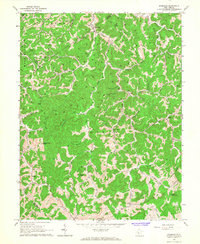 1965 Rosedale1967 Print · USGSBraxton County’s rural landscape is captured here in the mid-1960s, showing a network of ridge-top knobs and valley-bottom hamlets. Genealogists and local historians can trace family roots through sites like Charity Ch, Lower Sleith Sch, and the small community of Rosedale.2 unique versions available
 - 1965 Map of Burnsville, 1968 Print
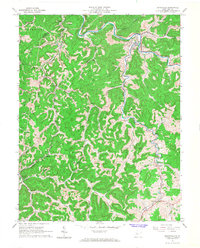 1965 Burnsville1968 Print · USGSBraxton County in the mid-1960s was a landscape where traditional Appalachian hollows met a growing energy sector. Genealogists and historians can trace family-named landmarks and old rail stops like Bower, Rollyson, and the Cedar Creek Sch along the Baltimore and Ohio line.3 unique versions available
 - 1966 Map of Cedarville, 1967 Print
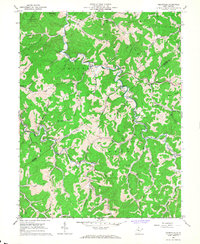 1966 Cedarville1967 Print · USGSNear the border of Gilmer and Braxton counties in the mid-1960s, this area shows a landscape of deep hollows and active energy production. Genealogists can locate family burial grounds like Moss Cem and Gerwig Cem or historic rural congregations at Rhodes Chapel.2 unique versions available
 - 1966 Map of Normantown, 1967 Print
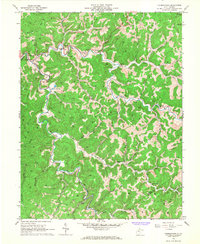 1966 Normantown1967 Print · USGSMid-century Gilmer County is shown here at the height of its gas-well development, where narrow hollows dictate the layout of small communities. Researchers can locate remote family sites like Elihu-Stump Cem and Snakeroot Cem or trace the early paths of Hunt Road.2 unique versions available
 - 1966 Map of Gilmer, 1968 Print
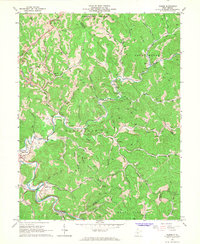 1966 Gilmer1968 Print · USGSThe mid-1960s central West Virginia hills are captured here, centered on the river and rail lines that sustained local industry. Genealogists can trace family landmarks and rural congregations like Hiney Ch, Stouts Mills, and Edmiston Cem.2 unique versions available
 - 1966 Map of Peterson, 1968 Print
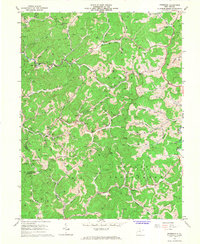 1966 Peterson1968 Print · USGSLewis County hill country is captured here in the mid-sixties, showing a landscape defined by isolated farmsteads and narrow creek valleys. Genealogists can trace family roots through Collins Settlement and landmarks like St Bernards Ch and Bealls Mills.3 unique versions available
 - 1966 Map of Walkersville, 1968 Print
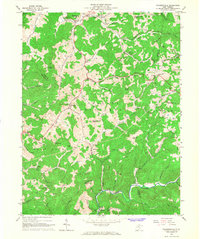 1966 Walkersville1968 Print · USGSIn the mid-1960s, these West Virginia hills were a patchwork of small communities like Ireland and Walkersville connected by the Baltimore and Ohio railroad. Researchers can trace local history at the Fort Pickens Monument or locate family roots at Heading Chapel and Long Point Cem.2 unique versions available
 - 1966 Map of Chloe, 1968 Print
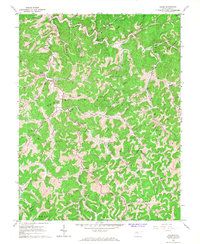 1966 Chloe1968 Print · USGSCalhoun County in the mid-sixties reveals a landscape shaped by creek-bottom farming and the gas industry. Genealogists can trace family names and small-town centers like Minnora, Nicut, and Chloe, alongside rural landmarks such as Ebenezer Ch and the Matheny Cem.2 unique versions available
 - 1967 Map of Hacker Valley, 1968 Print
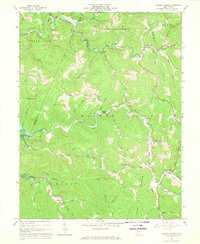 1967 Hacker Valley1968 Print · USGSHacker Valley and the surrounding Webster County hills appear in the late 1960s just as the Sutton Lake project influenced the drainage. Local historians can trace family locations near Chestnut Grove Ch, the settlement of Cleveland, and landmarks like Courthouse Rock.2 unique versions available
 - 1967 Map of Erbacon, 1968 Print
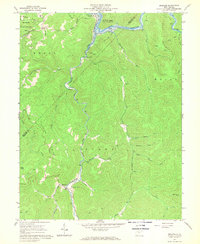 1967 Erbacon1968 Print · USGSThe Elk River valley in the late sixties reveals a landscape of isolated mountain settlements and winding rail lines. Researchers can trace the Baltimore and Ohio railroad corridor through Erbacon and Prestonia, or locate landmarks like the Cleveland Sch and Centralia Cem.2 unique versions available
 - 1967 Map of Newville, 1968 Print
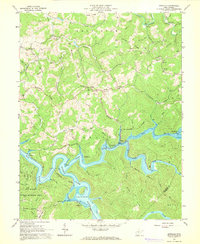 1967 Newville1968 Print · USGSThe rising waters of the Elk River valley take center stage in the late 1960s as the newly created Sutton Lake transforms the Braxton County landscape. Researchers can trace family sites like Hammer Cem and Kniceley Cem or locate old community centers like Stone Run Ch.3 unique versions available
 - 1967 Map of Sutton, 1968 Print
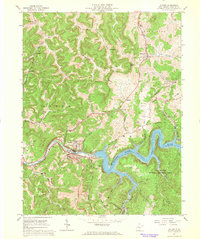 1967 Sutton1968 Print · USGSBraxton County in the late sixties shows a landscape transformed by the waters of Sutton Lake and the Elk River. Genealogists and historians can trace family locations near Granny Creek Ch, Frame Cem, and the railroad siding at Berry Siding.2 unique versions available
 - 1967 Map of Little Birch, 1968 Print
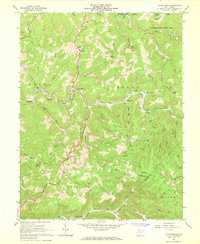 1967 Little Birch1968 Print · USGSBraxton and Nicholas counties are captured here in the late sixties, showing a landscape of winding river valleys and narrow ridges. Researchers can trace rural life through sites like Crites Mtn Sch, Tesla, and several historic cemeteries.2 unique versions available
End of results
Showing maps 1-18 of 18
Top cities of Braxton County
Frequently asked questions
- What are the different types of historical maps available for Braxton County?
- What is the oldest map of Braxton County?
- Where can I purchase historical maps of Braxton County for my home or office?
- Where can I download high-res historical maps of Braxton County?
- Are there historical topographic maps available for Braxton County?
- Is there historical aerial imagery available for Braxton County?
- Where are historical maps of Braxton County sourced from?