1920s Maps of Fayette County, West Virginia
Explore 6 historic maps of Fayette County from the 1920s. These maps offer a rare glimpse into what life looked like during the 1920s — showing old roads, neighborhoods, homes, and landmarks that have changed or disappeared over time.
Whether you're researching your family's past, planning a metal detecting trip, or studying how Fayette County's landscape evolved across the 1920s, these high-resolution maps are a powerful tool for exploring the history of this region.
- Focus on a specific era: All maps on this page are from the 1920s, giving you a focused view of this time period.
- See what’s changed: Compare century-old streets, trails, and buildings to today's modern landscape using overlays and satellite layers.
- Research with precision: Use these maps for genealogy, historical research, land use analysis, or educational projects.
- View, download, or print: Maps are fully viewable online in high resolution, and can be downloaded or printed for your own records.
Start exploring Fayette County's history through authentic maps from the 1920s. This is your window into the past.
Fayette County, WV maps
(6)- 1921 Map of Clintonville
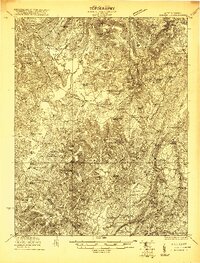 1921 Clintonville1921 Print · USGSGreenbrier County is captured in the early twentieth century as a landscape of mountain ridges and valley settlements connected by the historic James River and Kanawha Turnpike. Researchers can locate dozens of family-named landmarks, including Baker Mill, Maude Chapel, and the famous mineral waters at Blue Sulphur Springs.
 - 1923 Map of Clintonville
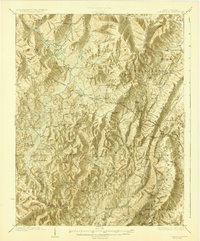 1923 Clintonville1923 Print · USGSGreenbrier County in the early twenties was a landscape of remote mountain valleys and thermal springs connected by early turnpikes. Researchers can trace ancestral farmsteads near Blue Sulphur Springs, Sam Black Church, and the many district schools like Sugar Grove School.2 unique versions available
 - 1928 Map of Fayetteville, 1955 Print
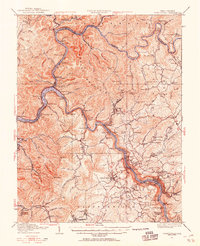 1928 Fayetteville1955 Print · USGSFayette County was a hub of river-and-rail activity in the late twenties as the coal industry matured. Genealogists and historians can locate old landmarks like Kanawha Falls, the Blue Hole Tunnel, and rural centers such as Ansted and Gauley Bridge.4 unique versions available
 - 1928 Map of Montgomery, 1963 Print
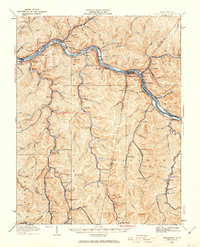 1928 Montgomery1963 Print · USGSIn the late 1920s, the Kanawha River valley was a dense network of rail and industry reaching deep into the Fayette and Kanawha hills. Genealogists and historians can trace rail stops like Hollygrove Sta and industrial sites like the Pure Oil Refinery.
 - 1929 Map of Beckley, 1954 Print
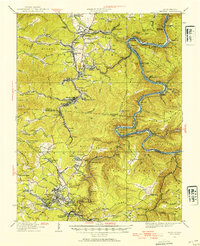 1929 Beckley1954 Print · USGSRaleigh and Fayette counties are shown in the late 1920s as coal and rail lines transformed the New River Gorge. Genealogists can trace family roots through numerous mining settlements like Minden or Thurmond and identify remote landmarks such as Brooklyn Finlow PO and Miles Sch.2 unique versions available
 - 1929 Map of Eccles, 1956 Print
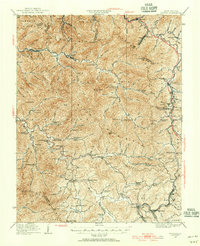 1929 Eccles1956 Print · USGSRaleigh and Fayette counties are captured here just before the Great Depression, showing a landscape defined by coal ridges and rural schoolhouses. Researchers can trace the roots of families near Eccles, Matville Church, and Lick Fork School.
End of results
Showing maps 1-6 of 6
Top cities of Fayette County
- Oak Hill historical maps
- Fayetteville historical maps
- Ansted historical maps
- Mount Hope historical maps
- Gauley Bridge historical maps
- Boomer historical maps
See more
Frequently asked questions
- What are the different types of historical maps available for Fayette County?
- What is the oldest map of Fayette County?
- Where can I purchase historical maps of Fayette County for my home or office?
- Where can I download high-res historical maps of Fayette County?
- Are there historical topographic maps available for Fayette County?
- Is there historical aerial imagery available for Fayette County?
- Where are historical maps of Fayette County sourced from?