1960s Maps of Fayette County, West Virginia
Explore 21 historic maps of Fayette County from the 1960s. These maps offer a rare glimpse into what life looked like during the 1960s — showing old roads, neighborhoods, homes, and landmarks that have changed or disappeared over time.
Whether you're researching your family's past, planning a metal detecting trip, or studying how Fayette County's landscape evolved across the 1960s, these high-resolution maps are a powerful tool for exploring the history of this region.
- Focus on a specific era: All maps on this page are from the 1960s, giving you a focused view of this time period.
- See what’s changed: Compare century-old streets, trails, and buildings to today's modern landscape using overlays and satellite layers.
- Research with precision: Use these maps for genealogy, historical research, land use analysis, or educational projects.
- View, download, or print: Maps are fully viewable online in high resolution, and can be downloaded or printed for your own records.
Start exploring Fayette County's history through authentic maps from the 1960s. This is your window into the past.
Fayette County, WV maps
(21)- 1961 Map of Charleston
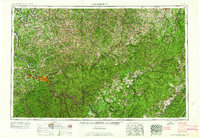 1961 Charleston1961 Print · USGSWest Virginia's capital region and the highlands to the east are shown in detail during the early sixties. Genealogists and historians can trace rail networks like the Baltimore and Ohio RR and find early state parks such as Watoga State Park.
 - 1961 Map of Bluefield
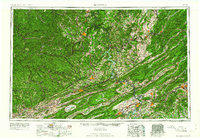 1961 Bluefield1961 Print · USGSThe coalfields and mountain ridges of southern West Virginia and southwest Virginia are captured in the early sixties. Genealogists can trace family ties through rail-linked towns like Princeton and Richlands or along the shores of Bluestone Reservoir.
 - 1965 Map of Pax, 1966 Print
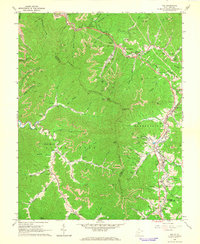 1965 Pax1966 Print · USGSWest Virginia coal country was in full swing when this mid-sixties survey documented the junction of Fayette and Raleigh counties. Genealogists can trace family landmarks like Workman Cem and Pax Sch alongside the tracks of the Norfolk and Western rail line.3 unique versions available
 - 1965 Map of Dorothy, 1966 Print
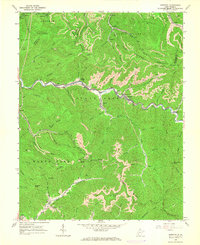 1965 Dorothy1966 Print · USGSThe Coal River region in the mid-sixties is a complex network of industrial mining and valley settlements. Genealogists and historians can trace the foundations of coal-camp life through labels like Township High Sch, Stanley Cems, and the Chesapeake and Ohio railroad.3 unique versions available
 - 1965 Map of Montgomery, 1966 Print
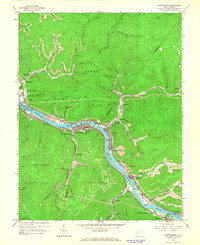 1965 Montgomery1966 Print · USGSThe Kanawha River valley was a humming corridor of coal and rail in the 1960s, with towns like Montgomery and London tightly squeezed between the water and the ridges. Genealogists and historians can trace the industrial footprint of Alloy, find rural landmarks like St Anthony Ch, or locate the London Lock & Dam No 3.2 unique versions available
 - 1965 Map of Powellton, 1966 Print
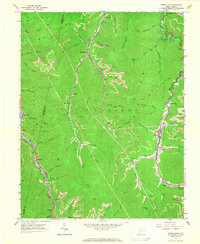 1965 Powellton1966 Print · USGSThe Fayette and Kanawha County border comes alive in the mid-sixties, showing a landscape defined by coal mining and heavy rail. Trace family roots and industrial sites from the tipple at Mahan to the cemeteries at Johnson Cem and Meadow Haven Memorial Park.2 unique versions available
 - 1967 Map of Bentree, 1968 Print
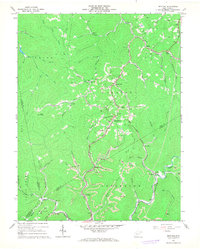 1967 Bentree1968 Print · USGSThe coal and rail corridors of Clay County are meticulously detailed here during the late sixties. Researchers can trace family sites and local landmarks from Indore Chapel and Lilly No 11 Sch to the busy Strip Mines along the Chesapeake and Ohio line.2 unique versions available
 - 1969 Map of Fayetteville, 1972 Print
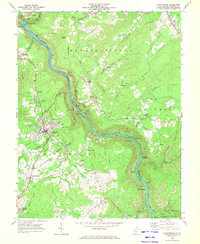 1969 Fayetteville1972 Print · USGSThe New River Gorge area is documented here during the late sixties, showcasing a landscape defined by deep-canyon industry and plateau settlements. Researchers can trace the legacy of coal at Kaymoor No 1 or locate family sites at Huse Memorial Cem and Altamont Sch.3 unique versions available
 - 1969 Map of Danese, 1972 Print
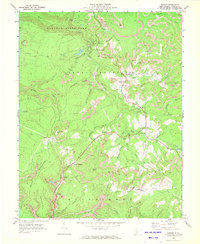 1969 Danese1972 Print · USGSFayette County coal country is captured here in the late sixties, showing the interplay between mountain industry and local life. Genealogists can locate family landmarks like Zickafoose Ch, the Danese Sch, and various mining sites near Maplewood and Layland.3 unique versions available
 - 1969 Map of Beckwith, 1972 Print
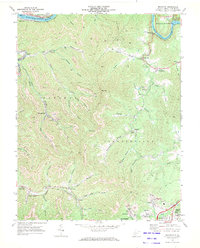 1969 Beckwith1972 Print · USGSFayette County was at its industrial peak in the late sixties, where coal mining and rail transport defined every valley. Genealogists and local historians can trace family-named sites and vanished industrial works from Beards Fork to the Harlem Heights Drive-in Theater and Lochgelly.2 unique versions available
 - 1969 Map of Prince, 1972 Print
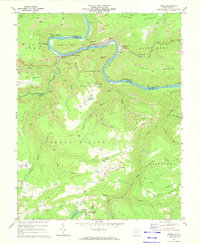 1969 Prince1972 Print · USGSThe New River Gorge area in the late sixties shows a landscape shaped by coal and rail, from the riverfront at Quinnimont to the heights of Shady Spring. Trace the path of the C & O through the Stretcher Neck Tunnel and find local landmarks like Table Rock Ch.4 unique versions available
 - 1969 Map of Summersville Dam, 1973 Print
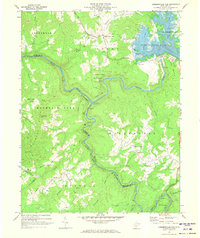 1969 Summersville Dam1973 Print · USGSThe West Virginia highlands are captured here during the late sixties, just as Summersville Lake transformed the local landscape. Genealogists and historians can trace the Old Carnifex Ferry Site and local landmarks like Keslers Cross Lanes or Richmond Chapel.3 unique versions available
 - 1969 Map of Ansted, 1973 Print
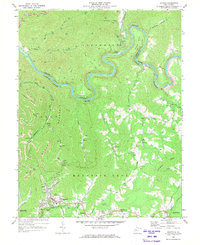 1969 Ansted1973 Print · USGSThe coal and gas country of Fayette County comes to life in the late sixties, where the winding Gauley River meets the heavy rail of the Penn Central. Trace family roots through Ansted and smaller settlements like Victor or find local landmarks like Arnette Chapel and the Gauley Mtn Lookout Tower.2 unique versions available
 - 1969 Map of Oak Hill, 1973 Print
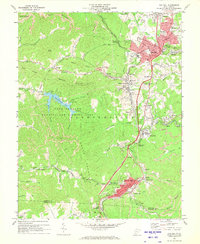 1969 Oak Hill1973 Print · USGSFayette County coal country is captured here during a period of industrial maturity, showing the intricate rail-and-mine network connecting Oak Hill and Mount Hope. Researchers can trace family roots at the Odd Fellows Cem or locate former schools like New Hope Sch and High Lawn Mem Park (School).3 unique versions available
 - 1969 Map of Winona, 1973 Print
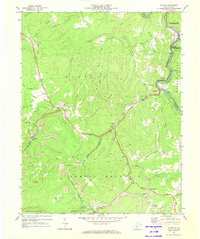 1969 Winona1973 Print · USGSFayette County coal country is documented here in the late sixties, where the Meadow River separates several mountain ridges. Genealogists and historians can trace family sites like the Old Stone House, Tyree Cem, and the communities of Nallen and Winona.2 unique versions available
 - 1969 Map of Rainelle, 1973 Print
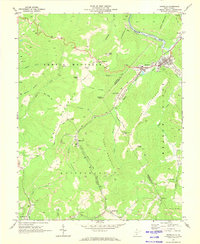 1969 Rainelle1973 Print · USGSRainelle and the surrounding mountain ridges are captured here during a peak era of coal and rail activity in the late sixties. Genealogists and local historians can trace rural landmarks from Big Sewell Ch and Spring Dale to the vanished rail stops near Bellwood.2 unique versions available
 - 1969 Map of Corliss, 1973 Print
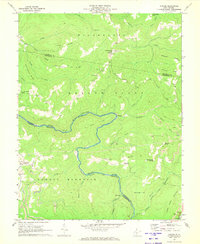 1969 Corliss1973 Print · USGSThe West Virginia highlands in the late 1960s reveal a landscape defined by industrial extraction and small settlements. Researchers can trace the river-and-rail era through the oxbow of The Loop, the community at Corliss, and local landmarks like Minnie Bell Ch.2 unique versions available
 - 1969 Map of Gauley Bridge, 1973 Print
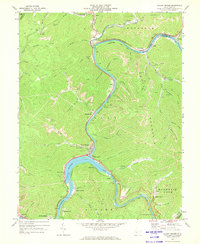 1969 Gauley Bridge1973 Print · USGSIn the late 1960s, the confluence of the Gauley and New Rivers served as a vital industrial artery for West Virginia's rail and coal sectors. Researchers can pinpoint long-standing landmarks like Bailey Memorial Ch, trace the Penn Central tracks, and locate sites like K & M Junction and Glen Ferris.3 unique versions available
 - 1969 Map of Thurmond, 1973 Print
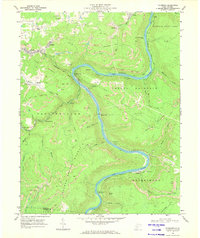 1969 Thurmond1973 Print · USGSFayette County coal country is shown in detail during the late sixties, where the winding New River corridor dictates the path of the Chesapeake and Ohio railroad. Genealogists and historians can trace the foundations of mining towns like Minden and Thurmond, or locate old landmarks like Calvin Ch and Dowdy Bluff.3 unique versions available
 - 1969 Map of Meadow Bridge, 1974 Print
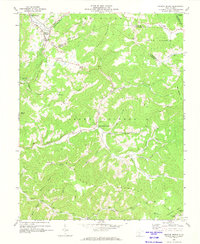 1969 Meadow Bridge1974 Print · USGSMeadow Bridge and the surrounding high ridges of West Virginia are captured here in the late sixties as traditional mountain life met industrial coal mining. Genealogists can locate family landmarks such as Little Meadow Ch, Lively Sch, and several remote cemeteries tucked along Lick Creek.3 unique versions available
 - 1969 Map of Meadow Creek, 1974 Print
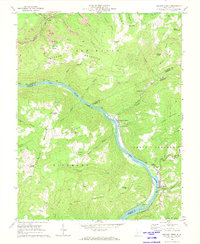 1969 Meadow Creek1974 Print · USGSThe New River gorge in the late 1960s shows a landscape defined by steep ridges and riverside rail lines. Researchers can trace family history at Little Laurel Ch, locate the Sandstone High Sch, or find industrial sites like the Tipple near Backus.2 unique versions available
End of results
Showing maps 1-21 of 21
Top cities of Fayette County
- Oak Hill historical maps
- Fayetteville historical maps
- Ansted historical maps
- Mount Hope historical maps
- Gauley Bridge historical maps
- Boomer historical maps
See more
Frequently asked questions
- What are the different types of historical maps available for Fayette County?
- What is the oldest map of Fayette County?
- Where can I purchase historical maps of Fayette County for my home or office?
- Where can I download high-res historical maps of Fayette County?
- Are there historical topographic maps available for Fayette County?
- Is there historical aerial imagery available for Fayette County?
- Where are historical maps of Fayette County sourced from?