1900s (20th Century) Maps of Alpena, West Virginia
Explore 7 historic maps of Alpena from the 1900s (20th Century). These maps offer a rare glimpse into what life looked like during the 1900s — showing old roads, neighborhoods, homes, and landmarks that have changed or disappeared over time.
Whether you're researching your family's past, planning a metal detecting trip, or studying how Alpena's landscape evolved across the 1900s, these high-resolution maps are a powerful tool for exploring the history of this region.
- Focus on a specific era: All maps on this page are from the 1900s, giving you a focused view of this time period.
- See what’s changed: Compare century-old streets, trails, and buildings to today's modern landscape using overlays and satellite layers.
- Research with precision: Use these maps for genealogy, historical research, land use analysis, or educational projects.
- View, download, or print: Maps are fully viewable online in high resolution, and can be downloaded or printed for your own records.
Start exploring Alpena's history through authentic maps from the 1900s. This is your window into the past.
Alpena, WV maps
(7)- 1922 Map of Horton
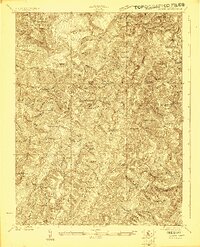 1922 Horton1922 Print · USGSThe West Virginia highlands in the early twenties were a landscape of mountain timber towns and isolated valley schools. Genealogists can trace family names at Little Italy or Evenwood, and locate rural landmarks like Bethel Church and Mylius School.2 unique versions available
 - 1924 Map of Horton
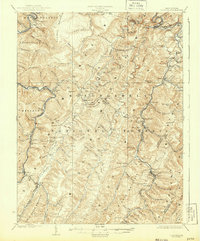 1924 Horton1924 Print · USGSRandolph and Tucker Counties were at the height of their rail-and-timber era in the early twenties. Researchers can trace family sites like Little Italy, industrial hubs at Whitmer, and rural landmarks such as Bethel Church or the Mylius School.2 unique versions available
 - 1949 Map of Charlottesville
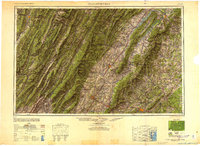 1949 Charlottesville1949 Print · USGSThe Shenandoah Valley and Blue Ridge appear in the late 1940s as a thriving corridor of rail and river commerce. Researchers can trace the mid-century footprints of Harrisonburg, Staunton, and Culpeper alongside the historic routes of the Southern Railway.2 unique versions available
 - 1956 Map of Charlottesville, 1966 Print
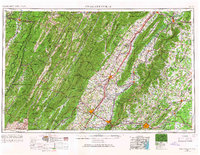 1956 Charlottesville1966 Print · USGSThe Shenandoah Valley and Blue Ridge are captured in detail during the mid-1960s as the modern interstate system began to emerge. Genealogists and historians can trace rail-connected hubs like Waynesboro or follow the river paths of the Rapidan River and Rivanna River.4 unique versions available
 - 1968 Map of Bowden, 1971 Print
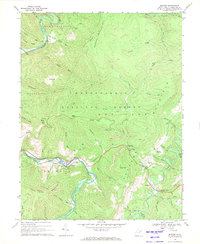 1968 Bowden1971 Print · USGSThe high ridges of Randolph County come alive in the late sixties, showing the intersection of mountain industry and forest recreation. Trace the Western Maryland rail line through Bowden or find the Bickle Knob Lookout Tower and remote Strip Mines.4 unique versions available
 - 1981 Map of Elkins, 1983 Print
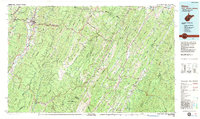 1981 Elkins1983 Print · USGSThe West Virginia mountains in the early eighties were a hub of rail-based industry and emerging conservation lands. Genealogists and historians can trace the paths of the Western Maryland RR through Elkins and locate small upland communities like Harpertown, Bowden, and Wymer.
 - 1995 Map of Bowden, 1998 Print
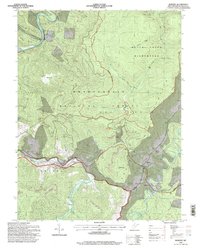 1995 Bowden1998 Print · USGSRandolph County highlands come into focus in the mid-1990s as the river-driven industry of the Shaver Fork valley meets wilderness preservation. Researchers can trace rural life and industry through the Fish Hatchery at Bowden, the Tipple near Evenwood, and high points like Bickle Knob.2 unique versions available
End of results
Showing maps 1-7 of 7
Top cities near Alpena
- Elkins historical maps
- Parsons historical maps
- Beverly historical maps
- Davis historical maps
- Thomas historical maps
- Hendricks historical maps
See more
Frequently asked questions
- What are the different types of historical maps available for Alpena?
- What is the oldest map of Alpena?
- Where can I purchase historical maps of Alpena for my home or office?
- Where can I download high-res historical maps of Alpena?
- Are there historical topographic maps available for Alpena?
- Is there historical aerial imagery available for Alpena?
- Where are historical maps of Alpena sourced from?