1900s (20th Century) Maps of Washburn, Wisconsin
Explore 18 historic maps of Washburn from the 1900s (20th Century). These maps offer a rare glimpse into what life looked like during the 1900s — showing old roads, neighborhoods, homes, and landmarks that have changed or disappeared over time.
Whether you're researching your family's past, planning a metal detecting trip, or studying how Washburn's landscape evolved across the 1900s, these high-resolution maps are a powerful tool for exploring the history of this region.
- Focus on a specific era: All maps on this page are from the 1900s, giving you a focused view of this time period.
- See what’s changed: Compare century-old streets, trails, and buildings to today's modern landscape using overlays and satellite layers.
- Research with precision: Use these maps for genealogy, historical research, land use analysis, or educational projects.
- View, download, or print: Maps are fully viewable online in high resolution, and can be downloaded or printed for your own records.
Start exploring Washburn's history through authentic maps from the 1900s. This is your window into the past.
Washburn, WI maps
(18)- 1942 Map of Ashland
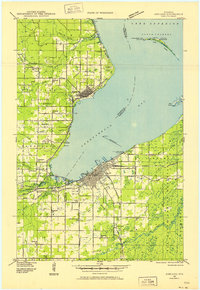 1942 Ashland1942 Print · USGSThe South Shore of Lake Superior comes alive in the early 1940s, showing the bustling rail hubs and maritime ports of Chequamegon Bay. Genealogists and historians can trace local family roots through sites like Northland College, St Agnes Cem, and Ondassagon Sch.
 - 1943 Map of Iron Lake, 1952 Print
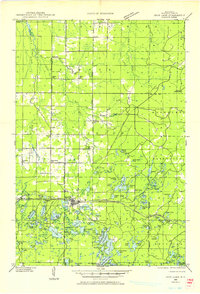 1943 Iron Lake1952 Print · USGSBayfield County at the height of the 1940s reveals a landscape of lakeside settlements and rural school districts centered around Iron River. Genealogists and local researchers can trace early homesteads and landmarks like Hillside Cem, Washington Sch, and the Iron River Fire Tower.
 - 1944 Map of Moquah, 1952 Print
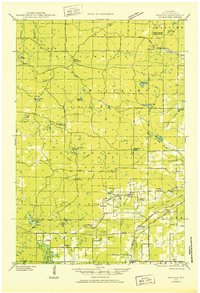 1944 Moquah1952 Print · USGSBayfield County at the end of the Second World War shows a landscape of timber-town history and rural school districts. Genealogists and historians can trace the foundations of Moquah, locate family-named schoolhouses like Gednota Sch, and follow the long-vanished Old Grade logging routes.2 unique versions available
 - 1947 Map of Moquah
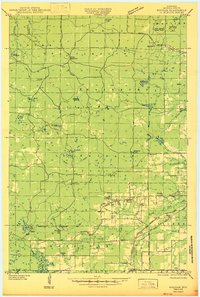 1947 Moquah1947 Print · USGSBayfield County in the late 1940s reveals a landscape of rural schoolhouses and forest management hubs like the Brinks Ranger Sta. Genealogists and historians can trace family locations near Hillsdale Sch, Gednota Sch, and the rail stop at Ino Sta.
 - 1947 Map of Iron Lake
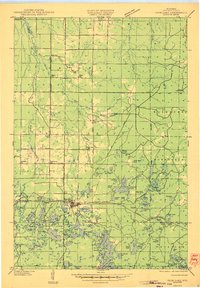 1947 Iron Lake1947 Print · USGSBayfield County at the end of the 1940s reveals a landscape of lakeside settlements and rural school districts linked by the Northern Pacific line. Researchers can trace local genealogy at Hillside Cem or locate former community sites like Kolin and Miles Sch.
 - 1947 Map of Ashland
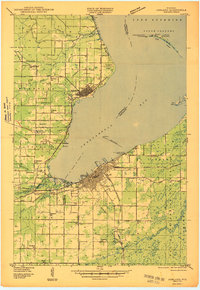 1947 Ashland1947 Print · USGSCoastal Wisconsin thrived on the shores of Lake Superior in the late 1940s, balancing industrial power with small-town education. Genealogists can trace family roots through numerous country schools like Olson Sch and local sites like St Agnes Cem.
 - 1953 Map of Ashland, 1964 Print
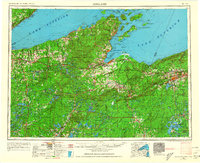 1953 Ashland1964 Print · USGSNorthern Wisconsin's lakefront and timberlands are seen here in the mid-1950s, showing the intersection of industrial rail lines and vast wilderness. Genealogists and historians can trace the Soo Line through rail towns like Mellen or locate family roots in the Apostle Islands and Bad River Indian Reservation.3 unique versions available
 - 1958 Map of Ashland
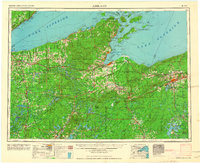 1958 Ashland1958 Print · USGSCoastal Wisconsin and the Michigan borderlands meet here in the late fifties, dominated by the timbered expanses and iron-rich ranges. Genealogists can trace family footprints in settlements like Odanah and Montreal, or locate landmarks such as the Coast Guard Station and Agricultural Experiment Station.
 - 1961 Map of Iron Lake, 1963 Print
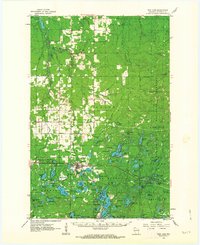 1961 Iron Lake1963 Print · USGSNorthern Wisconsin's timber and rail corridor is captured here in the early sixties, centered on the junction at Iron River. Genealogists and local researchers can locate family sites near Hillside Cem, Oulu Ch, and the old Townhall.2 unique versions available
 - 1961 Map of Iron Lake NE, 1985 Print
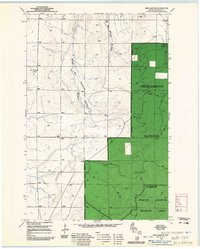 1961 Iron Lake NE1985 Print · USGSBayfield County saw significant conservation during the early sixties as the Chequamegon National Forest expanded. You can trace the remnants of the logging era along the Old Railroad Grade or locate the headwaters of the Flag River.
 - 1964 Map of Moquah NW, 1965 Print
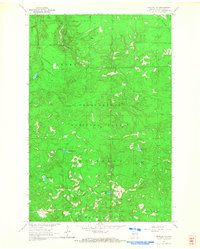 1964 Moquah NW1965 Print · USGSBayfield County’s timberlands are shown here in the mid-sixties, a period when the forest was managed for both conservation and legacy industrial use. Genealogists and historians can trace the Old Railroad Grade and locate remote landmarks like the Brinks Guard Sta and Sunken Camp Lakes.3 unique versions available
 - 1964 Map of Moquah, 1965 Print
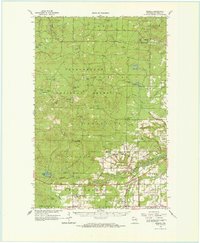 1964 Moquah1965 Print · USGSBayfield County in the mid-sixties shows a landscape shaped by timber management and railway transit. Genealogists and researchers can trace the rail-side settlements of Moquah and Ino, or locate landmarks like the Moquah Lookout Tower and St Florian Ch.
 - 1964 Map of Washburn, 1965 Print
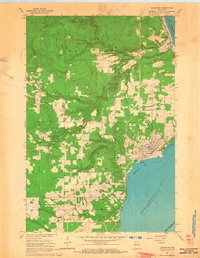 1964 Washburn1965 Print · USGSCoastal Wisconsin communities and timberlands are captured here in the mid-sixties as the region balanced lakefront industry with recreation. You can trace the path of the Chicago and North Western railroad or locate local landmarks like Woodlawn Cem and the Big Rock Rapids.2 unique versions available
 - 1964 Map of Mt. Valhalla, 1965 Print
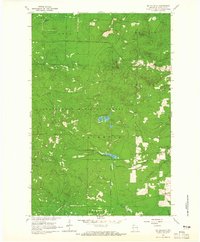 1964 Mt. Valhalla1965 Print · USGSThe northern Wisconsin wilderness of the mid-sixties is captured here, centered on the high reaches of Mt Valhalla. Researchers can trace the extensive network of the Old Railroad Grade and locate the Washburn Lookout Tower deep within the forest.3 unique versions available
 - 1964 Map of Ashland, 1965 Print
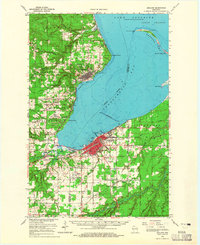 1964 Ashland1965 Print · USGSChequamegon Bay was a bustling hub of maritime and rail transport in the mid-sixties. Researchers can trace the extensive rail lines at Ashland Junction, find local heritage sites like Northland College, and locate family names at St Agnes Cem.2 unique versions available
 - 1980 Map of Port Wing
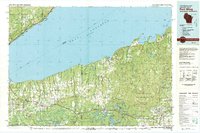 1980 Port Wing1980 Print · USGSThe Lake Superior shoreline and the deep forests of Bayfield and Douglas counties are captured here in the early eighties. Genealogists and historians can trace the rail lines through Iron River or locate the lakeside landings at Cornucopia and Port Wing.
 - 1984 Map of Iron Lake NE
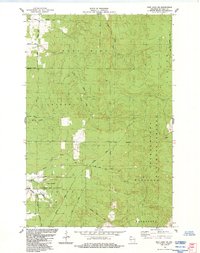 1984 Iron Lake NE1984 Print · USGSBayfield County's timber and water resources are mapped here in the mid-1980s during a period of forest management and conservation. Genealogists and local historians can trace family land via Larson Road or locate the National Fish Hatchery and Lenawee settlement.
 - 1989 Map of Ashland
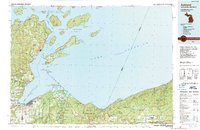 1989 Ashland1989 Print · USGSCoastal Wisconsin and Michigan at the end of the 1980s show a landscape of deep-water bays, island preserves, and industrial timber towns. Researchers can trace the rail lines of the Soo Line and identify landmarks from Big Bay State Park to the Bad River Indian Reservation.
End of results
Showing maps 1-18 of 18
Top cities near Washburn
- Ashland historical maps
- Washburn historical maps
- Iron River historical maps
- Port Wing historical maps
- Delta historical maps
Frequently asked questions
- What are the different types of historical maps available for Washburn?
- What is the oldest map of Washburn?
- Where can I purchase historical maps of Washburn for my home or office?
- Where can I download high-res historical maps of Washburn?
- Are there historical topographic maps available for Washburn?
- Is there historical aerial imagery available for Washburn?
- Where are historical maps of Washburn sourced from?