1950s Maps of Anderson, Wisconsin
Explore 6 historic maps of Anderson from the 1950s. These maps offer a rare glimpse into what life looked like during the 1950s — showing old roads, neighborhoods, homes, and landmarks that have changed or disappeared over time.
Whether you're researching your family's past, planning a metal detecting trip, or studying how Anderson's landscape evolved across the 1950s, these high-resolution maps are a powerful tool for exploring the history of this region.
- Focus on a specific era: All maps on this page are from the 1950s, giving you a focused view of this time period.
- See what’s changed: Compare century-old streets, trails, and buildings to today's modern landscape using overlays and satellite layers.
- Research with precision: Use these maps for genealogy, historical research, land use analysis, or educational projects.
- View, download, or print: Maps are fully viewable online in high resolution, and can be downloaded or printed for your own records.
Start exploring Anderson's history through authentic maps from the 1950s. This is your window into the past.
Anderson, WI maps
(6)- 1950 Map of Butternut
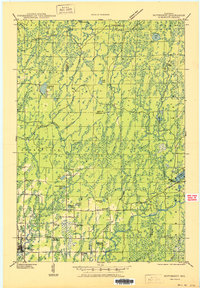 1950 Butternut1950 Print · USGSWisconsin's Northwoods were still defined by logging camps and rural school districts in the mid-twentieth century. Genealogists and local historians can trace the foundations of Butternut and the surrounding townships, locating sites like Agenda Town Hall, Old Camp, and Tank Sch.
 - 1953 Map of Ashland, 1964 Print
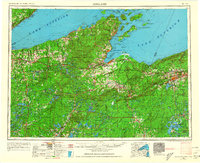 1953 Ashland1964 Print · USGSNorthern Wisconsin's lakefront and timberlands are seen here in the mid-1950s, showing the intersection of industrial rail lines and vast wilderness. Genealogists and historians can trace the Soo Line through rail towns like Mellen or locate family roots in the Apostle Islands and Bad River Indian Reservation.3 unique versions available
 - 1956 Map of Saxon, 1957 Print
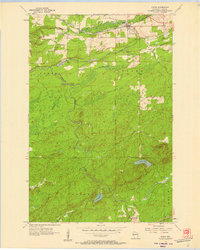 1956 Saxon1957 Print · USGSIron County's northern rail corridors and forest lands are captured here in the mid-fifties as the timber and transit industries shaped the landscape. Genealogists and researchers can trace family plots at Greenwood Cem or locate historic landmarks like the County Fairground and Upson Lookout Tower.2 unique versions available
 - 1956 Map of Upson, 1957 Print
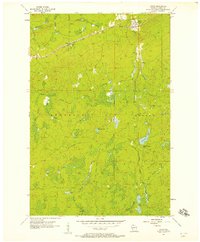 1956 Upson1957 Print · USGSIron County's Northwoods are captured here in the mid-1950s, showing a landscape defined by timber history and rail. Researchers can trace the Soo Line through Upson and Rouse, or locate remote sites like McIver Camp.2 unique versions available
 - 1956 Map of Mt. Whittlesey, 1958 Print
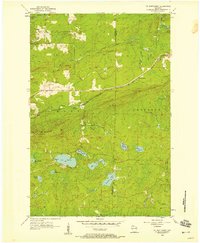 1956 Mt. Whittlesey1958 Print · USGSThe Wisconsin Northwoods of the mid-1950s reveal a landscape of iron mining history and glacial lakes between Ashland and Iron counties. Genealogists and researchers can trace the old rail lines of the Soo Line, the settlement at Ballou, and the Berkshire Mine Ruins.
 - 1958 Map of Ashland
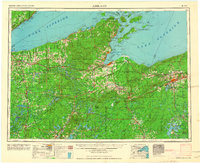 1958 Ashland1958 Print · USGSCoastal Wisconsin and the Michigan borderlands meet here in the late fifties, dominated by the timbered expanses and iron-rich ranges. Genealogists can trace family footprints in settlements like Odanah and Montreal, or locate landmarks such as the Coast Guard Station and Agricultural Experiment Station.
End of results
Showing maps 1-6 of 6
Top cities near Anderson
- Mercer historical maps
- Mellen historical maps
- Montreal historical maps
- Morse historical maps
- Kimball historical maps
- Saxon historical maps
See more
Top neighborhoods of Anderson
Frequently asked questions
- What are the different types of historical maps available for Anderson?
- What is the oldest map of Anderson?
- Where can I purchase historical maps of Anderson for my home or office?
- Where can I download high-res historical maps of Anderson?
- Are there historical topographic maps available for Anderson?
- Is there historical aerial imagery available for Anderson?
- Where are historical maps of Anderson sourced from?