Old Maps of Amberg, Wisconsin for Academic Research
Study the evolution of Amberg with 56 high-resolution historic maps. Whether you're teaching, researching, or modeling changes in land use, these maps provide essential visual documentation of urban, environmental, and geographic change.
- Analyze long-term change: Track patterns in development, transportation, and natural features.
- Ideal for environmental or urban studies: Support academic projects with primary historical map data.
- Use in the classroom or lab: Educators and researchers rely on these maps to bring historical context to life.
These maps are a powerful tool for teaching, research, and visualizing how Amberg has changed over the decades.
Amberg, WI maps
(56)- 1939 Map of Pembine, 1941 Print
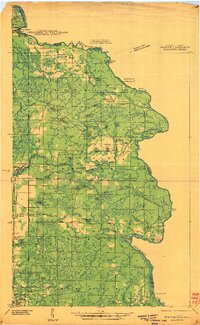 1939 Pembine1941 Print · USGSThe Menominee River borderlands in the late thirties showcase a landscape of granite quarries, rail junctions, and river falls. Trace early settlements and infrastructure including Pembine, the Chalk Hill Dam, and the St Anthony Cem.2 unique versions available
 - 1939 Map of Dunbar, 1955 Print
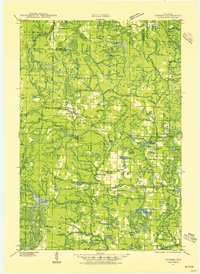 1939 Dunbar1955 Print · USGSThe town of Dunbar and surrounding Marinette County lands are shown here in the late 1930s, caught between the era of heavy rail and emerging forest roads. You can trace early schoolhouses like McKinley Sch, find landmarks like the Dunbar Fire Tower, and locate the crossing at Carney Rapids.2 unique versions available
 - 1940 Map of Athelstane, 1969 Print
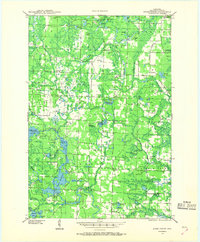 1940 Athelstane1969 Print · USGSMarinette County was a hub of hydroelectric power and timber management during the 1940s. Researchers can trace rural school districts like Newton Lakes School or locate the specialized Molybdenite Mine near the village of Athelstane.
 - 1941 Map of Dunbar
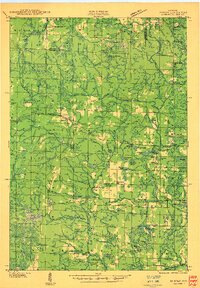 1941 Dunbar1941 Print · USGSMarinette and Florence Counties are shown here just before the war, when rail lines and rural schools still defined northern Wisconsin life. Genealogists and historians can trace families near Dunbar or locate local landmarks like the Dunbar Fire Tower and Merriman Sch.
 - 1942 Map of Athelstane
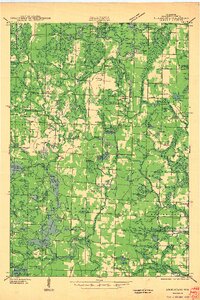 1942 Athelstane1942 Print · USGSMarinette County was a landscape of timber and hydropower in the early 1940s. Genealogists and historians can trace defunct rural schools like Rector Sch and Konsted Sch, or locate industrial sites such as the Molybdenite Mine.
 - 1942 Map of Wausaukee
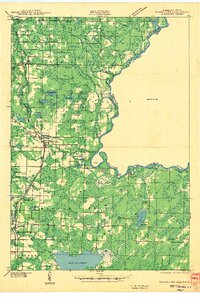 1942 Wausaukee1942 Print · USGSMarinette County in the early 1940s was a landscape of timber-towns and railroads winding toward the Michigan border. Genealogists can locate family-named rural schools like Shanebrook Sch and Gallow Sch or trace the early community at WAUSAUKEE.
 - 1947 Map of Pembine
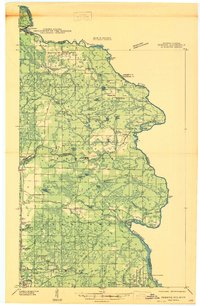 1947 Pembine1947 Print · USGSMarinette County was a landscape of stone quarries and timber-line railroads just after World War II. Researchers can trace rural life through sites like Dixon Sch, the Reformatory Quarry, and the Mission Chapel near Kremlin.
 - 1947 Map of Dunbar
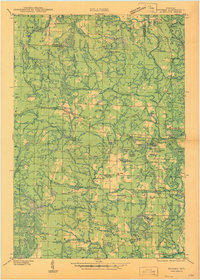 1947 Dunbar1947 Print · USGSNortheastern Wisconsin’s logging and rail history is on full display here in the late 1940s, centered on the junction at Dunbar. Local historians can trace the paths of two major railroads and locate vanished community landmarks like the Dunbar Fire Tower and Pike Ridge Sch.
 - 1947 Map of Wausaukee
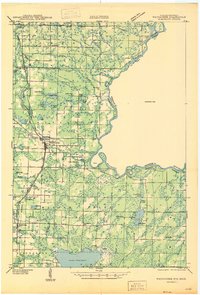 1947 Wausaukee1947 Print · USGSMarinette County in the late nineteen-forties centers on the village of Wausaukee and its surrounding glacial lake country. Trace the locations of rural schoolhouses like Shanebrook Sch and Gallow Sch, or locate family sites near Cedarville and the Pine Hill Cem.
 - 1954 Map of Iron Mountain, 1964 Print
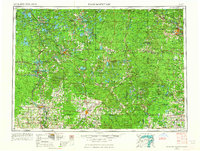 1954 Iron Mountain1964 Print · USGSUpper Michigan and Northeastern Wisconsin are shown in detail during the mid-fifties, when the logging and mining economies still moved by rail. Trace the rail lines of the Soo Line to remote stops like Koepenick Station or explore the Iron Range near Iron Mountain.2 unique versions available
 - 1954 Map of Escanaba, 1967 Print
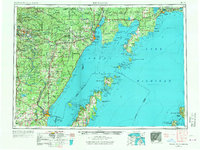 1954 Escanaba1967 Print · USGSThe Upper Peninsula and Door County shorelines meet here in the mid-fifties, showing the vital maritime and timber networks of the Great Lakes. Researchers can trace historic rail lines, old fire lookouts like the Stonington Fire Tower, and island settlements such as Washington Island.2 unique versions available
 - 1957 Map of Escanaba
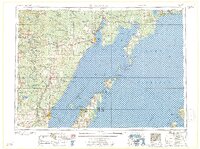 1957 Escanaba1957 Print · USGSThe Upper Peninsula and Door County shorelines meet in the mid-fifties, capturing a landscape of timber, iron, and maritime trade. Genealogists and local historians can trace the Chicago & North Western RR through settlements like Hermansville or locate St Vitals Church and the Potawatome Indian Reservation.
 - 1958 Map of Escanaba
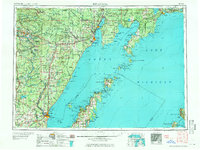 1958 Escanaba1958 Print · USGSNorthern Lake Michigan maritime commerce and timberlands are captured here in the mid-fifties. Genealogists and historians can trace rail networks like the Escanaba and Lake Superior or locate island settlements such as Detroit Harbor and Fish Creek.
 - 1959 Map of Iron Mountain
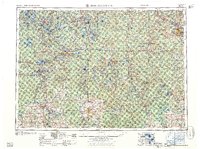 1959 Iron Mountain1959 Print · USGSThe northwoods of Wisconsin and the Michigan border are captured here in the mid-fifties, showing a landscape defined by timber, water, and rail. Researchers can trace historic junctions like Hiles Junction, the expansive Nicolet National Forest, and lakefront settlements from Rhinelander to Tomahawk.2 unique versions available
 - 1963 Map of Pembine, 1964 Print
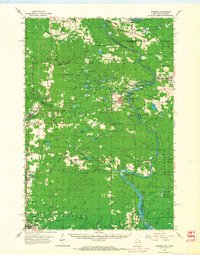 1963 Pembine1964 Print · USGSThe Menominee River borderlands thrive in the early sixties as a crossroads of the Soo Line and Chicago and North Western railroads. Historians can trace the local landscape through landmarks like Smalley Falls, Mission Chapel, and the old Lookout Tower.2 unique versions available
 - 1963 Map of Wausaukee, 1964 Print
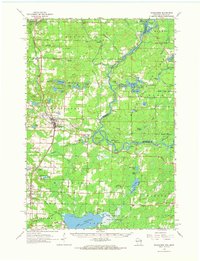 1963 Wausaukee1964 Print · USGSMarinette County was a hub of timber and rail activity in the early 1960s, centered on the Menominee River border. Local historians can trace the Chicago Milwaukee St Paul and Pacific RR through Amberg, Wausaukee, and the small settlement of Sweetheart City.
 - 1972 Map of Town Corner Lake, 1974 Print
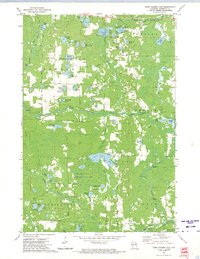 1972 Town Corner Lake1974 Print · USGSMarinette County's glacial lake country is captured here in the early seventies, showing a landscape shaped by conservation and recreation. Genealogists and local historians can trace family-named sites like Lindquist Lake, the remote Holmes Junction, and the Beecher Ch.
 - 1972 Map of Athelstane, 1975 Print
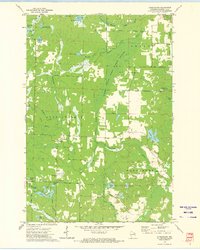 1972 Athelstane1975 Print · USGSMarinette County's lake-filled woodlands are documented here in the early 1970s, as a rural economy transitioned away from its rail-dependent roots. Genealogists can trace family landmarks like the Athelstane Cem, Assembly of God Ch, and the Old Railroad Grade north of town.
 - 1981 Map of Marinette, 1982 Print
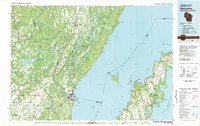 1981 Marinette1982 Print · USGSThe Menominee River valley and Door County peninsula are captured here in the early 1980s, showcasing the region's timber and maritime foundations. Researchers can trace historic shorelines from Fish Creek to Deathdoor Bluff or locate inland landmarks like Lake Noquebay and Kangaroo Lake.
 - 1982 Map of Escanaba
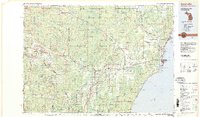 1982 Escanaba1982 Print · USGSUpper Peninsula timber and mining country come to life in this early 1980s survey of the lakefront and forest interior. Trace family roots and industrial history through settlements like Norway and Gladstone, or locate the Appleton Mine and Fernwood Cem near the rail lines.
 - 1982 Map of Miscauno Island, 1983 Print
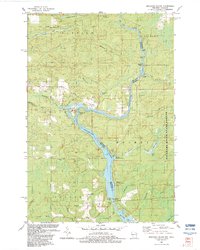 1982 Miscauno Island1983 Print · USGSThe Menominee River forms the interstate border in the early eighties, winding through a landscape of timber and hydroelectric power. Researchers can locate White Rapids Cem, the Chalk Hill Dam, and the recreation grounds of Miscauno Island.
 - 1982 Map of Amberg, 1983 Print
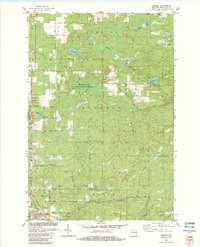 1982 Amberg1983 Print · USGSMarinette County's quarrying and timber lands are in focus in the early 1980s as the rail line connects small northern outposts. Trace family landmarks like Faith Sch or explore the wetlands of Miscauno State Public Hunting Grounds and Beecher Lake.
 - 1982 Map of Resort Lake, 1983 Print
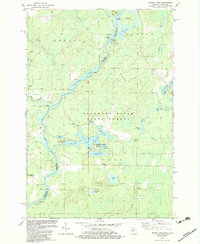 1982 Resort Lake1983 Print · USGSThe Menominee River borderlands in the early eighties were a mosaic of state forests and quiet fishing lakes. Genealogists and hikers can trace old routes like Pike River Road or locate landmarks such as Chalk Hill Camp and the Lost Lake Ch.
 - 1982 Map of Wausaukee North, 1983 Print
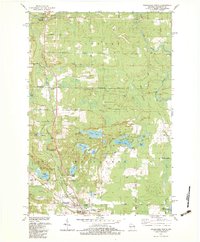 1982 Wausaukee North1983 Print · USGSMarinette County in the early eighties was a landscape defined by its waterways and the Chicago and North Western rail line. Genealogists and hikers can trace the areas around Wausaukee, Daves Falls County Park, and the Amberg Cem.
 - 1990 Map of Wabeno, 1991 Print
 1990 Wabeno1991 Print · USGSThe Wisconsin Northwoods in the early nineties is a landscape of deep timber, tribal lands, and glacial lakes. Researchers can trace the Chicago and North Western rail line through lumber towns like Wabeno and Townsend or locate the Lakewood State Fish Hatchery.
Showing maps 1-25 of 56
Top cities near Amberg
- Dunbar historical maps
- Aurora historical maps
- Pembine historical maps
- Wagner historical maps
- Beecher historical maps
- Athelstane historical maps
See more
Frequently asked questions
- What are the different types of historical maps available for Amberg?
- What is the oldest map of Amberg?
- Where can I purchase historical maps of Amberg for my home or office?
- Where can I download high-res historical maps of Amberg?
- Are there historical topographic maps available for Amberg?
- Is there historical aerial imagery available for Amberg?
- Where are historical maps of Amberg sourced from?