1900s (20th Century) Maps of Powell, Wyoming
Explore 9 historic maps of Powell from the 1900s (20th Century). These maps offer a rare glimpse into what life looked like during the 1900s — showing old roads, neighborhoods, homes, and landmarks that have changed or disappeared over time.
Whether you're researching your family's past, planning a metal detecting trip, or studying how Powell's landscape evolved across the 1900s, these high-resolution maps are a powerful tool for exploring the history of this region.
- Focus on a specific era: All maps on this page are from the 1900s, giving you a focused view of this time period.
- See what’s changed: Compare century-old streets, trails, and buildings to today's modern landscape using overlays and satellite layers.
- Research with precision: Use these maps for genealogy, historical research, land use analysis, or educational projects.
- View, download, or print: Maps are fully viewable online in high resolution, and can be downloaded or printed for your own records.
Start exploring Powell's history through authentic maps from the 1900s. This is your window into the past.
Powell, WY maps
(9)- 1955 Map of Cody, 1969 Print
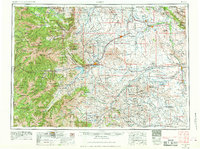 1955 Cody1969 Print · USGSThe Bighorn Basin and Absaroka Range meet in the mid-fifties, capturing a landscape defined by mountain wilderness and burgeoning oil fields. Trace family roots in Cody or Meeteetse, and locate industrial landmarks like the Elk Basin Oil and Gas Field and the Chicago Burlington and Quincy RR.2 unique versions available
 - 1958 Map of Cody
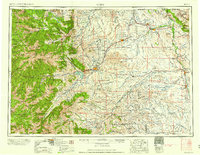 1958 Cody1958 Print · USGSNorthwestern Wyoming at the peak of the mid-century energy and ranching boom shows a land of high peaks and oil basins. Researchers can trace the Chicago Burlington and Quincy rail lines through Greybull or locate the sprawling Elk Basin Oil and Gas Field.
 - 1962 Map of Cody
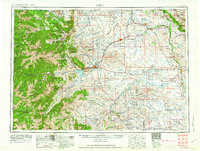 1962 Cody1962 Print · USGSBig Horn Basin energy and agriculture define this mid-century look at Wyoming’s northern frontier. Local historians can trace the irrigation and rail networks connecting Cody and Powell to major energy sites like the Oregon Basin Oil Field.
 - 1966 Map of Garland, 1969 Print
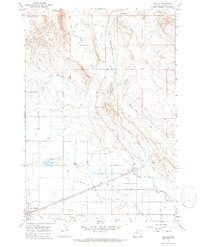 1966 Garland1969 Print · USGSThe irrigated plains of Park County come into focus during the mid-sixties as agricultural grids expand across Powell Flats. Researchers can trace the historic Jim Bridger Trail or locate family plots at Crown Hill Cemetery near Powell.2 unique versions available
 - 1966 Map of Elk Basin, 1969 Print
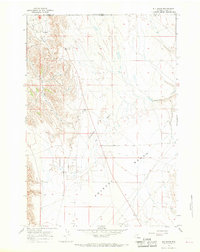 1966 Elk Basin1969 Print · USGSThe northern Wyoming oil frontier is captured here in the mid-1960s, showing a landscape defined by energy production. Researchers can trace the extensive infrastructure of the Elk Basin Oil Field and the Sulphur Plant, or locate the original site of the Powell Municipal Airport.2 unique versions available
 - 1966 Map of Elk Basin SE, 1969 Print
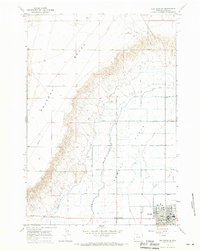 1966 Elk Basin SE1969 Print · USGSThe agricultural heart of Park County is captured in the mid-1960s as the town of Powell expanded along its rigid irrigation grid. Researchers can trace the development of Powell Flats and locate specific homesteads near Frannie Canal or along Lane Nine.2 unique versions available
 - 1966 Map of Gilmore Hill NW, 1970 Print
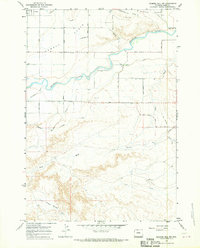 1966 Gilmore Hill NW1970 Print · USGSPark County, Wyoming, is shown here during the mid-1960s as a landscape defined by the irrigation of the Big Horn Basin. Researchers can trace the path of the Jim Bridger Trail and the complex water systems of the Elk Lovell Canal and Willwood Draw.2 unique versions available
 - 1967 Map of Ralston, 1971 Print
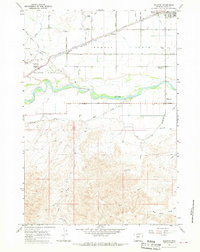 1967 Ralston1971 Print · USGSIn the Big Horn Basin during the late 1960s, a complex network of canals and numbered roads transformed the high desert into productive farmland. Genealogists and historians can trace the grid of Ralston Flats, the route of the Chicago Burlington and Quincy, and the southern trails around Willwood.2 unique versions available
 - 1980 Map of Powell, 1982 Print
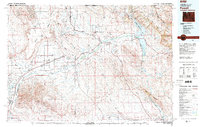 1980 Powell1982 Print · USGSThe Bighorn Basin in the 1980s shows a landscape where irrigation and rail transformed the high desert near the Montana border. Researchers can trace the path of the Burlington Northern line through historic stops like Garland, Frannie, and Deaver.
End of results
Showing maps 1-9 of 9
Top cities near Powell
Frequently asked questions
- What are the different types of historical maps available for Powell?
- What is the oldest map of Powell?
- Where can I purchase historical maps of Powell for my home or office?
- Where can I download high-res historical maps of Powell?
- Are there historical topographic maps available for Powell?
- Is there historical aerial imagery available for Powell?
- Where are historical maps of Powell sourced from?