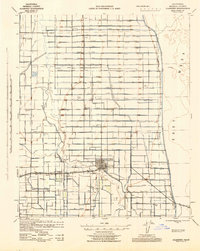
1945 Map of Alamorio
USGS Topo · Published 1945About this map
Holtville serves as the primary hub in this highly engineered landscape, where the Alamo River snakes through an intricate grid of irrigation infrastructure. This 1945 survey by the War Department reveals the intensive transformation of the Imperial Valley, defined by a dense network of canals and drains such as the Rubber Canal, Rose Canal, and the Holtville Main Drain. The presence of numerous rural schoolhouses, including Union Sch, Sunset Springs Sch, and Alamitos Sch, indicates a robust agricultural community supported by these water systems.
Find a feature on this map
99 named features on this map. Tap any name to fly to it.
Don’t see what you’re looking for? This feature index may not catch every label — zoom into the map to look around manually.
Map Details
Editions of this 1945 Alamorio Map
This is the sole edition of this map. No revisions or reprints were ever made.
Other maps of this area
1907 · Holtville
USGS Topo · 1:125,000
1915 · El Centro
USGS Topo · 1:125,000
1940 · Brawley
USGS Topo · 1:62,500
1940 · Iris
USGS Topo · 1:62,500
1940 · Heber
USGS Topo · 1:62,500
1940 · Alamorio
USGS Topo · 1:62,500
1940 · Calexico
USGS Topo · 1:62,500
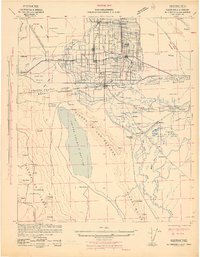
1942 · El Centro
USGS Topo · 1:250,000
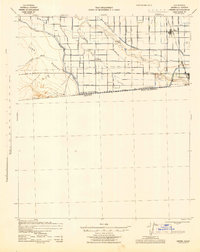
1943 · Heber
USGS Topo · 1:62,500
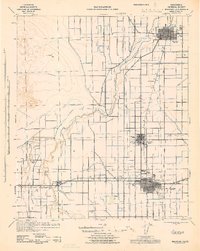
1943 · Brawley
USGS Topo · 1:62,500