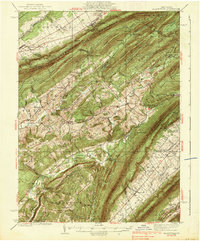
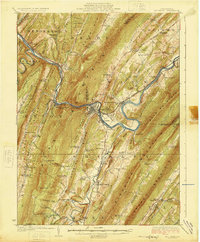
1938 Map of Allensville
USGS Topo · Published 1938About this map
The central Pennsylvania landscape of the 1930s is defined by the sharp parallel ridges of Tussey Mountain and Stone Mountain, which channel the movement of people and industry through narrow gaps and valleys. Settlement follows the water, with Standing Stone Creek and Shaver Creek anchoring agricultural and milling communities like McAlevys Fort and Ennisville. Evidence of the region’s earlier industrial era remains at Monroe Furnace and Greenwood Furnace, while the timber and grain economy is still visible through landmarks such as Compropst Mill and the community of Pine Grove Mills. A network of country schools, including Steffey Sch and Stone Valley Sch, dots the lower elevations of Warrior Ridge, reflecting a decentralized rural life before modern consolidation. Higher elevations show a shift toward forestry and conservation, highlighted by the Martin Gap CCC Camp and the Fire Tower at the intersection of several mountain ridges.
Find a feature on this map
90 named features on this map. Tap any name to fly to it.
Don’t see what you’re looking for? This feature index may not catch every label — zoom into the map to look around manually.
Map Details
Editions of this 1938 Allensville Map
3 editions found
Other maps of this area
1901 · Huntingdon
USGS Topo · 1:62,500
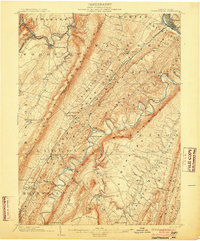
1904 · Huntingdon
USGS Topo · 1:62,500
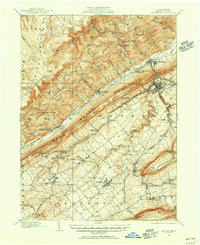
1908 · Bellefonte
USGS Topo · 1:62,500
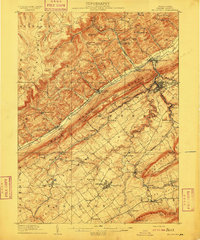
1909 · Bellefonte
USGS Topo · 1:62,500
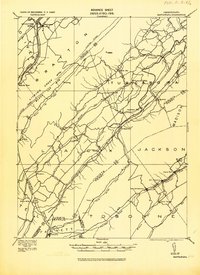
1919 · Mattawana
USGS Topo · 1:62,500
1919 · Menno
USGS Topo · 1:62,500
1922 · Mt Union
USGS Topo · 1:48,000
1922 · Philipsburg
USGS Topo · 1:62,500
1923 · Tyrone
USGS Topo · 1:62,500
1924 · Mt. Union
USGS Topo · 1:62,500