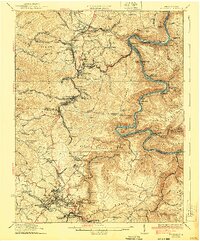
1932 Map of Beckley
USGS Topo · Published 1940About this map
Peavine Ridge and the winding course of the New River dominate this landscape, illustrating the industrial and residential patterns of the West Virginia coalfields between the world wars. The heavy reliance on rail transport is evident in the path of the Chesapeake and Ohio railroad, which follows the river's deep incision through Stretcher Neck. Settlements like Oak Hill, Scarbro, and Glen Jean cluster along the ridges and narrow valleys, interconnected by a complex web of local roads and creek systems like Dunloup Creek. Numerous rural institutions are documented, including the Miles Sch and Lewis Williams Sch, serving the scattered communities. The terrain transitions from the high elevations of Sewell Mountain in the northeast to the dense collection of hollows near Kilsyth and Mt Hope, reflecting the era's concentrated extraction and transport infrastructure before modern highway expansion.
Find a feature on this map
148 named features on this map. Tap any name to fly to it.
Don’t see what you’re looking for? This feature index may not catch every label — zoom into the map to look around manually.
Map Details
Editions of this 1932 Beckley Map
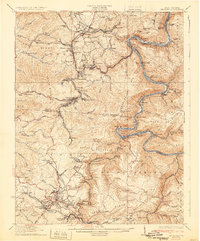
2 editions found
Other maps of this area
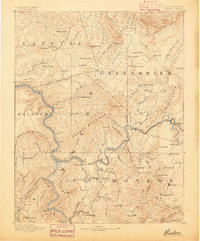
1887 · Hinton
USGS Topo · 1:125,000
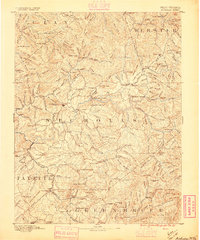
1889 · Nicholas
USGS Topo · 1:125,000
1891 · Nicholas
USGS Topo · 1:125,000
1891 · Raleigh
USGS Topo · 1:125,000
1892 · Hinton
USGS Topo · 1:125,000
1897 · Kanawha Falls
USGS Topo · 1:125,000
1897 · Raleigh
USGS Topo · 1:125,000
1900 · Kanawha Falls
USGS Topo · 1:125,000
1901 · Nicholas
USGS Topo · 1:125,000
1901 · Kanawha Falls
USGS Topo · 1:125,000