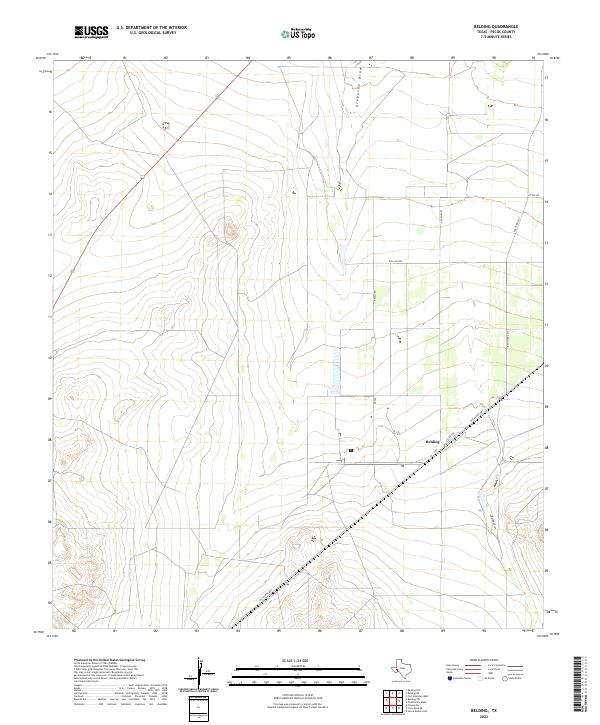
2022 Map of Belding
USGS Topo · Published 2022About this map
Belding stands as a focal point in this Pecos County landscape, where the intersection of transit and topography defines the high desert character of West Texas. The settlement is positioned along the historic route of the Old Alpine Hwy and Co Rd 896, which cut diagonally across a terrain marked by intermittent watercourses. Two primary ephemeral drainage systems, Acebuche Draw and Belding Draw, provide the primary relief in an otherwise structured grid of local thoroughfares. The road network, including Williams Rd and Ranch Rd 2037, suggests a region organized around ranching and agricultural tracts, with several circular and linear features indicating localized infrastructure or property divisions. The presence of Pecan Rd and Pecan hints at the specific botanical or economic influences on the naming conventions of the area.
Find a feature on this map
13 named features on this map. Tap any name to fly to it.
Don’t see what you’re looking for? This feature index may not catch every label — zoom into the map to look around manually.
Map Details
Editions of this 2022 Belding Map
This is the sole edition of this map. No revisions or reprints were ever made.
Other maps of this area
1921 · Fort Stockton
USGS Topo · 1:62,500
1923 · Fort Stockton
USGS Topo · 1:62,500
1923 · Sierra Madera
USGS Topo · 1:62,500
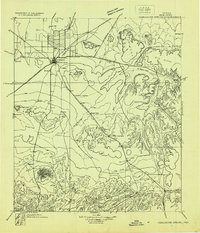
1928 · Comanche Spring
USGS Topo · 1:125,000
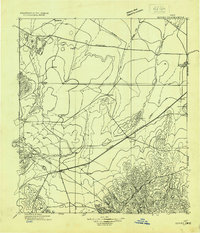
1929 · Hovey
USGS Topo · 1:125,000
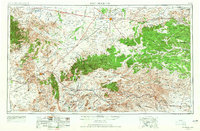
1954 · Fort Stockton
USGS Topo · 1:250,000
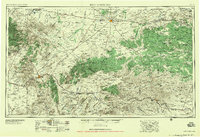
1958 · Fort Stockton
USGS Topo · 1:250,000
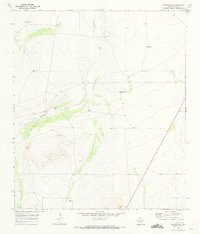
1970 · Belding SW
USGS Topo · 1:24,000
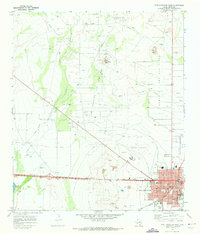
1970 · Fort Stockton West
USGS Topo · 1:24,000
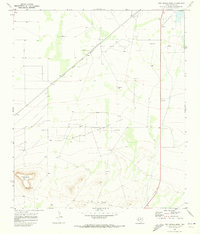
1970 · Twelvemile Mesa
USGS Topo · 1:24,000