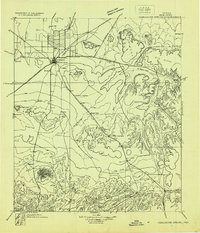
1928 Map of Comanche Spring
USGS Topo · Published 1928About this map
Fort Stockton serves as the hub of this Trans-Pecos landscape, situated at the vital waters of Comanche Spring. In the late 1920s, the area's geography was defined by the intersection of early automotive routes and transcontinental rail, with the Kansas City Mexico and Orient railroad cutting a diagonal path through the desert floor. The map documents the historic Old Spanish Trail, which followed the path of modern-day highways through a terrain of dramatic flat-topped mesas and isolated peaks like Madera Mountain. Outside the central town, the presence of numerous tanks and springs, such as Hole in the Wall Tank and Tunis Spring, reveals the essential water infrastructure required for ranching and travel in this arid Pecos County region. Named locations like Scharbaugh, Elsinore, and Rochelle highlight the remote outposts and sidings that supported the local ranching economy.
Find a feature on this map
45 named features on this map. Tap any name to fly to it.
Don’t see what you’re looking for? This feature index may not catch every label — zoom into the map to look around manually.
Map Details
Editions of this 1928 Comanche Spring Map
This is the sole edition of this map. No revisions or reprints were ever made.
Other maps of this area
1920 · Longfellow
USGS Topo · 1:125,000
1921 · Fort Stockton
USGS Topo · 1:62,500
1923 · Fort Stockton
USGS Topo · 1:62,500
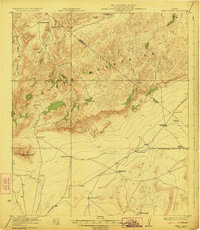
1923 · Hess Canyon
USGS Topo · 1:62,500
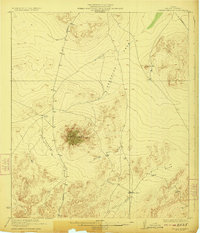
1923 · Sierra Madera
USGS Topo · 1:62,500
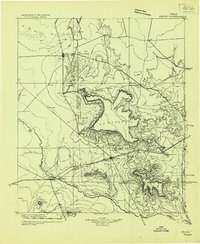
1928 · Crane
USGS Topo · 1:125,000
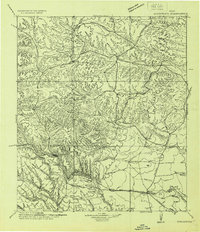
1928 · Sanderson
USGS Topo · 1:125,000
1929 · Hovey
USGS Topo · 1:125,000
1929 · Independence Draw Quadrangle
USGS Topo · 1:125,000
1931 · Barstow
USGS Topo · 1:125,000
Featured Places
- Fort Stockton, TX
- Little Mexico Colonia, TX
- Guild, TX
- Bodieville Colonia, TX
- Alamo Ranchettes Colonia, TX