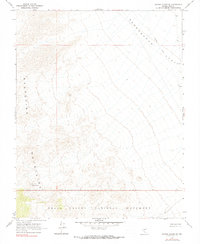
1967 Map of Bonnie Claire SE
USGS Topo · Published 1990About this map
Grapevine Mountains dominate the western half of this Nevada landscape, where steep elevation changes give way to the broad expanse of Sarcobatus Flat to the east. Within the southern boundary lies a portion of Death Valley National Monument, marking the transition into one of the most arid environments in North America. Traces of previous desert transit and infrastructure are visible across the basin, most notably the Old Railroad Grade which cuts a straight line through the northeast corner of the sheet. Vital water sources in this high-desert terrain are sparse, with Willow Spring and a nearby Water Tank serving as the primary landmarks for surveyors in the late 1960s. The map illustrates the stark contrast between the desert floor and the high ridgelines, where townships like T. 10 S. meet along the rugged slopes.
Find a feature on this map
9 named features on this map. Tap any name to fly to it.
Don’t see what you’re looking for? This feature index may not catch every label — zoom into the map to look around manually.
Map Details
Editions of this 1967 Bonnie Claire SE Map
2 editions found
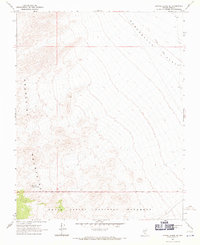
Other maps of this area
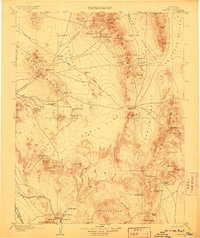
1908 · Kawich
USGS Topo · 1:250,000
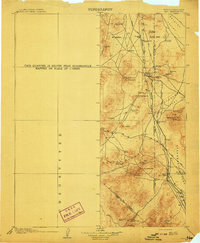
1908 · Lida
USGS Topo · 1:250,000
1908 · Furnace Creek
USGS Topo · 1:250,000
1908 · Ballarat
USGS Topo · 1:250,000
1910 · Furnace Creek
USGS Topo · 1:250,000
1913 · Lida
USGS Topo · 1:250,000
1913 · Ballarat
USGS Topo · 1:250,000
1942 · Tolicha Peak
USGS Topo · 1:125,000
1942 · Bullfrog
USGS Topo · 1:125,000
1948 · Death Valley
USGS Topo · 1:250,000