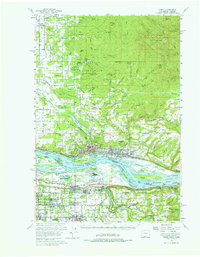
1954 Map of Camas
USGS Topo · Published 1976About this map
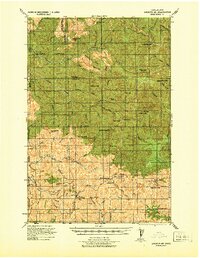
Camas and Washougal serve as industrial and residential anchors along the Washington side of the Columbia River in the mid-1950s, while Troutdale and Gresham show the burgeoning development of the Oregon side. This period reveals a landscape transitioning from rural farmsteads to suburban expansion, evidenced by the presence of several defunct rural institutions like Norway Sch (Aban'd) and Grass Valley Sch (Aban'd). The Camp Bonneville Military Reservation occupies a significant portion of the northern timberland, while the Spokane Portland and Seattle railroad follows the riverbank, mirroring the Evergreen Highway. Numerous islands such as Lady Island and Reed Island dot the Columbia River, which is defined here by industrial reaches and landmarks like Rooster Rock and Pt Vancouver, marking the historic gateway to the Columbia River Gorge.
Find a feature on this map
109 named features on this map. Tap any name to fly to it.
Don’t see what you’re looking for? This feature index may not catch every label — zoom into the map to look around manually.
Map Details
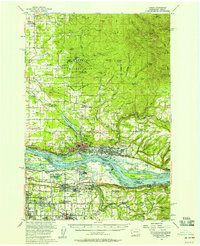
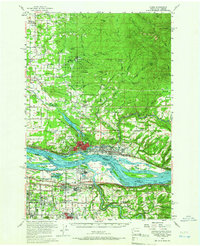
Editions of this 1954 Camas Map
Other maps of this area
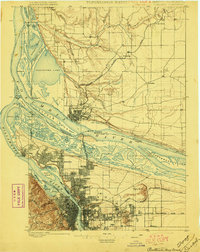
1897 · Portland
USGS Topo · 1:62,500
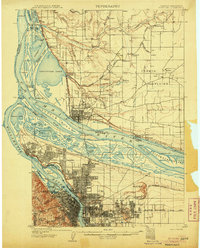
1905 · Portland
USGS Topo · 1:62,500
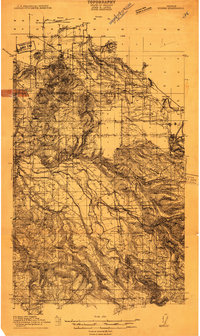
1911 · Boring
USGS Topo · 1:48,000
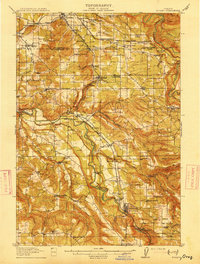
1914 · Boring
USGS Topo · 1:62,500
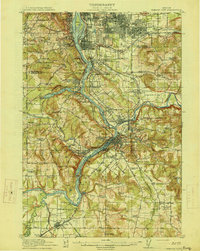
1914 · Oregon City
USGS Topo · 1:62,500
1916 · Estacada
USGS Topo · 1:125,000
1918 · Troutdale
USGS Topo · 1:62,500
1934 · Troutdale
USGS Topo · 1:48,000
1939 · Oregon City
USGS Topo · 1:62,500
1940 · Lookout Mtn
USGS Topo · 1:62,500