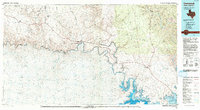
1985 Map of Comstock
USGS Topo · Published 1993About this map
The Rio Grande carves a deep international boundary between Mexico and Texas in this mid-1980s landscape, where the Pecos River makes its final descent into the vast Amistad Reservoir. This high-desert terrain is defined by its deep limestone drainages, including Osman Draw, Lozier Canyon, and the sheer walls of Seminole Canyon State Historical Park. The Southern Pacific railroad remains the primary industrial artery, stitching together small outposts like Langtry, Pumpville, and Comstock across the arid borderlands. Human presence is sparse, concentrated near these rail stops and the U.S. 90 corridor, while the backlands are marked by isolated crossings and named gaps like Bakers Crossing and Dead Mans Pass. The emergence of the Amistad National Recreation Area signals a shift toward conservation and public use in a region historically dominated by ranching and the railroad.
Find a feature on this map
43 named features on this map. Tap any name to fly to it.
Don’t see what you’re looking for? This feature index may not catch every label — zoom into the map to look around manually.
Map Details
Editions of this 1985 Comstock Map
2 editions found
Other maps of this area
1918 · Dryden Crossing
USGS Topo · 1:62,500
1928 · Sanderson
USGS Topo · 1:125,000
1941 · Feely
USGS Topo · 1:62,500
1943 · Malvado
USGS Topo · 1:62,500
1943 · Devils River
USGS Topo · 1:62,500
1943 · Langtry
USGS Topo · 1:62,500
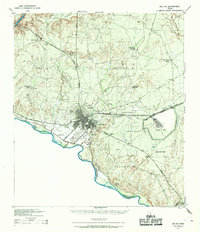
1943 · Del Rio
USGS Topo · 1:62,500
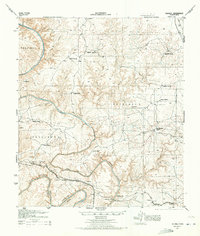
1943 · Shumla
USGS Topo · 1:62,500
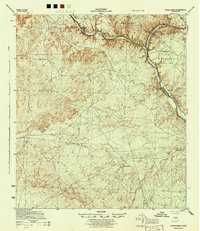
1944 · Devils River
USGS Topo · 1:62,500
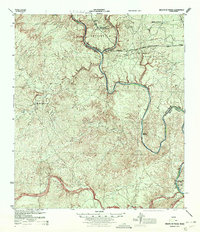
1944 · Mouth Of Pecos
USGS Topo · 1:62,500