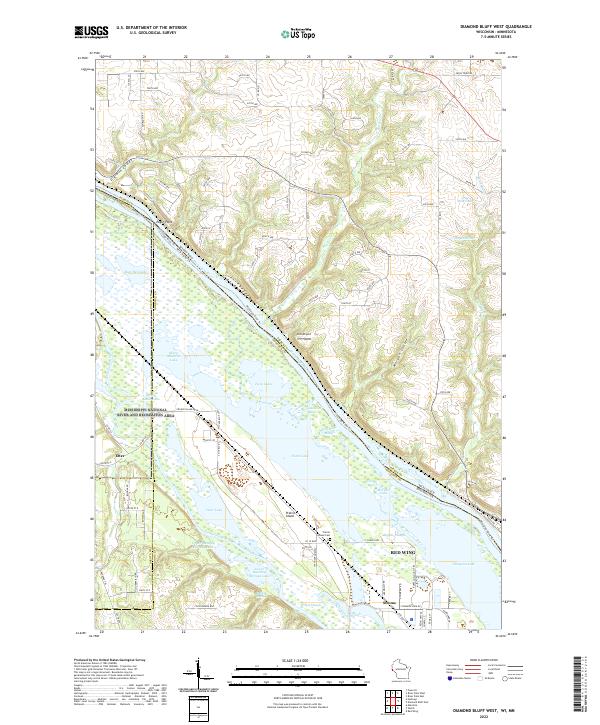
2022 Map of Diamond Bluff West
USGS Topo · Published 2022About this map
Mississippi National River and Recreation Area dominates the central landscape of this quadrangle, where the massive waterway forms a complex network of sloughs and backwaters along the border of Wisconsin and Minnesota. This 2022 survey documents a hydrographically dense region where the Mississippi River is fed by the Big River and Wind River from the north and the Vermillion River from the west. The area's geography is defined by significant island formations and wetlands, most notably Prairie Island, which contains the Prairie Island Cem.
Find a feature on this map
72 named features on this map. Tap any name to fly to it.
Don’t see what you’re looking for? This feature index may not catch every label — zoom into the map to look around manually.
Map Details
Editions of this 2022 Diamond Bluff West Map
This is the sole edition of this map. No revisions or reprints were ever made.
Other maps of this area
1944 · Red Wing
USGS Topo · 1:62,500
1946 · Hudson
USGS Topo · 1:62,500
1946 · River Falls
USGS Topo · 1:62,500
1949 · River Falls
USGS Topo · 1:62,500
1949 · Hudson
USGS Topo · 1:62,500
1951 · Prescott
USGS Topo · 1:24,000
1952 · Red Wing
USGS Topo · 1:62,500
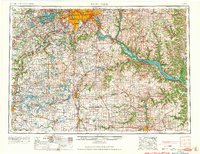
1953 · Saint Paul
USGS Topo · 1:250,000
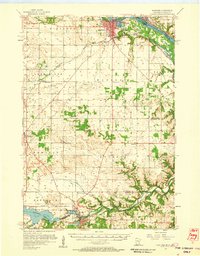
1957 · Hastings
USGS Topo · 1:62,500
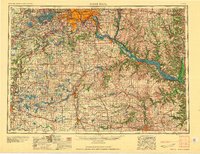
1959 · Saint Paul
USGS Topo · 1:250,000