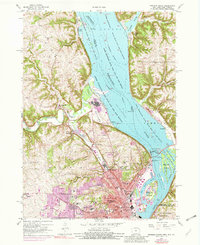
1956 Map of Dubuque North
USGS Topo · Published 1982About this map
The Mississippi River corridor dominates this survey, where the tri-state boundaries of Iowa, Wisconsin, and Illinois converge. In the mid-1950s, the industrial and educational heart of Dubuque is visible through its dense concentration of institutions, including Loras College, Clarke College, and Mount St Bernard Seminary. The river's commercial utility is marked by the complex of Lock and Dam No 11 and the Eagle Point Bridge, while the vast Upper Mississippi River Wild Life and Fish Refuge preserves the ecological character of the Peru Bottoms. Moving inland, the landscape shifts from the urban grid to the narrow drainages of Couler Valley and Union Park Hollow. Rural life is anchored by numerous neighborhood landmarks such as West Sageville Sch and the Derby Grange Sch, alongside spiritual centers like the St Francis Convent and Holy Ghost Sch.
Find a feature on this map
84 named features on this map. Tap any name to fly to it.
Don’t see what you’re looking for? This feature index may not catch every label — zoom into the map to look around manually.
Map Details
Editions of this 1956 Dubuque North Map
5 editions found
Other maps of this area
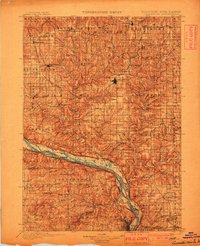
1900 · Lancaster
USGS Topo · 1:125,000
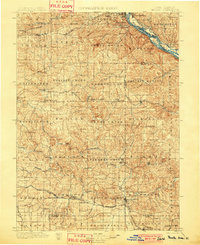
1901 · Peosta
USGS Topo · 1:125,000
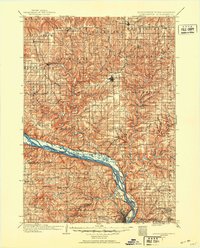
1904 · Lancaster
USGS Topo · 1:125,000
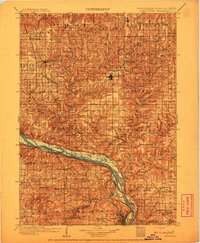
1908 · Lancaster
USGS Topo · 1:125,000
1935 · East Dubuque
USGS Topo · 1:62,500
1940 · East Dubuque
USGS Topo · 1:62,500
1955 · Menominee
USGS Topo · 1:24,000
1955 · Dubuque South
USGS Topo · 1:24,000
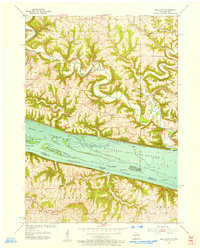
1955 · Balltown
USGS Topo · 1:24,000
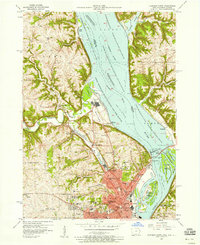
1956 · Dubuque North
USGS Topo · 1:24,000