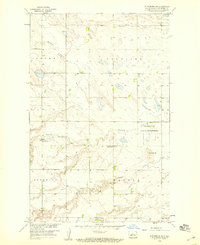
1958 Map of Kongsberg NE
USGS Topo · Published 1959About this map
The Wintering River National Wildlife Refuge anchors this section of McHenry County, preserving a landscape of wetlands and winding waterways within the Missouri River Basin. During the late 1950s, this area was defined by the transition from the glaciated plains of Brown and Voltaire to the more dissected terrain of Bjornson and Olivia. The drainage patterns are clearly visible through the seasonal flows of Blacktail Coulee and Spring Coulee, which cut through the undulating prairie towards the Wintering River. Local infrastructure from this era remains sparse, reflecting the rural character of the region. Notable landmarks for genealogical research include the South Prairie Cem and School No 2, providing evidence of the small community hubs that served local farmsteads. Distinctive landforms like Little Butte rise above the surrounding gravel-rich terrain, where several Gravel Pits indicate the local extractive activity of the time.
Find a feature on this map
13 named features on this map. Tap any name to fly to it.
Don’t see what you’re looking for? This feature index may not catch every label — zoom into the map to look around manually.
Map Details
Editions of this 1958 Kongsberg NE Map
This is the sole edition of this map. No revisions or reprints were ever made.
Other maps of this area
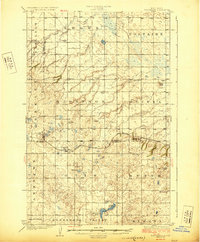
1929 · Kongsberg
USGS Topo · 1:62,500
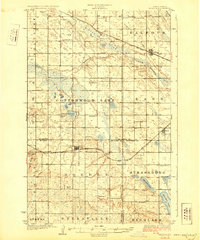
1929 · Balfour
USGS Topo · 1:62,500
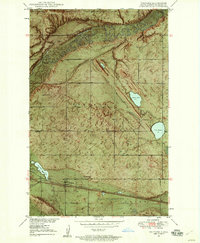
1948 · Voltaire
USGS Topo · 1:24,000
1948 · Velva
USGS Topo · 1:62,500
1949 · Velva
USGS Topo · 1:24,000
1949 · Voltaire
USGS Topo · 1:24,000
1951 · Velva
USGS Topo · 1:62,500
1954 · Minot
USGS Topo · 1:250,000
1954 · McClusky
USGS Topo · 1:250,000
1957 · Bergen
USGS Topo · 1:24,000