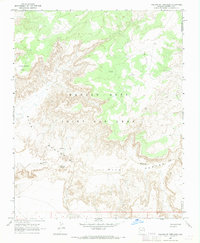
1967 Map of Pillars of Hercules
USGS Topo · Published 1969About this map
The Navajo - Hopi Joint Use Area dominates this high-altitude landscape in the late 1960s, defined by the stark topography of the Blue Canyon system. The striking geological formation known as the Pillars of Hercules overlooks the winding Moenkopi Wash near the southern boundary. This area, spanning the border of Coconino and Navajo counties, is characterized by its isolation and lack of permanent settlements. Transportation is limited to a sparse network including a Jeep Trail and a Pack Tr, reflecting the difficult access to the region. Water sources are critical but rare, with only a few isolated Springs and a single Spring marked across the plateau. To the northwest, Horse Corral Point rises as a significant landmark above the surrounding drainage basins, including the drainage at Blue.
Find a feature on this map
11 named features on this map. Tap any name to fly to it.
Don’t see what you’re looking for? This feature index may not catch every label — zoom into the map to look around manually.
Map Details
Editions of this 1967 Pillars of Hercules Map
This is the sole edition of this map. No revisions or reprints were ever made.
Other maps of this area
1883 · Marsh Pass
USGS Topo · 1:250,000
1892 · Marsh Pass
USGS Topo · 1:250,000
1956 · Marble Canyon
USGS Topo · 1:250,000
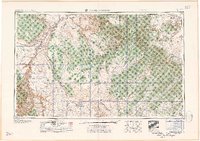
1959 · Marble Canyon
USGS Topo · 1:250,000
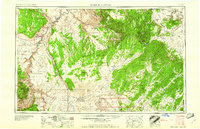
1961 · Marble Canyon
USGS Topo · 1:250,000
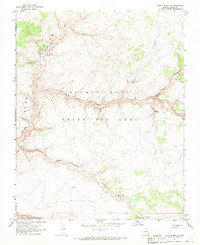
1967 · Rocky Ridge NW
USGS Topo · 1:24,000
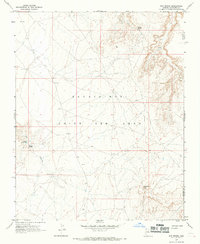
1967 · Bat Spring
USGS Topo · 1:24,000
1967 · Rocky Ridge SW
USGS Topo · 1:24,000
1967 · Bat Canyon
USGS Topo · 1:24,000
1967 · Begashibito Canyon
USGS Topo · 1:24,000