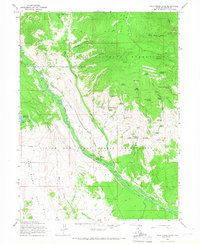
1965 Map of Pole Creek Cave
USGS Topo · Published 1967About this map
Ashley National Forest and the Uintah and Ouray Indian Reservation meet in this 1960s survey, revealing a landscape defined by water management and high-altitude springs. The rugged canyon topography is traced by the Pole Creek Canal and Cedarview Canal, engineering efforts designed to divert flow from the Pole Creek and Uinta River. Named features like Pole Creek Cave and the Uintah Powerplant reflect the intersection of natural landmarks and utility infrastructure. Further south, the Uintah Canyon Youth Camp and Gaging Station sit along the river's edge, while dozens of family-named or descriptively titled water sources, such as Mugwump Spring and Lightning Killed Bull Spring, dot the timbered slopes. The boundary lines between national forest and reservation lands dictate the placement of stock-management features like Nephi Pond and the Ant Reservoirs.
Find a feature on this map
56 named features on this map. Tap any name to fly to it.
Don’t see what you’re looking for? This feature index may not catch every label — zoom into the map to look around manually.
Map Details
Editions of this 1965 Pole Creek Cave Map
This is the sole edition of this map. No revisions or reprints were ever made.
Other maps of this area
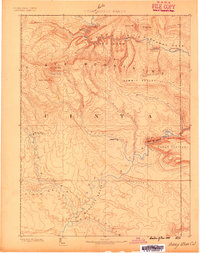
1885 · Ashley
USGS Topo · 1:250,000
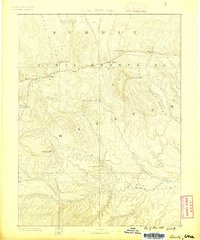
1885 · Uinta
USGS Topo · 1:250,000
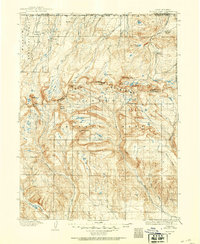
1905 · Gilbert Peak
USGS Topo · 1:125,000
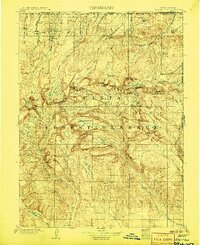
1906 · Gilbert Peak
USGS Topo · 1:125,000
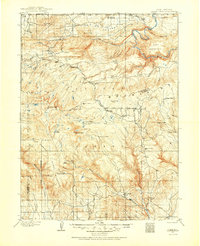
1906 · Marsh Peak
USGS Topo · 1:125,000
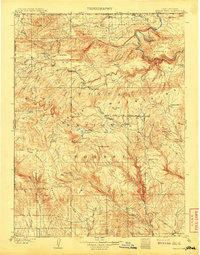
1908 · Marsh Peak
USGS Topo · 1:125,000
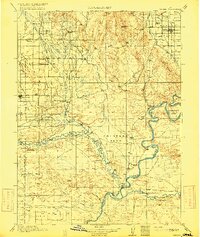
1917 · Vernal
USGS Topo · 1:125,000
1939 · Duchesne
USGS Topo · 1:125,000
1954 · Salt Lake City
USGS Topo · 1:250,000
1954 · Vernal
USGS Topo · 1:250,000