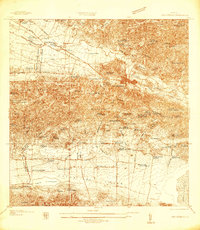
1937 Map of San German
USGS Topo · Published 1937About this map
San German serves as the focal point of this 1930s survey, illustrating the dense concentration of educational and religious institutions that defined the town during this era. The Polytechnic Institute occupies a prominent campus just west of the town center, while numerous rural schools like Escuela Manuel F Rossy and Escuela Jose de Diego are scattered throughout the surrounding hills of Los Peñones. The agricultural landscape is clearly delineated by traditional landholdings, including Hacienda Luisa and Hacienda Desengaño, which emphasize the sugar-driven economy centered around Central Eureka.
Find a feature on this map
79 named features on this map. Tap any name to fly to it.
Don’t see what you’re looking for? This feature index may not catch every label — zoom into the map to look around manually.
Map Details
Editions of this 1937 San German Map
This is the sole edition of this map. No revisions or reprints were ever made.
Other maps of this area
1935 · Puerto Real
USGS Topo · 1:25,000
1937 · Sabana Grande
USGS Topo · 1:25,000
1937 · Puerto Real
USGS Topo · 1:25,000
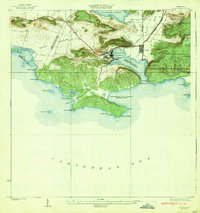
1938 · Guanica
USGS Topo · 1:30,000
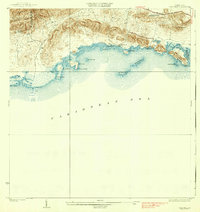
1938 · Parguera
USGS Topo · 1:30,000
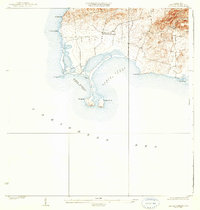
1938 · Cabo Rojo
USGS Topo · 1:30,000
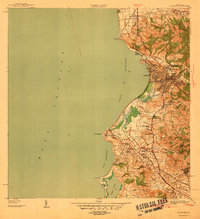
1939 · Mayaguez
USGS Topo · 1:30,000
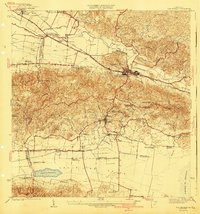
1941 · San German
USGS Topo · 1:30,000
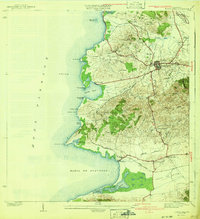
1941 · Puerto Real
USGS Topo · 1:30,000
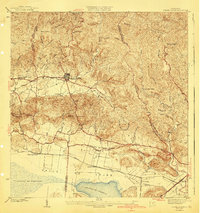
1941 · Sabana Grande
USGS Topo · 1:30,000