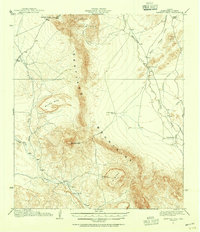
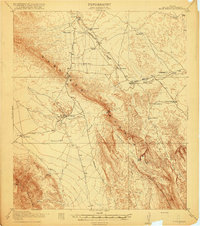
1917 Map of Santiago Peak
USGS Topo · Published 1955About this map
Santiago Peak anchors this West Texas landscape, serving as a prominent landmark for early twentieth-century ranchers and travelers in Brewster County. Surveyed by Arthur Stiles and others during the First World War era, the map reveals a remote pastoral economy defined by isolated outposts like the Combs Cattle Co Ranch and Schuler Ranch. The terrain is dominated by the dramatic spine of the Santiago Mountains and the Cochran Mountains, where intermittent drainages like Chalk Draw and Maravillas Creek dictate the movement of livestock and people. Historic tracks leading to Terlingua and to Boquillas connect these scattered operations, illustrating the vast distances and geographical barriers, such as Black Mtn and E Mesa, that shaped life in the Big Bend region before modern development.
Find a feature on this map
22 named features on this map. Tap any name to fly to it.
Don’t see what you’re looking for? This feature index may not catch every label — zoom into the map to look around manually.
Map Details
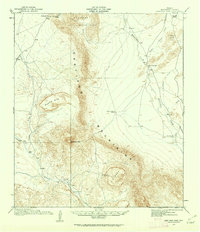
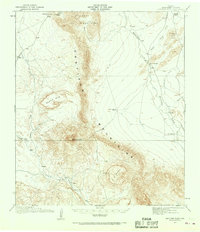
Editions of this 1917 Santiago Peak Map
3 editions found
Other maps of this area
1895 · Alpine
USGS Topo · 1:125,000
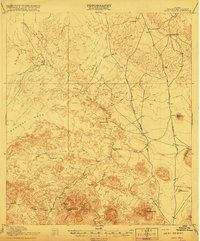
1917 · Agua Fria
USGS Topo · 1:62,500
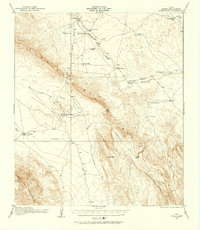
1917 · Bone Spring
USGS Topo · 1:62,500
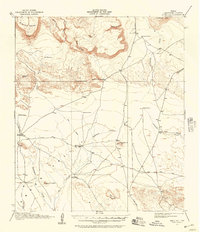
1917 · Buck Hill
USGS Topo · 1:62,500
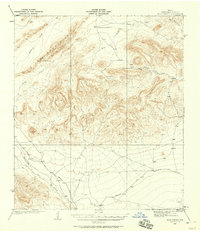
1917 · Hood Spring
USGS Topo · 1:62,500
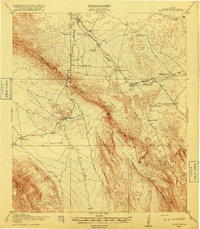
1918 · Bone Spring
USGS Topo · 1:125,000
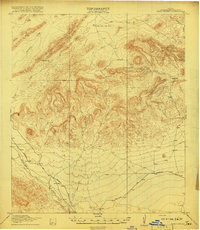
1918 · Hood Spring
USGS Topo · 1:62,500
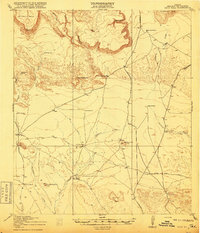
1918 · Buck Hill
USGS Topo · 1:62,500
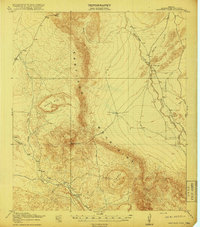
1918 · Santiago Peak
USGS Topo · 1:62,500
1918 · Bone Spring
USGS Topo · 1:62,500