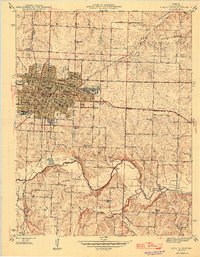
1946 Map of Sedalia East
USGS Topo · Published 1946About this map
Sedalia serves as a major railroad and industrial hub in the mid-1940s, dominated by the sprawling infrastructure of the Missouri Pacific and Missouri Pacific Shops. The city's growth is anchored by its intersection with the Georgetown Branch and the M K T Depot, which fueled the expansion of neighborhoods containing numerous educational and civic institutions like Smith Cotton High Sch and Liberty Park. The landscape outside the city grid transitions into the rolling terrain of the Flat Creek valley, where the rural economy is marked by scattered one-room schoolhouses like Striped College Sch and Maplewood Sch. The map reveals a deeply established social fabric through its varied spiritual and memorial sites, ranging from the Hebrew Cem and Crown Hill Cem near the city center to the remote Goodwill Chapel and Pleasant Hill Ch further south.
Find a feature on this map
53 named features on this map. Tap any name to fly to it.
Don’t see what you’re looking for? This feature index may not catch every label — zoom into the map to look around manually.
Map Details
Editions of this 1946 Sedalia East Map
2 editions found
Other maps of this area
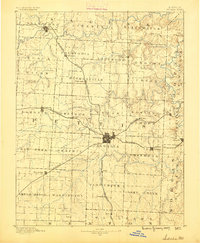
1887 · Sedalia
USGS Topo · 1:125,000
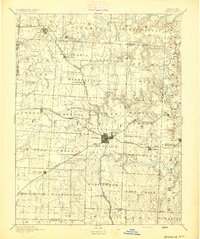
1894 · Sedalia
USGS Topo · 1:125,000
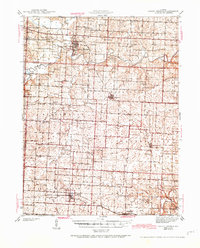
1939 · Sweet Springs
USGS Topo · 1:62,500
1940 · Sweet Springs
USGS Topo · 1:62,500
1941 · Sweet Springs
USGS Topo · 1:62,500
1944 · Sedalia West
USGS Topo · 1:24,000
1944 · Sedalia East
USGS Topo · 1:24,000
1945 · Sweet Springs
USGS Topo · 1:62,500
1946 · Sedalia West
USGS Topo · 1:24,000
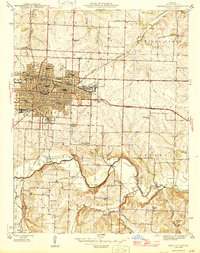
1946 · Sedalia East
USGS Topo · 1:24,000