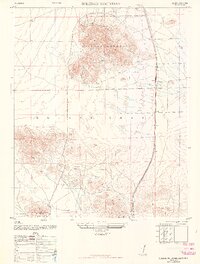
1947 Map of Soledad Mountain
USGS Topo · Published 1947About this map
The Soledad Mountain massif rises sharply from the floor of the western Mojave Desert, its slopes marked by a high concentration of hard-rock mining operations following the post-Depression gold boom. This 1947 survey, compiled from aerial photography, captures the peak of extraction at sites like the Golden Queen Mine, Bobtail Mines, and Tip Top Mine. Further south, the Tropico Mine sits near the base of the foothills, illustrating the industrial footprint on this arid landscape. The eastern edge of the quadrangle is defined by the logistics of the era, where the Southern Pacific railroad corridor supports a string of desert sidings and small settlements, including Gloster, Actis, and Ansel. These points of transit served as vital links for moving ore and supplies between the isolated mining camps and larger regional centers.
Find a feature on this map
12 named features on this map. Tap any name to fly to it.
Don’t see what you’re looking for? This feature index may not catch every label — zoom into the map to look around manually.
Map Details
Editions of this 1947 Soledad Mountain Map
This is the sole edition of this map. No revisions or reprints were ever made.
Other maps of this area
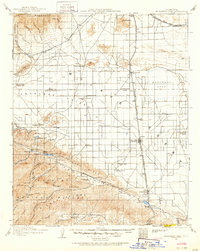
1915 · Elizabeth Lake
USGS Topo · 1:125,000
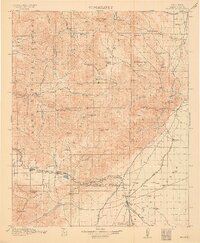
1915 · Mojave
USGS Topo · 1:125,000
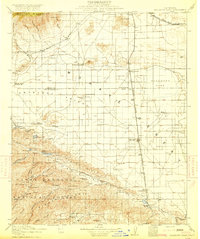
1917 · Elizabeth Lake
USGS Topo · 1:125,000
1943 · Rosamond
USGS Topo · 1:62,500
1943 · Tehachapi
USGS Topo · 1:62,500
1943 · Mojave
USGS Topo · 1:62,500
1943 · Willow Springs
USGS Topo · 1:62,500
1947 · Rosamond
USGS Topo · 1:24,000
1947 · Plano
USGS Topo · 1:24,000
1947 · Mojave
USGS Topo · 1:24,000