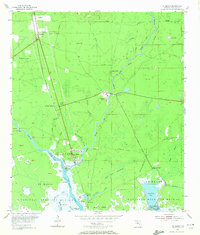
1954 Map of St Marks
USGS Topo · Published 1972About this map
St Marks and the surrounding Wakulla County landscape are defined by the convergence of the Wakulla River and the St Marks River during the mid-1950s. This survey records the significant maritime and rail infrastructure of the era, including the Seaboard Air Line railroad terminating near the Oil Tanks and various landings such as Strickland Landing and Fig Tree Landing. A sense of the region's deep colonial and early American history is preserved in the Site of Old Fort St Marks, located at the strategic point where the rivers meet. Further inland, the map shows a network of family-named cemeteries like Stewart Cem, Mays Cem, and Magnolia Cem, alongside the New Mt Zion Ch. Much of the southern coastal reaches are protected within the St Marks National Wildlife Refuge, featuring intricate waterways like Salt Pan Creek and the East River Pool.
Find a feature on this map
50 named features on this map. Tap any name to fly to it.
Don’t see what you’re looking for? This feature index may not catch every label — zoom into the map to look around manually.
Map Details
Editions of this 1954 St Marks Map
2 editions found
Other maps of this area
1940 · Tallahassee
USGS Topo · 1:62,500
1940 · Arran
USGS Topo · 1:62,500
1942 · Tallahassee
USGS Topo · 1:62,500
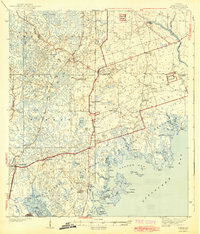
1943 · Arran
USGS Topo · 1:62,500
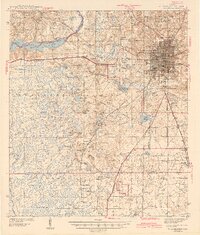
1943 · Tallahassee
USGS Topo · 1:62,500
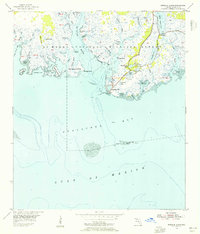
1954 · Sprague Island
USGS Topo · 1:24,000
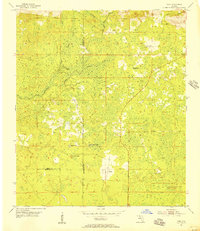
1954 · Cody
USGS Topo · 1:24,000
1954 · Woodville
USGS Topo · 1:24,000
1954 · St. Marks NE
USGS Topo · 1:24,000
1954 · St. Marks
USGS Topo · 1:24,000