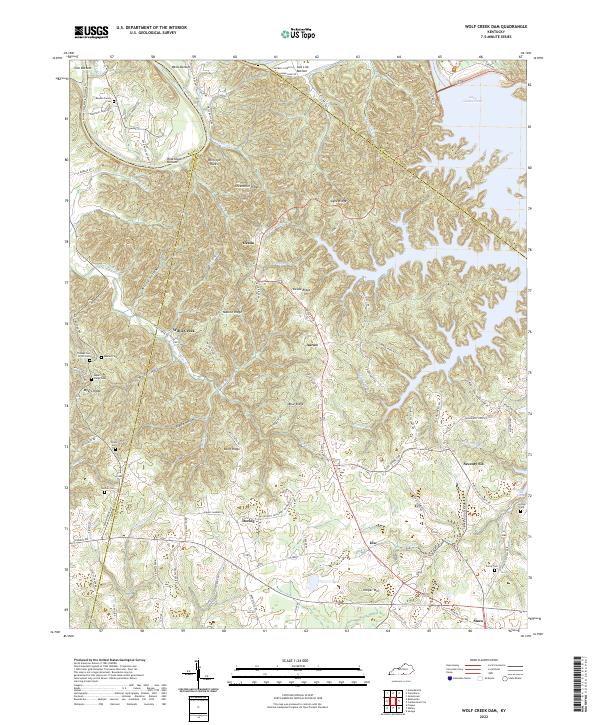
2022 Map of Wolf Creek Dam
USGS Topo · Published 2022About this map
The Cumberland River carves a deep path through the borderlands of Clinton, Russell, and Cumberland counties, defining a landscape of high ridges and fertile bottoms. The lower elevations are marked by named floodplains like Irish Bottom, Wells Bottom, and Salt Lick Bottom, which sit in contrast to the prominent Greenbrier Ridge and Harper Mtn. This topography dictated the settlement of small communities such as Desda, Willis Creek, and Seventy-Six, often situated at the intersection of winding ridge roads and creeks like Big Willis Cr and Indian Cr.
Find a feature on this map
103 named features on this map. Tap any name to fly to it.
Don’t see what you’re looking for? This feature index may not catch every label — zoom into the map to look around manually.
Map Details
Editions of this 2022 Wolf Creek Dam Map
This is the sole edition of this map. No revisions or reprints were ever made.
Other maps of this area
1924 · Lillydale
USGS Topo · 1:62,500
1926 · Lillydale
USGS Topo · 1:62,500
1929 · Lillydale
USGS Topo · 1:62,500
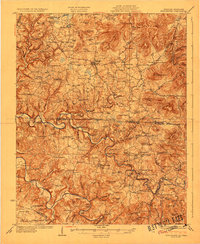
1929 · Byrdstown
USGS Topo · 1:62,500
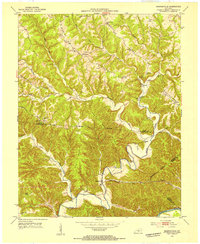
1953 · Amandaville
USGS Topo · 1:24,000
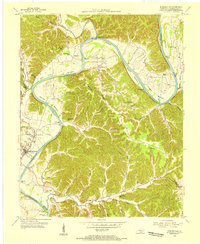
1953 · Burkesville
USGS Topo · 1:24,000
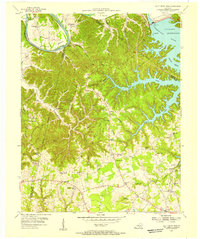
1953 · Wolf Creek Dam
USGS Topo · 1:24,000
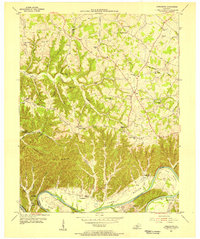
1953 · Creelsboro
USGS Topo · 1:24,000
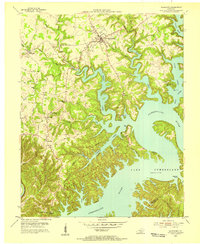
1953 · Jamestown
USGS Topo · 1:24,000
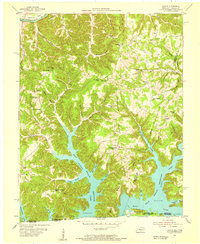
1954 · Frogue
USGS Topo · 1:24,000