Old Maps of Coffee County, Alabama
Explore 113 old maps of Coffee County, spanning from 1942 to today. These high-resolution historic maps reveal how streets, neighborhoods, landmarks, and natural features evolved over time — perfect for genealogy, metal detecting, research, and local history exploration.
What you can do with these maps:
- See how Coffee County changed over time: Compare historical maps to modern-day views to trace roads, homesites, rail lines & more.
- View detailed metadata: Each map includes creators, publishers, year, scale, and archive source.
- Overlay maps with satellite & LiDAR: Visualize the past alongside modern tools to explore terrain & human change.
- Trusted historical sources: Maps sourced from the USGS, Library of Congress, and other archives.
- Access maps your way: View online, download high-res files, or order prints for personal or research use.
Start exploring old maps of Coffee County to uncover forgotten places, hidden landmarks, and the deep history beneath your feet.
Coffee County, AL maps
(113)- 1942 Map of Enterprise
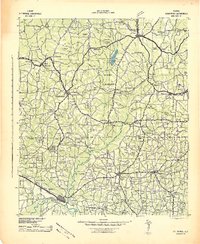 1942 Enterprise1942 Print · USGSSoutheast Alabama is shown at a wartime turning point, just as Camp Rucker was established. Family historians can trace hundreds of rural landmarks, from Oak Grove Ch & Sch to the New Prospect Ch.
 - 1948 Map of Brundidge, 1965 Print
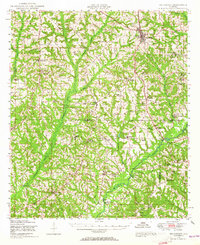 1948 Brundidge1965 Print · USGSSoutheast Alabama in the late 1940s is defined by a network of small farming communities and country churches connected by the Atlantic Coast Line. Genealogists and researchers can trace family-named landmarks such as Lowerys Mill, Coles Bridge, and Hamilton Crossroads School.
 - 1950 Map of Enterprise
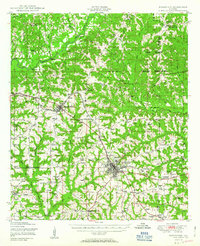 1950 Enterprise1950 Print · USGSEnterprise and the surrounding Wiregrass region of South Alabama appear here in the mid-century, defined by small farming communities and a growing military presence. Local historians can trace family-named landmarks like Dismukes Bridge and Weeks Bridge or locate rural landmarks such as Old Tabernacle Church and Shiloh School.2 unique versions available
 - 1950 Map of Brundidge
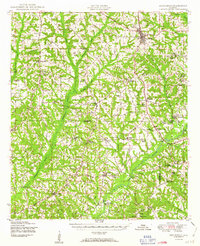 1950 Brundidge1950 Print · USGSBrundidge and the surrounding hills of Pike and Coffee Counties are captured here at mid-century as the local rail and river economy flourished. Genealogists can locate family landmarks like Arcus Cemetery or rural hubs such as Tarentum, Roeton, and Rocky Head.
 - 1953 Map of Andalusia, 1965 Print
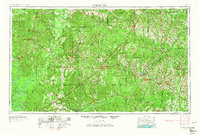 1953 Andalusia1965 Print · USGSSouth Alabama in the mid-twentieth century remains a land of pine forests and river-fed settlements. You can trace the vital rail corridors of the Louisville & Nashville and locate regional centers such as Andalusia, Brewton, and Monroeville.3 unique versions available
 - 1953 Map of Dothan, 1966 Print
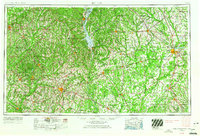 1953 Dothan1966 Print · USGSSoutheast Alabama and Southwest Georgia are captured during a period of massive hydraulic and military expansion in the mid-fifties. Genealogists and historians can trace rural landmarks like Antioch Church and School, the Andrew Jackson Monument, and the early footprint of Fort Rucker Military Reservation.3 unique versions available
 - 1954 Map of Dothan
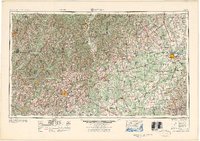 1954 Dothan1954 Print · USGSSoutheast Alabama and Southwest Georgia are seen here in the mid-fifties, during a decade of military expansion and rural transition. Genealogists can trace the location of country schools like Little Zion School or the grounds of Kolomoki Mounds State Park.
 - 1955 Map of Dothan
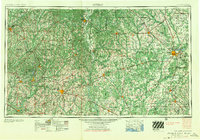 1955 Dothan1955 Print · USGSSoutheast Alabama and Southwest Georgia are captured here in the mid-fifties, showing a landscape of river-port history and growing military bases. Researchers can trace rural life via the Andrew Jackson Monument, Bauxite mines, and the Central of Georgia RR.
 - 1957 Map of Andalusia
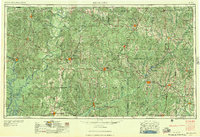 1957 Andalusia1957 Print · USGSSouthern Alabama in the mid-1950s was a landscape defined by timbered stretches and the rhythmic flow of the Alabama River. Researchers can trace the legacy of the rail era through the Central of Georgia tracks and the storied river bluffs at Choctaw Bluff.
 - 1957 Map of Geneva, 1958 Print
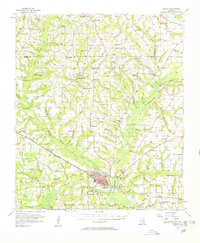 1957 Geneva1958 Print · USGSGeneva and its surrounding river valleys come into focus in the late 1950s, showing a landscape defined by the Choctawhatchee River and rural industry. Genealogists and local historians can trace family-named sites like McDuffie Cem, Vanlandingham Mill, and the Consolation Cem.2 unique versions available
 - 1957 Map of Bellwood, 1959 Print
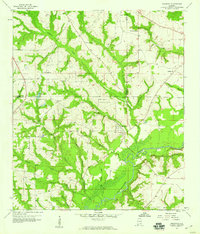 1957 Bellwood1959 Print · USGSGeneva and Coffee County in the late fifties show a landscape defined by the Choctawhatchee River and its rural creek valleys. Researchers can trace ancestral locations near Bellwood, Consolation Cem, and numerous country churches like Cool Springs Ch.2 unique versions available
 - 1957 Map of Coffee Springs, 1959 Print
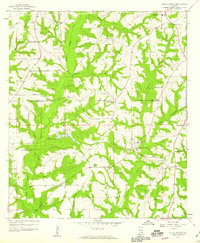 1957 Coffee Springs1959 Print · USGSCoffee Springs and the surrounding Wiregrass countryside appear here in the late fifties, showing a rural landscape shaped by winding creeks and country crossroads. Researchers can locate family landmarks like Mt Pleasant Sch, Moore Cem, and the community at Central City.3 unique versions available
 - 1960 Map of Brundidge SE, 1963 Print
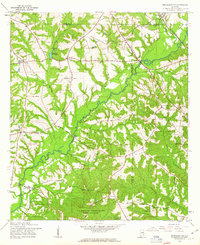 1960 Brundidge SE1963 Print · USGSCoffee County during the early sixties is captured here as a landscape of river-bottom farms and small rail stops. Genealogists can trace the rural communities of Tennille, Roeton, and Java alongside historic landmarks like Prestwood Millpond and New Tabernacle Ch.2 unique versions available
 - 1960 Map of Victoria, 1963 Print
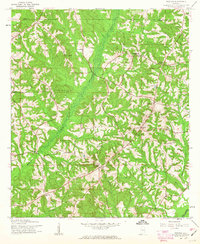 1960 Victoria1963 Print · USGSDeep in the Alabama wiregrass region during the early sixties, this area shows a landscape defined by the winding Whitewater Creek and the Pea River. Researchers can trace rural life through landmarks like Lowry Mill, Clowers Crossroads, and Bethlehem Ch.2 unique versions available
 - 1960 Map of Goodman, 1963 Print
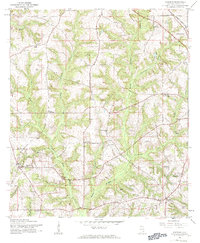 1960 Goodman1963 Print · USGSCoffee County at the dawn of the sixties shows a patchwork of small farms and rural crossroads before the modern expansion of Enterprise. Genealogists can locate family landmarks like Wooten Chapel, Bethany Ch, and the Meadow Lawn Memorial Park cemetery.2 unique versions available
 - 1960 Map of New Brockton, 1963 Print
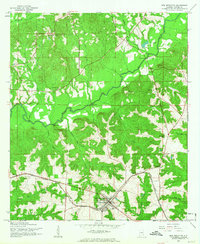 1960 New Brockton1963 Print · USGSCoffee County as it appeared in the early sixties was a landscape of river-bank crossings and railroad hamlets. Trace the heritage of the Pea River valley through New Brockton and Clintonville, locating family landmarks like McGee Cem and Shiloh Ch.2 unique versions available
 - 1960 Map of Enterprise NE, 1963 Print
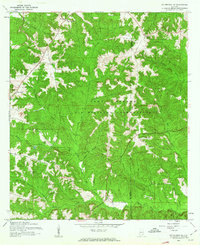 1960 Enterprise NE1963 Print · USGSIn the Alabama Wiregrass during the early sixties, the landscape was defined by rural church communities and the expansion of the military. Genealogists and historians can trace family sites at Wesley Chapel Cem, Old Tabernacle Ch, and the Fort Rucker U. S. Military Reservation boundary.2 unique versions available
 - 1960 Map of Enterprise, 1964 Print
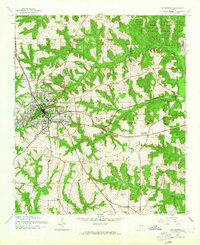 1960 Enterprise1964 Print · USGSEnterprise and the surrounding Wiregrass region are shown here in the early 1960s as military and rail infrastructure shaped the landscape. Researchers can trace rural life through landmarks like Macedonia Cem, Level Plains Crossroads, and the Atlantic Coast Line.3 unique versions available
 - 1962 Map of Victoria
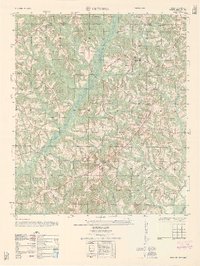 1962 Victoria1962 Print · USGSThe borderlands of Coffee and Pike County come alive in the early sixties, showing a landscape defined by small farms and country churches. Researchers can locate the Victoria School, the site of Lowry Mill, and local landmarks like Clowers Crossroads.
 - 1962 Map of Enterprise NE
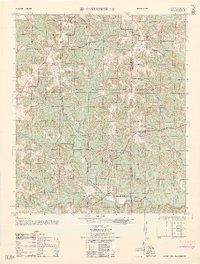 1962 Enterprise NE1962 Print · USGSSoutheast Alabama is captured in the early sixties as rural farm communities met the expansion of the military. Genealogists and local historians can trace the sites of El Bethel Church, the Ebenezer Cemetery, and old landmarks like the fire tower.
 - 1962 Map of Brundidge SE
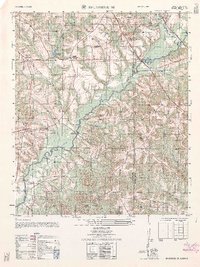 1962 Brundidge SE1962 Print · USGSCoffee and Dale counties in the early sixties reveal a landscape of river-bottom farms and emerging military installations. Genealogists can trace family roots through sites like Tennille, Roeton, and the Mt Olive Cemetery.
 - 1968 Map of Danleys Crossroads, 1970 Print
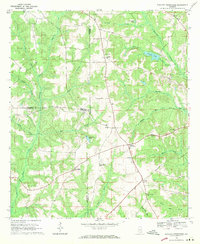 1968 Danleys Crossroads1970 Print · USGSSoutheast Alabama in the late sixties reveals a landscape of tight-knit farming communities at the junction of Coffee, Crenshaw, and Covington Counties. Researchers can trace family history through local landmarks like Mt Olive Ch, Danleys Crossroads, and Friendship.2 unique versions available
 - 1968 Map of Ino, 1970 Print
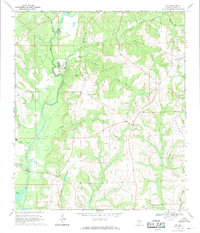 1968 Ino1970 Print · USGSCoffee County life in the late 1960s centered on the Pea River and its rural settlements. Researchers can trace family roots through sites like Ino, Mt Gilead Ch, and Phillips Cem, or locate infrastructure like the Elba Dam.2 unique versions available
 - 1968 Map of Bluff Springs, 1970 Print
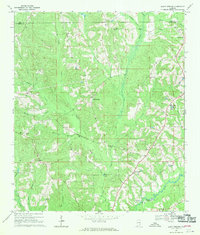 1968 Bluff Springs1970 Print · USGSSoutheast Alabama in the late sixties reveals a landscape of rural family churches and creek-side settlements along the Pike and Coffee County line. Genealogists and researchers can trace the vicinity of Bluff Springs, the historic Old Sharron Cem, and the crossings at Lewis Mill Bridge.2 unique versions available
 - 1968 Map of Sellersville, 1971 Print
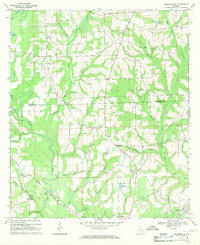 1968 Sellersville1971 Print · USGSSoutheast Alabama’s agricultural heartland is documented here in the late sixties, showcasing the rural landscape at the border of Coffee and Geneva counties. Genealogists can trace family roots through landmarks like Weeks Cem, Friendship Ch, and the small settlement of Sellersville.2 unique versions available
Showing maps 1-25 of 113
Top cities of Coffee County
Frequently asked questions
- What are the different types of historical maps available for Coffee County?
- What is the oldest map of Coffee County?
- Where can I purchase historical maps of Coffee County for my home or office?
- Where can I download high-res historical maps of Coffee County?
- Are there historical topographic maps available for Coffee County?
- Is there historical aerial imagery available for Coffee County?
- Where are historical maps of Coffee County sourced from?