1900s (20th Century) Maps of DeKalb County, Alabama
Explore 69 historic maps of DeKalb County from the 1900s (20th Century). These maps offer a rare glimpse into what life looked like during the 1900s — showing old roads, neighborhoods, homes, and landmarks that have changed or disappeared over time.
Whether you're researching your family's past, planning a metal detecting trip, or studying how DeKalb County's landscape evolved across the 1900s, these high-resolution maps are a powerful tool for exploring the history of this region.
- Focus on a specific era: All maps on this page are from the 1900s, giving you a focused view of this time period.
- See what’s changed: Compare century-old streets, trails, and buildings to today's modern landscape using overlays and satellite layers.
- Research with precision: Use these maps for genealogy, historical research, land use analysis, or educational projects.
- View, download, or print: Maps are fully viewable online in high resolution, and can be downloaded or printed for your own records.
Start exploring DeKalb County's history through authentic maps from the 1900s. This is your window into the past.
DeKalb County, AL maps
(69)- 1900 Map of Fort Payne
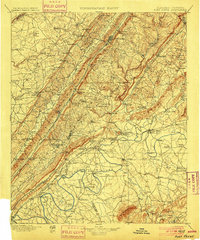 1900 Fort Payne1900 Print · USGSNortheast Alabama is defined by its deep ridges and river valleys in the late nineteenth century. Researchers can trace the era's ferry network across the Coosa River and find old family-run landmarks like Wagners Store and Santy Mills.6 unique versions available
 - 1903 Map of Gadsden
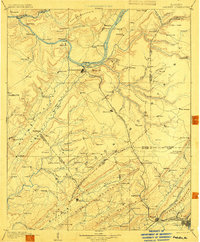 1903 Gadsden1903 Print · USGSNorthern Alabama in the late nineteenth century centers on the busy Tennessee River corridor and its surrounding ridges. Trace old family sites and transport hubs like Hillian Store, Lovelace Landing, and the Mt Zion church.4 unique versions available
 - 1936 Map of Trenton
 1936 Trenton1936 Print · USGSThe Georgia and Alabama borderlands are captured here in the mid-1930s as mountain life met the era's emerging highway and rail networks. Genealogists can locate family landmarks like Sand Mtn Academy, Hanna Cem, and the community of Rising Fawn.
 - 1936 Map of Painter
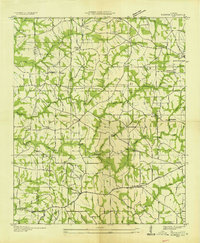 1936 Painter1936 Print · USGSDeKalb and Marshall counties are shown here during the mid-1930s, documenting a landscape of plateau farms and essential creek crossings. Genealogists can trace family roots through landmarks like Blessing Sch, Dalrymple Cem, and rural centers like Whiton and Lathamville.
 - 1936 Map of Ider
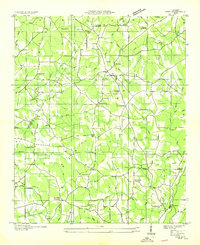 1936 Ider1936 Print · USGSThe plateau of De Kalb and Jackson counties is captured here in the mid-1930s as a network of crossroads and family farms. Local historians can trace family roots through sites like Yorks Mill, Pilgrims Home Ch, and the Fuller Cem.
 - 1936 Map of Crossville
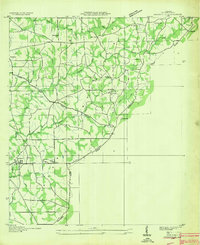 1936 Crossville1936 Print · USGSDeKalb County and the Sand Mountain area are shown here in the mid-1930s as a thriving rural community of small crossroads and family-named landmarks. Researchers can trace the locations of Orphir Sch, Friendship Ch, and early businesses like Gilbert Store.
 - 1936 Map of Flat Rock
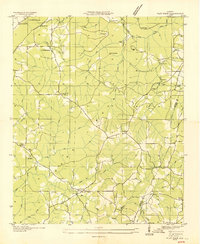 1936 Flat Rock1936 Print · USGSSand Mountain in the mid-thirties remains a landscape of high plateaus and remote community centers. Genealogists can trace family names at Smith Cem and Cooley Cem or locate the rural crossroads at Christian Home and Flat Rock.
 - 1936 Map of Dugout Valley
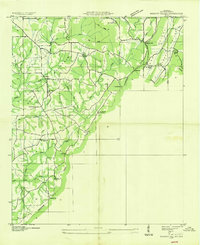 1936 Dugout Valley1936 Print · USGSDeKalb County mountain life in the mid-1930s is captured here, showing the scattered farmsteads and schools along SAND MOUNTAIN. Genealogists can locate family landmarks such as Hawkins Chapel Sch, Blackburns Store, and Mt Parron Ch tucked between the ridges.
 - 1936 Map of Rodentown
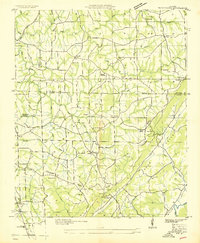 1936 Rodentown1936 Print · USGSNortheast Alabama hill country is captured here during the mid-thirties, showing the rural communities of Sand Mountain. Researchers can trace family roots through numerous local landmarks like Whitesboro, Smith Chapel, and Duck Springs Sch.
 - 1936 Map of Roden Gap
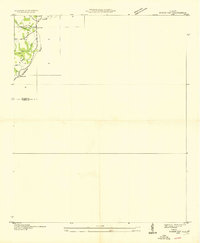 1936 Roden Gap1936 Print · USGSThe upland terrain along the DeKalb and Etowah county line is captured in the mid-1930s as the Tennessee Valley Authority began its systematic mapping. Researchers can trace rural landmarks like Wallace, Marcus Sch, and the natural pass at Roden Gap.
 - 1936 Map of Chavies
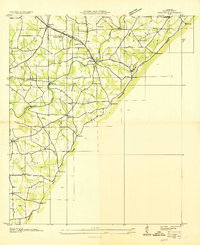 1936 Chavies1936 Print · USGSDeKalb County is captured here in the mid-1930s, showing a landscape of upland farms and mountain gaps along the Tennessee Basin Divide. Researchers can trace rural life through sites like Peeks Corner Sch, Bohannon Ford, and the many churches of Rainsville.
 - 1936 Map of Dutton
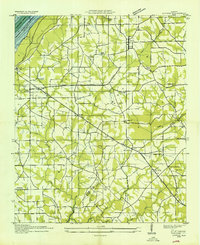 1936 Dutton1936 Print · USGSSand Mountain and the Tennessee River valley appear here in the mid-thirties just as the landscape began to change. Trace the old community footprints of Dutton and Macedonia or locate family landmarks like Happy Hill Ch and Patterson Sch.
 - 1936 Map of Sulphur Springs
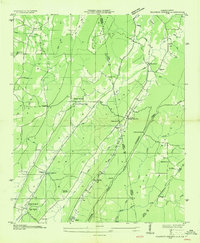 1936 Sulphur Springs1936 Print · USGSLookout Mountain and the Alabama-Georgia borderlands are captured here in the mid-1930s. Researchers can trace families near Sulphur Springs or find landmarks like Amos Mill, Battelle, and the Lookout Chapel Sch.
 - 1936 Map of Sylvania
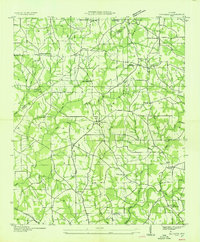 1936 Sylvania1936 Print · USGSSand Mountain's rural plateau comes to life in the mid-1930s, showing a landscape of family farms and community centers. Genealogists can trace family footprints at Bowman Crossroads, Mahan Sch, or the Dean Chapel Cem.
 - 1936 Map of Grove Oak
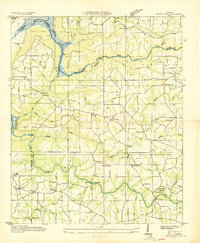 1936 Grove Oak1936 Print · USGSDeKalb and Marshall counties are captured in the mid-1930s as the Tennessee Valley Authority began transforming the river landscape. Genealogists can locate numerous rural landmarks like Prospect Ch, Old Beulah Ch, and High Falls Bridge.
 - 1936 Map of Little Falls
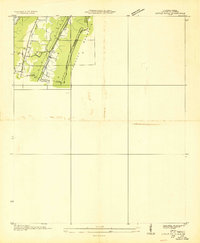 1936 Little Falls1936 Print · USGSDeKalb County, Alabama, is captured in the mid-1930s just as the Tennessee Valley Authority began modernizing the region. Researchers can trace rural life through the upland community of Violet Hill, its Violet Hill Ch, and the high ridges of Lookout Mountain.
 - 1936 Map of Henagar
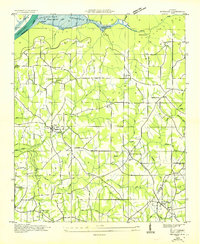 1936 Henagar1936 Print · USGSDeKalb and Jackson counties were undergoing significant change in the mid-1930s as the Tennessee Valley Authority developed the region. Researchers can locate early educational and religious sites including Chalybeate Springs Sch, Friendship Ch, and the settlement of Pisgah.
 - 1936 Map of Fyffe
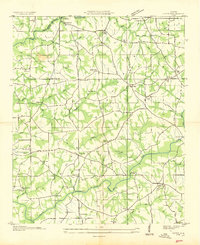 1936 Fyffe1936 Print · USGSDeKalb County and the Sand Mountain plateau are captured here during the mid-1930s, showing a landscape of tightly-knit rural communities. You can trace early creek crossings like Old Sauty Mill Bridge and locate family landmarks such as Lusk Chapel Ch and Ten Broeck.
 - 1946 Map of Trenton, 1947 Print
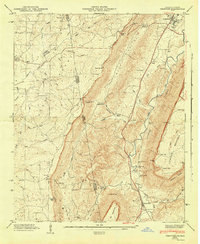 1946 Trenton1947 Print · USGSNorthwest Georgia and the Alabama borderlands are captured here in the mid-1940s, showing the ridge-and-valley landscape of Dade and DeKalb counties. Researchers can trace rural lineages through numerous landmarks like Countess Cem, Rising Fawn, and Byrds Chapel.5 unique versions available
 - 1946 Map of Flat Rock, 1947 Print
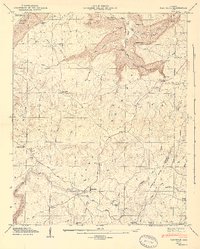 1946 Flat Rock1947 Print · USGSThe plateau of Sand Mountain in the 1940s was a landscape of remote gulfs and tight-knit rural communities. Genealogists can trace family names through the many small burial grounds and churches like Beulah Chapel, Welden Ch, and Swafford Cem.7 unique versions available
 - 1946 Map of Dugout Valley, 1956 Print
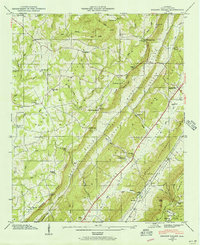 1946 Dugout Valley1956 Print · USGSDe Kalb County is shown here in the mid-1940s, where the dramatic ridges of Sand Mountain and Lookout Mountain frame a landscape of traditional farming and rail transport. Genealogists can locate family landmarks like White Hall Cem, Lea Chapel, and the rural community of Stamp.2 unique versions available
 - 1946 Map of Sulphur Springs, 1956 Print
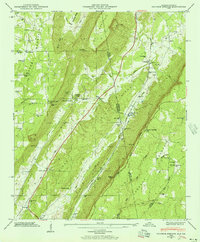 1946 Sulphur Springs1956 Print · USGSThe Alabama and Georgia state line meets along the spine of the mountains in this mid-century survey of the Little River Valley. Researchers can trace the path of the Southern Railroad through old stops like Sulphur Springs Station and find family landmarks like Pannell Cem and Amos Mill.3 unique versions available
 - 1946 Map of Ider, 1956 Print
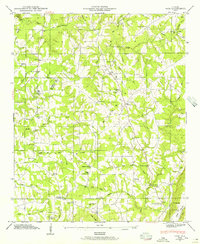 1946 Ider1956 Print · USGSDeKalb County upland life in the mid-1940s centers on the family-named crossroads of Sand Mountain. Researchers can trace rural landmarks from Yorks Mill and Freehill Sch to numerous country churches like New Bethel Ch No 2.2 unique versions available
 - 1946 Map of Valley Head, 1956 Print
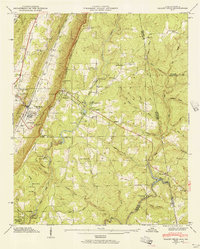 1946 Valley Head1956 Print · USGSThe Alabama-Georgia state line and the slopes of Lookout Mountain are captured here in the mid-1940s. Genealogists and researchers can locate the Southern Railroad corridor, rural schools like Moon Lake Sch, and local landmarks including Mentone and Valley Head.2 unique versions available
 - 1946 Map of Portersville, 1958 Print
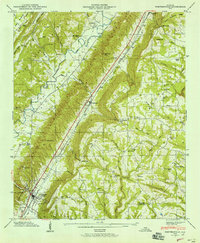 1946 Portersville1958 Print · USGSDeKalb County and the southern reaches of Lookout Mountain appear here just after the war, showing a landscape defined by parallel ridges and valley rail lines. Genealogists can locate family landmarks like Longshore Mill, McNutt Memorial Ch, and the Brown Fell Sch.2 unique versions available
Showing maps 1-25 of 69
Top cities of DeKalb County
- Fort Payne historical maps
- Rainsville historical maps
- Henagar historical maps
- Collinsville historical maps
- Crossville historical maps
- Sylvania historical maps
See more
Frequently asked questions
- What are the different types of historical maps available for DeKalb County?
- What is the oldest map of DeKalb County?
- Where can I purchase historical maps of DeKalb County for my home or office?
- Where can I download high-res historical maps of DeKalb County?
- Are there historical topographic maps available for DeKalb County?
- Is there historical aerial imagery available for DeKalb County?
- Where are historical maps of DeKalb County sourced from?