Old Maps of Greene County, Alabama for Hiking & Exploration
Hike through history with 171 historic maps of Greene County. Explore old trails, ghost towns, and forgotten backroads — perfect for outdoor adventurers and local explorers.
- Rediscover forgotten places: Map out old mining camps, roads, and footpaths that no longer exist on modern maps.
- Layer with modern tools: Combine with LiDAR or satellite views to plan hikes through historical terrain.
- Made for exploration: Popular among hikers, overlanders, and local history lovers.
Use these maps to find adventure and explore the hidden past of Greene County.
Greene County, AL maps
(171)- 1924 Map of Tuscaloosa, 1957 Print
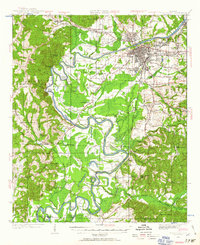 1924 Tuscaloosa1957 Print · USGSTuscaloosa and the Black Warrior River valley are seen here in the mid-1920s, showing a landscape defined by river bends and rail lines. Researchers can trace the early footprint of the University of Alabama or locate rural sites like Cribbs Mill and Little Satan Church.
 - 1926 Map of Tuscaloosa
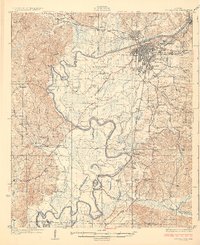 1926 Tuscaloosa1926 Print · USGSCentral Alabama's river-and-rail landscape is captured here during the mid-twenties, showcasing the growth of the University of Alabama and Tuscaloosa. Genealogists and historians can trace family-named sites like Carson Bluff Bend and rural landmarks such as Coker, Kings Ferry, and the Hull Consolidated School.3 unique versions available
 - 1927 Map of Eutaw
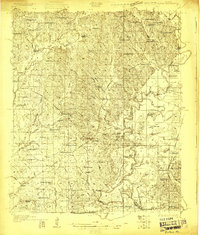 1927 Eutaw1927 Print · USGSIn the Alabama Black Belt during the late 1920s, the river and rail networks defined local life and commerce. Genealogists and researchers can trace dozens of rural landmarks, from the County Poor Farm and Rosenwald School to river crossings at Forches Ferry.
 - 1929 Map of Epes
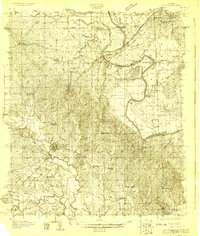 1929 Epes1929 Print · USGSThe Tombigbee and Sucarnoochee rivers meet in this 1920s portrait of West Alabama. Genealogists can trace family roots at Livingston or search for old schoolhouses like the Ezell Sch and rural landmarks like Hixon Switch.
 - 1931 Map of Eutaw
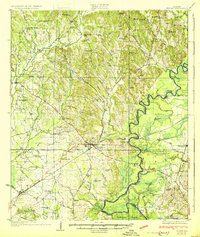 1931 Eutaw1931 Print · USGSThe Black Warrior River valley in the late twenties was a landscape of river locks and rail junctions centered on Eutaw. Local historians can trace early rural infrastructure like the Rosenwald School, the County Poor Farm, and Pinckes Ferry.4 unique versions available
 - 1932 Map of Epes
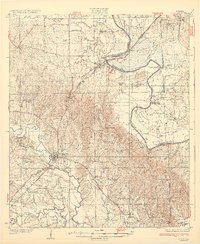 1932 Epes1932 Print · USGSSumter and Greene counties are shown in the early 1930s as the regional economy relied heavily on the Southern Railway and river transport. Genealogists can locate family landmarks like Wesley Chapel, Hillman Ferry, and the Industrial School.4 unique versions available
 - 1946 Map of Demopolis, 1947 Print
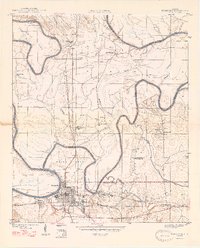 1946 Demopolis1947 Print · USGSDemopolis and its surrounding river bends are captured here in the mid-1940s, showing a landscape defined by the Tombigbee and Black Warrior rivers. Genealogists and historians can trace community roots through numerous local landmarks like Jerusalem Ch, Birdine Junior High Sch, and Merriwether Ferry.3 unique versions available
 - 1947 Map of Demopolis
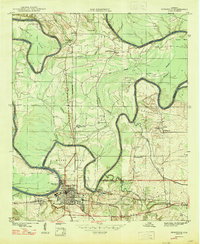 1947 Demopolis1947 Print · USGSDemopolis and its surroundings were defined by the convergence of major rivers and railroads in the late 1940s. Genealogists and historians can trace community life through sites like the Rosenwald Sch, the Arington Cem, and landmarks such as Merriwether Ferry.
 - 1947 Map of Mason Bend, 1948 Print
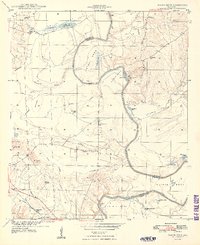 1947 Mason Bend1948 Print · USGSThe Black Warrior River winds through Greene and Hale counties in the late 1940s, defining a landscape of deep oxbows and rural quarters. Researchers can trace local genealogy through several school sites like Loyss Sch and family landmarks such as Walden Quarters and Creehill Cem.2 unique versions available
 - 1947 Map of Forkland, 1973 Print
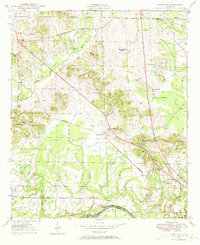 1947 Forkland1973 Print · USGSGreene County, Alabama, is documented here in the mid-1940s as the river-and-rail economy shaped local life. Researchers can trace family roots through numerous rural landmarks like Hard Bargain Cem, Thornhill Sta, and the Stonewall Taylor Sch.3 unique versions available
 - 1948 Map of Mason Bend
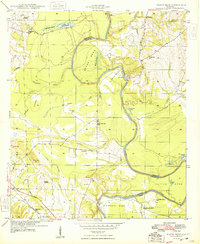 1948 Mason Bend1948 Print · USGSThe Black Warrior River winds through Greene and Hale counties in the late 1940s, revealing a landscape of river-bend settlements and labor quarters. Genealogists and historians can trace the locations of Ebenezer Sch, Walden Quarters, and Lock No 6.
 - 1948 Map of Mc Dowell, 1973 Print
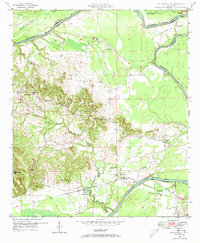 1948 Mc Dowell1973 Print · USGSSumter and Greene Counties are defined by the winding river and its early crossings in the late 1940s. Genealogists and historians can trace the foundations of rural life through landmarks like McDowell Ferry, Belmont Ch, and the Taylor Cem.3 unique versions available
 - 1949 Map of Mc Dowell
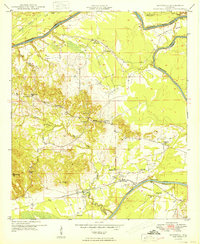 1949 Mc Dowell1949 Print · USGSSumter County in the late 1940s is defined by its deep relationship with the winding Tombigbee River. Genealogists and historians can trace family roots through numerous local landmarks like Bucks Chapel Sch, Belmont Ch, and the historic McDowell Ferry.2 unique versions available
 - 1949 Map of Forkland
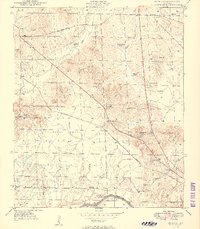 1949 Forkland1949 Print · USGSGreene County near the Tombigbee River in the late 1940s reveals a landscape of small schools and family-named landmarks. Trace the ST LOUIS SAN FRANCISCO rail line past Thornhill Sta or locate burial sites like Hard Bargain Cem.2 unique versions available
 - 1953 Map of Montgomery, 1964 Print
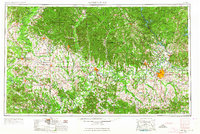 1953 Montgomery1964 Print · USGSCentral Alabama's river-and-rail corridor is mapped here in the mid-fifties, showing the vital connections between the capital and the Black Belt. Genealogists and historians can trace rail depots and crossroads from Marion Junction to Wetumpka, alongside landmarks like Craig AFB.4 unique versions available
 - 1953 Map of Birmingham, 1964 Print
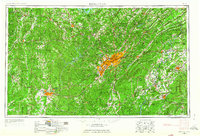 1953 Birmingham1964 Print · USGSCentral Alabama at mid-century shows a landscape defined by industrial expansion and the iron-rich ridges surrounding Birmingham. Researchers can trace the extensive rail networks of the L & N RR or locate historic federal sites like the Anniston Ordnance Depot.4 unique versions available
 - 1953 Map of Meridian, 1966 Print
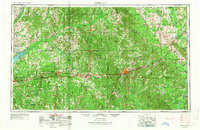 1953 Meridian1966 Print · USGSEast Central Mississippi and the Alabama borderlands are captured here during a period of steady growth and infrastructure expansion. Genealogists and historians can trace rail-town development along the Gulf Mobile & Ohio Railroad and find early settlements like Scooba, Pelahatchie, and De Kalb.2 unique versions available
 - 1953 Map of West Point, 1973 Print
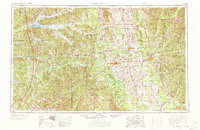 1953 West Point1973 Print · USGSNorth-Central Mississippi and the Alabama borderlands are captured here during the mid-twentieth century as new reservoirs and national forests transformed the landscape. Researchers can trace the path of the Mississippi & Skuna Valley railroad or locate old landings along the Tombigbee River and Schooner Creek.3 unique versions available
 - 1956 Map of Birmingham
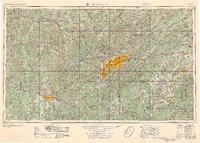 1956 Birmingham1956 Print · USGSCentral Alabama in the mid-fifties exhibits a landscape of growing cities and deep-rooted industrial corridors. Genealogists and historians can trace the development of suburban Mountain Brook or locate regional hubs like Sylacauga and Jasper.
 - 1956 Map of Montgomery
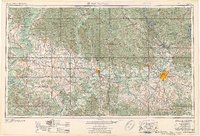 1956 Montgomery1956 Print · USGSCentral Alabama in the mid-1950s shows a landscape defined by its great river systems and a booming military aviation presence. Genealogists and historians can trace the rail corridors of the Southern Railway and locate tactical bases like Maxwell AFB and Craig AFB.
 - 1957 Map of Birmingham
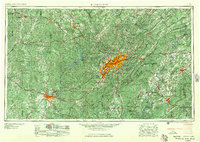 1957 Birmingham1957 Print · USGSNorth-Central Alabama in the mid-fifties is an industrial powerhouse centered on the steel valleys and sprawling iron ridges. Genealogists and historians can trace the rail-linked growth of Birmingham and Tuscaloosa, or locate rural landmarks like Talladega College and the Anniston Ordnance Depot.
 - 1957 Map of Meridian
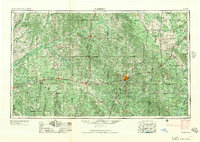 1957 Meridian1957 Print · USGSEast Central Mississippi and parts of Western Alabama come alive in the mid-1950s, centered on the transit hub of Meridian. Researchers can trace old rail lines like the Illinois Central and find historic sites such as the Choctaw Indian Reservation and Roosevelt State Park.
 - 1957 Map of Montgomery
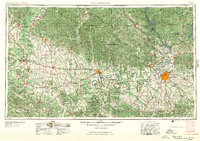 1957 Montgomery1957 Print · USGSCentral Alabama in the mid-fifties is defined by the winding Alabama River and a strategic network of military bases and rail lines. Trace family roots in Montgomery and Selma, or locate landmarks like Craig AFB and the State Capitol before the interstate era.
 - 1958 Map of West Point
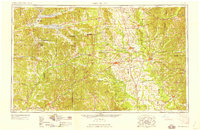 1958 West Point1958 Print · USGSNortheastern Mississippi and western Alabama are shown in the late 1950s, highlighting a region defined by its river-and-rail economy. Researchers can trace family roots through numerous settlements like Artesia and Vardaman or explore the corridor of the Tombigbee River.
 - 1963 Map of West Point
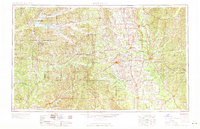 1963 West Point1963 Print · USGSEastern Mississippi and western Alabama are captured in the early sixties as industrial centers and rail lines connected the Black Prairie to the hills. Genealogists and historians can trace family-named watercourses and the early footprints of Starkville, Columbus, and the Noxubee National Wildlife Refuge.2 unique versions available
Showing maps 1-25 of 171
Top cities of Greene County
Frequently asked questions
- What are the different types of historical maps available for Greene County?
- What is the oldest map of Greene County?
- Where can I purchase historical maps of Greene County for my home or office?
- Where can I download high-res historical maps of Greene County?
- Are there historical topographic maps available for Greene County?
- Is there historical aerial imagery available for Greene County?
- Where are historical maps of Greene County sourced from?