Old Maps of Bayou La Batre, Alabama for Academic Research
Study the evolution of Bayou La Batre with 25 high-resolution historic maps. Whether you're teaching, researching, or modeling changes in land use, these maps provide essential visual documentation of urban, environmental, and geographic change.
- Analyze long-term change: Track patterns in development, transportation, and natural features.
- Ideal for environmental or urban studies: Support academic projects with primary historical map data.
- Use in the classroom or lab: Educators and researchers rely on these maps to bring historical context to life.
These maps are a powerful tool for teaching, research, and visualizing how Bayou La Batre has changed over the decades.
Bayou La Batre, AL maps
(25)- 1921 Map of Grand Bay
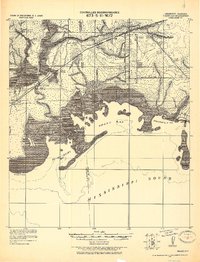 1921 Grand Bay1921 Print · USGSThe Mississippi and Alabama borderlands meet at the Gulf Coast during the early twentieth century, showing a landscape of tidal marshes and emerging rail towns. Genealogists and historians can trace the early footprints of Pecan, Orange Grove, and the shoreline Oyster factory.
 - 1921 Map of Delchamps
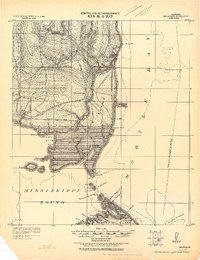 1921 Delchamps1921 Print · USGSCoastal Mobile County comes alive in this early twentieth-century survey of the bays and sounds before modern development. Genealogists and historians can trace family-named settlements like Delchamps and Prosser, or locate maritime landmarks such as the Oyster Factory and the Mobile & Ohio RR.
 - 1941 Map of Cedar Point
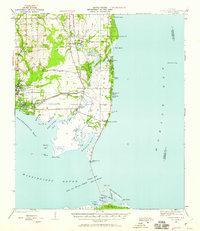 1941 Cedar Point1941 Print · USGSCoastal Mobile County is shown here just before the mid-century, from the fishing docks of Bayou La Batre to the shores of Dauphin Island. Researchers can trace the path of the G M and O railroad or locate old landings at Mon Louis and Alabama Port.2 unique versions available
 - 1943 Map of Cedar Point
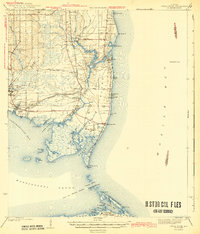 1943 Cedar Point1943 Print · USGSThe Alabama Gulf Coast was a hub of maritime trade and seafood harvesting in the early 1940s. Trace the path of the G M and O (Abandoned) railroad near Bayou La Batre or locate coastal settlements like Alabama Port and Mon Louis.4 unique versions available
 - 1943 Map of Grand Bay
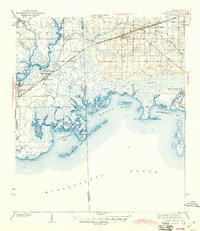 1943 Grand Bay1943 Print · USGSCoastal Alabama and Mississippi are captured here in the early 1940s, showing the vital rail-and-water networks of the Gulf. Genealogists and researchers can trace family lands near Bayou La Batre, the Orange Lake Sch, or the maritime settlement at Coden.2 unique versions available
 - 1953 Map of Mobile, 1968 Print
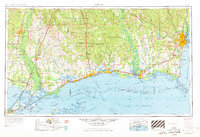 1953 Mobile1968 Print · USGSThe Gulf Coast comes alive in this mid-century survey, from the streets of Mobile to the marshes of New Orleans. Trace family roots in coastal towns like Pass Christian and Bayou La Batre or locate military landmarks including Keesler AFB.3 unique versions available
 - 1956 Map of Coden, 1957 Print
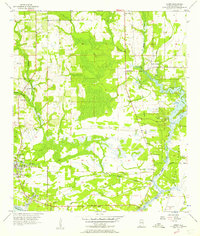 1956 Coden1957 Print · USGSThe Alabama coast in the mid-1950s is captured here, from the bustling waterfront of Bayou La Batre to the famous Bellingrath Gardens. Researchers can trace old family sites and transport routes through Coden, St Pauls Ch, and an Old Railroad Grade.3 unique versions available
 - 1957 Map of Mobile
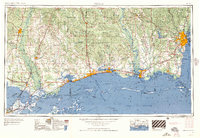 1957 Mobile1957 Print · USGSThe Gulf Coast in the mid-1950s reveals a bustling corridor of rail-and-river commerce connecting Alabama to Louisiana. Genealogists and historians can trace old settlements and military hubs from Keesler Afb to the coastal reaches of Ship Island and Bogalusa.3 unique versions available
 - 1958 Map of Grand Bay, 1959 Print
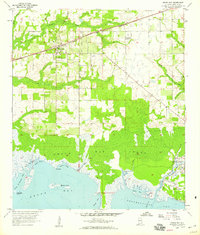 1958 Grand Bay1959 Print · USGSCoastal Mobile County is shown here in the late fifties, where the railroad and the Gulf shoreline shaped local life. Genealogists and historians can trace the inland settlement of Grand Bay, the St Elmo Landing Field, and the fishing waters of Bayou La Batre.3 unique versions available
 - 1958 Map of Grand Bay, 1959 Print
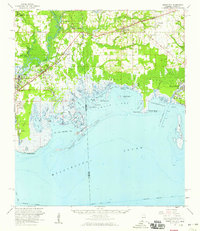 1958 Grand Bay1959 Print · USGSThe coastal borderlands of Alabama and Mississippi come alive in the late fifties, where rail and river networks meet the Gulf. Genealogists and local historians can trace family-named sites like Dees Cem and Kivisto Cem or explore the working waterfronts of Bayou La Batre and Moss Point.2 unique versions available
 - 1960 Map of Mobile
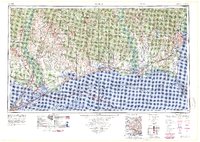 1960 Mobile1960 Print · USGSThe Gulf Coast at the dawn of the sixties shows a landscape of busy ports, military airbases, and barrier islands. Trace the rail lines of the Louisville & Nashville through BILOXI and Pascagoula or find family history in towns like Bayou La Batre and Poplarville.
 - 1963 Map of Mobile
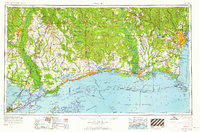 1963 Mobile1963 Print · USGSThe Gulf Coast at the dawn of the sixties shows a thriving maritime and military corridor from Louisiana to Alabama. Genealogists and historians can trace rail lines like the Louisville & Nashville RR and find landmarks from Brookley AFB to Fort Morgan.
 - 1965 Map of Mobile
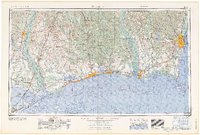 1965 Mobile1965 Print · USGSThe Gulf Coast at mid-century reveals a landscape of expanding ports and vital military installations from Louisiana to Alabama. Genealogists and historians can trace the growth of Biloxi, Pascagoula, and Mobile, alongside the sprawling De Soto National Forest.
 - 1982 Map of Biloxi
 1982 Biloxi1982 Print · USGSThe Mississippi and Alabama coastlines are captured in the early eighties as industrial hubs and wildlife refuges shaped the shoreline. Trace maritime and military history through Fort Morgan, Keesler Air Force Base, and the barrier islands of Gulf Islands National Seashore.2 unique versions available
 - 1984 Map of Mobile
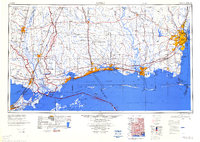 1984 Mobile1984 Print · USGSThe Gulf Coast at the height of the mid-eighties shows a landscape of rapid industrial growth and military significance. Researchers can trace the sprawling rail lines of the Illinois Central Gulf RR, locate the NASA Test Facility, or study the barrier island chain from Cat Island to Petit Bois Island.3 unique versions available
 - 2011 Map of Coden, 2011 Print
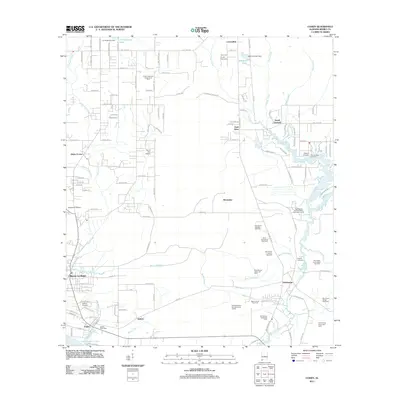 2011 Coden2011 Print · USGSThe Mobile County shoreline comes to life in the early 2000s, showing the deep-rooted maritime and industrial character of coastal Alabama. Researchers can trace family history through sites like the Catholic Cemetery or locate old community hubs in Bayou La Batre, Coden, and Delchamps.
 - 2011 Map of Grand Bay, 2011 Print
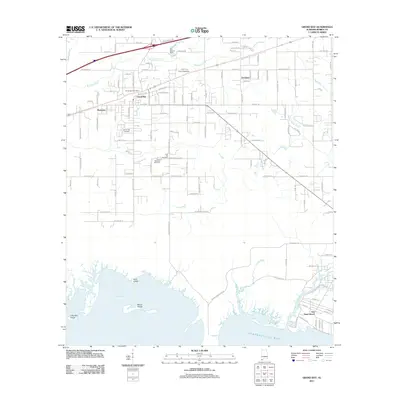 2011 Grand Bay2011 Print · USGSCoastal Mobile County comes alive in this early 21st-century survey of the Grand Bay area and its tidal marshlands. Genealogists and local historians can trace family locations near the Grand Bay Post Office or find records at Pine McGrew Cemetery and San Souci Beach.
 - 2014 Map of Coden, 2014 Print
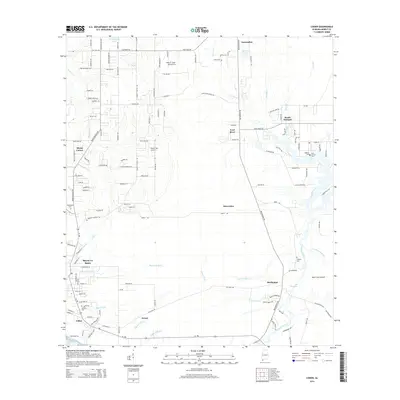 2014 Coden2014 Print · USGSThe Alabama Gulf Coast comes into focus in this study of the bayous and wetlands south of Mobile. Genealogists and historians can trace the roads connecting Bayou La Batre to Coden, locating several community burial grounds like Oddfellows Cem and Cold Springs Cem.
 - 2014 Map of Grand Bay, 2014 Print
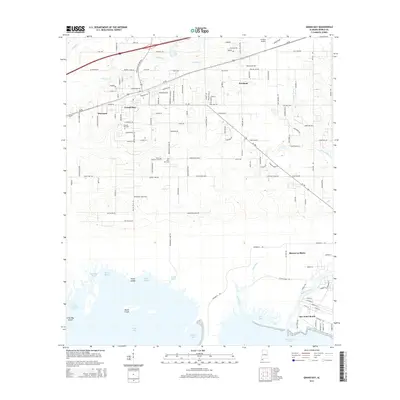 2014 Grand Bay2014 Print · USGSCoastal Mobile County is shown here in the mid-2010s, capturing the transition from the rail-centered interior to the tidal marshes of the Gulf. Researchers can trace local heritage at Grand Bay Cem or follow the winding Little River down to San Souci Beach.
 - 2018 Map of Grand Bay, 2018 Print
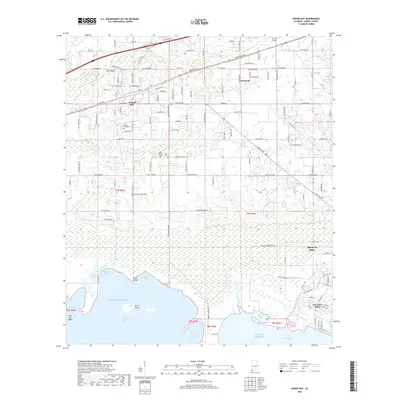 2018 Grand Bay2018 Print · USGSThe Alabama coast near the Mississippi border shows its modern maritime character and rail-linked interior in the late 2010s. Researchers can trace family history at Piner McGrew Cem or explore the coastal reach of Bayou La Batre and San Souci Beach.
 - 2018 Map of Coden, 2018 Print
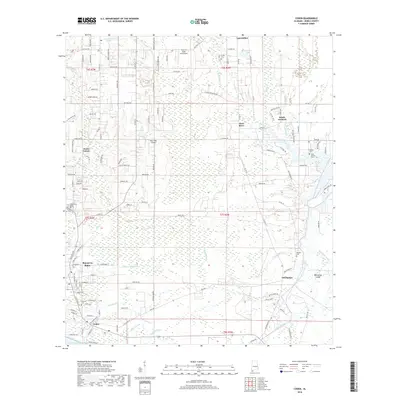 2018 Coden2018 Print · USGSMobile County's coastal fishing villages and marshy inlets are captured here in the late twenty-teens. Trace local family history and maritime routes through the streets of Bayou La Batre, the historic Catholic Cem, and the waterways of Mon-Louis Island.
 - 2020 Map of Coden, 2020 Print
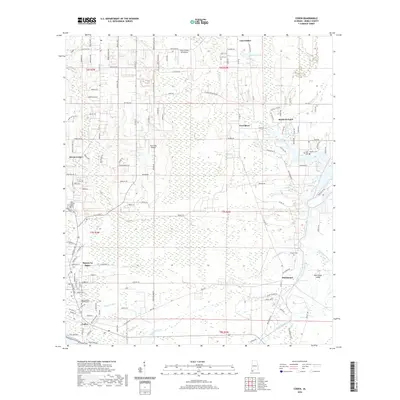 2020 Coden2020 Print · USGSCoastal Mobile County is shown here in the modern era, where the traditional seafood hubs of Bayou La Batre and Coden meet the Gulf. Researchers can locate numerous local burial sites like English Cem and Cold Springs Cem or trace the winding course of the West Fowl River.
 - 2021 Map of Grand Bay, 2021 Print
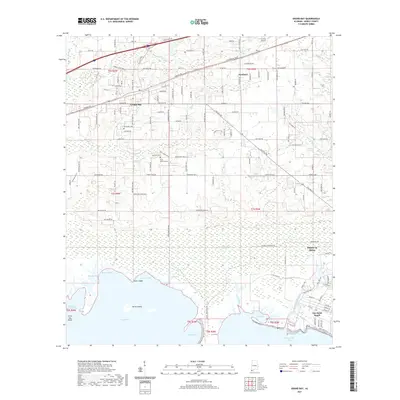 2021 Grand Bay2021 Print · USGSCoastal Mobile County's intersection of marshland and maritime industry is documented here in the early twenty-first century. Researchers can locate family burial sites at Grand Bay Cem or trace the winding shoreline from Bayou La Batre to San Souci Beach.
 - 2024 Map of Coden, 2024 Print
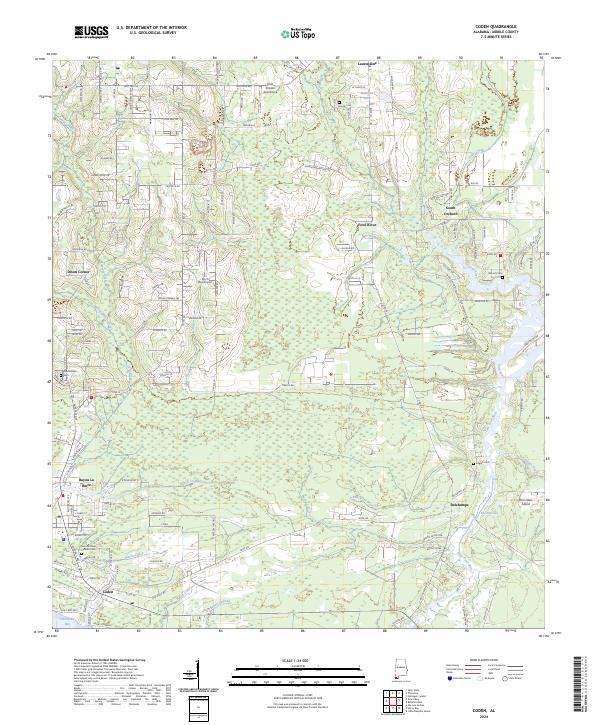 2024 Coden2024 Print · USGSMobile County’s coastline comes into focus in this contemporary survey of the Bayou La Batre area. Genealogists and historians can trace family plots at Odd Fellows Cem and English Cem, or follow the winding reach of the Fowl River to The Narrows.
 - 2024 Map of Grand Bay, 2024 Print
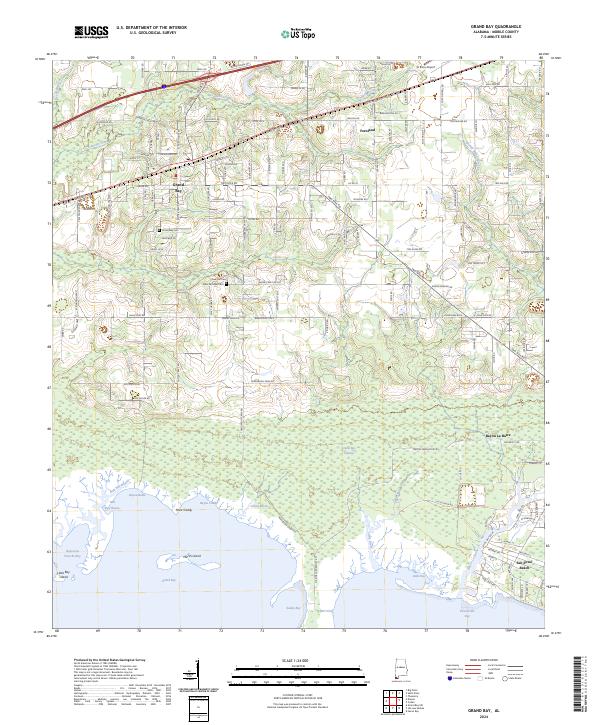 2024 Grand Bay2024 Print · USGSThe Alabama coast comes into focus in the 2020s, showcasing the intricate wetlands and settlements of Mobile County. Researchers can locate family landmarks like Grand Bay Cemetery and trace the tidal reaches of Bayou La Batre and Point Caddy.
End of results
Showing maps 1-25 of 25
Top cities near Bayou La Batre
- Mobile historical maps
- Tillmans Corner historical maps
- Moss Point historical maps
- Theodore historical maps
- Grand Bay historical maps
- Dauphin Island historical maps
See more
Frequently asked questions
- What are the different types of historical maps available for Bayou La Batre?
- What is the oldest map of Bayou La Batre?
- Where can I purchase historical maps of Bayou La Batre for my home or office?
- Where can I download high-res historical maps of Bayou La Batre?
- Are there historical topographic maps available for Bayou La Batre?
- Is there historical aerial imagery available for Bayou La Batre?
- Where are historical maps of Bayou La Batre sourced from?