1950s Maps of Manokotak, Alaska
Explore 7 historic maps of Manokotak from the 1950s. These maps offer a rare glimpse into what life looked like during the 1950s — showing old roads, neighborhoods, homes, and landmarks that have changed or disappeared over time.
Whether you're researching your family's past, planning a metal detecting trip, or studying how Manokotak's landscape evolved across the 1950s, these high-resolution maps are a powerful tool for exploring the history of this region.
- Focus on a specific era: All maps on this page are from the 1950s, giving you a focused view of this time period.
- See what’s changed: Compare century-old streets, trails, and buildings to today's modern landscape using overlays and satellite layers.
- Research with precision: Use these maps for genealogy, historical research, land use analysis, or educational projects.
- View, download, or print: Maps are fully viewable online in high resolution, and can be downloaded or printed for your own records.
Start exploring Manokotak's history through authentic maps from the 1950s. This is your window into the past.
Manokotak, AK maps
(7)- 1951 Map of Dillingham, 1952 Print
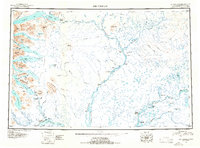 1951 Dillingham1952 Print · USGSDillingham and the Bristol Bay river systems are captured here in the early fifties, showing a remote landscape linked by water and seasonal camps. Researchers can trace early settlements and post offices at New Stuyahok, Ekwok, and Kvichak.
 - 1951 Map of Goodnews, 1953 Print
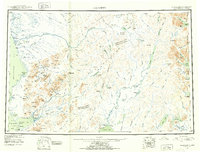 1951 Goodnews1953 Print · USGSSouthwest Alaska’s coastal bays and mountain lakes are captured here just after the war, showing the area's shifting settlement patterns. Trace the coastline from Kwinhagak to Goodnews, or locate interior landmarks like the Placer Mine and Nuyakuk Lake.6 unique versions available
 - 1951 Map of Nushagak Bay, 1955 Print
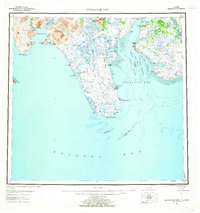 1951 Nushagak Bay1955 Print · USGSBristol Bay's eastern coastline is captured here in the early fifties, highlighting the salmon fishing and canning hubs of the era. Genealogists and historians can trace coastal settlements like Ekuk and Nushagak or locate the Igushik (Site).7 unique versions available
 - 1952 Map of Nushagak Bay D-3, 1955 Print
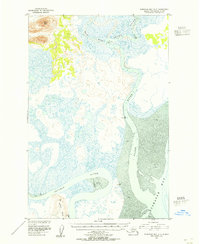 1952 Nushagak Bay D-31955 Print · USGSNushagak Bay and its tidal river systems are documented here in the early fifties, capturing the remote coastal geography of the Alaska Territory. Researchers can trace the industrial footprint of the isolated Cannery and locate landmarks like Acorn Peak and Igushik Ridge.
 - 1952 Map of Nushagak Bay D-4, 1955 Print
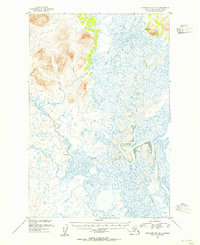 1952 Nushagak Bay D-41955 Print · USGSThe Nushagak Bay region in the early fifties was a landscape of winding waterways and isolated coastal settlements. Researchers can trace the path of the Igushik River and locate historic community sites at Manokotak and Tuklung.
 - 1952 Map of Dillingham A-8, 1963 Print
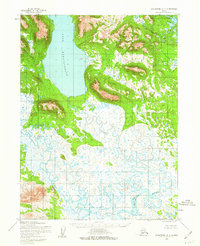 1952 Dillingham A-81963 Print · USGSSouthwest Alaska during the early fifties reveals a landscape defined by the shifting waters of Lake Nunavaugaluk. Researchers can trace the meandering Snake River and locate remote Cabins along the water's edge.2 unique versions available
 - 1954 Map of Dillingham, 1967 Print
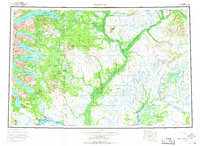 1954 Dillingham1967 Print · USGSBristol Bay's interior river systems are mapped here in the mid-1950s, showing a landscape defined by water and winter travel. Researchers can trace remote settlements like Koliganek and Levelock or find family landmarks along the Nushagak River and Lake Aleknagik.3 unique versions available
End of results
Showing maps 1-7 of 7
Frequently asked questions
- What are the different types of historical maps available for Manokotak?
- What is the oldest map of Manokotak?
- Where can I purchase historical maps of Manokotak for my home or office?
- Where can I download high-res historical maps of Manokotak?
- Are there historical topographic maps available for Manokotak?
- Is there historical aerial imagery available for Manokotak?
- Where are historical maps of Manokotak sourced from?