1940s Maps of Ash Fork, Arizona
Explore 6 historic maps of Ash Fork from the 1940s. These maps offer a rare glimpse into what life looked like during the 1940s — showing old roads, neighborhoods, homes, and landmarks that have changed or disappeared over time.
Whether you're researching your family's past, planning a metal detecting trip, or studying how Ash Fork's landscape evolved across the 1940s, these high-resolution maps are a powerful tool for exploring the history of this region.
- Focus on a specific era: All maps on this page are from the 1940s, giving you a focused view of this time period.
- See what’s changed: Compare century-old streets, trails, and buildings to today's modern landscape using overlays and satellite layers.
- Research with precision: Use these maps for genealogy, historical research, land use analysis, or educational projects.
- View, download, or print: Maps are fully viewable online in high resolution, and can be downloaded or printed for your own records.
Start exploring Ash Fork's history through authentic maps from the 1940s. This is your window into the past.
Ash Fork, AZ maps
(6)- 1947 Map of Ash Fork, 1957 Print
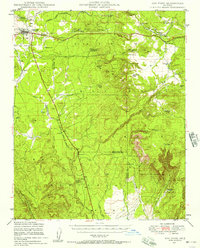 1947 Ash Fork1957 Print · USGSThe high desert around Ash Fork was a vital rail and ranching corridor in the late 1940s. Genealogists and historians can trace the Atchison Topeka & Santa Fe line past Evans Ranch and remote water features like Irishman Dam.3 unique versions available
 - 1947 Map of Picacho Butte, 1958 Print
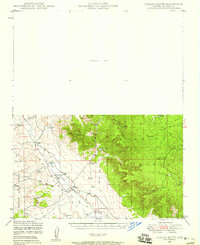 1947 Picacho Butte1958 Print · USGSArizona's high desert ranching country comes into focus in the late 1940s, showcasing the isolated cattle operations and water works of Yavapai County. Genealogists and historians can trace family-named sites like Fritsche Ranch and CV Ranch or locate early infrastructure such as Cotton Dam.2 unique versions available
 - 1948 Map of Ash Fork
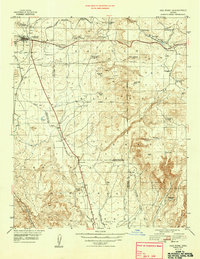 1948 Ash Fork1948 Print · USGSIn the late 1940s, the railroad town of Ashfork served as a gateway to the ranching country at the edge of the Coconino plateau. Researchers can trace the water-management history of the high desert through features like Irishman Dam, McLellan Res, and the Quarter Circle XX Ranch.
 - 1948 Map of Williams
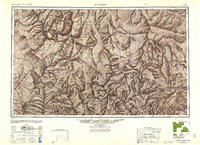 1948 Williams1948 Print · USGSNorthern Arizona is captured here during the post-war era of roadside travel and heavy rail transport along the Santa Fe line. Researchers can trace the path of Route 66 through settlements like Seligman, Valentine, and Hackberry while exploring the vast terrain of the Hualpai Indian Reservation.2 unique versions available
 - 1948 Map of Picacho Butte
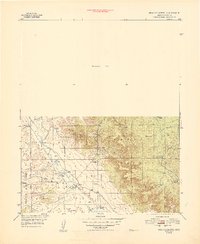 1948 Picacho Butte1948 Print · USGSArizona ranching and forest lands are captured here just after the war, showing the working landscape of Yavapai County. Researchers can trace historic property boundaries and water infrastructure at K4 Farm, CV Ranch, and Mexican Dam.
 - 1949 Map of Ash Fork
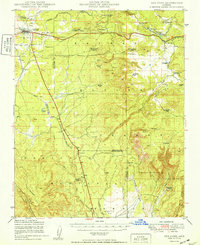 1949 Ash Fork1949 Print · USGSAsh Fork and the surrounding high plateau of northern Arizona are captured here in the late 1940s as rail and ranching dominated the landscape. Genealogists and local historians can trace family-named sites like Brown Place, Evans Ranch, and the railway junction at Sereno.
End of results
Showing maps 1-6 of 6
Top cities near Ash Fork
Frequently asked questions
- What are the different types of historical maps available for Ash Fork?
- What is the oldest map of Ash Fork?
- Where can I purchase historical maps of Ash Fork for my home or office?
- Where can I download high-res historical maps of Ash Fork?
- Are there historical topographic maps available for Ash Fork?
- Is there historical aerial imagery available for Ash Fork?
- Where are historical maps of Ash Fork sourced from?