1900s (20th Century) Maps of Ash Fork, Arizona
Explore 15 historic maps of Ash Fork from the 1900s (20th Century). These maps offer a rare glimpse into what life looked like during the 1900s — showing old roads, neighborhoods, homes, and landmarks that have changed or disappeared over time.
Whether you're researching your family's past, planning a metal detecting trip, or studying how Ash Fork's landscape evolved across the 1900s, these high-resolution maps are a powerful tool for exploring the history of this region.
- Focus on a specific era: All maps on this page are from the 1900s, giving you a focused view of this time period.
- See what’s changed: Compare century-old streets, trails, and buildings to today's modern landscape using overlays and satellite layers.
- Research with precision: Use these maps for genealogy, historical research, land use analysis, or educational projects.
- View, download, or print: Maps are fully viewable online in high resolution, and can be downloaded or printed for your own records.
Start exploring Ash Fork's history through authentic maps from the 1900s. This is your window into the past.
Ash Fork, AZ maps
(15)- 1922 Map of Williams
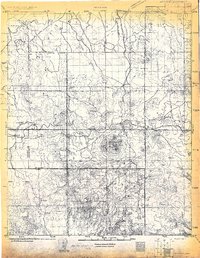 1922 Williams1922 Print · USGSNorthern Arizona's high plateau during the early 1920s reveals a landscape of forestry and rail expansion. Trace early ranger stations and small rail stops like Fairview, Meath, and the Wood Spur logging line.
 - 1947 Map of Ash Fork, 1957 Print
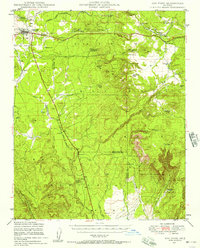 1947 Ash Fork1957 Print · USGSThe high desert around Ash Fork was a vital rail and ranching corridor in the late 1940s. Genealogists and historians can trace the Atchison Topeka & Santa Fe line past Evans Ranch and remote water features like Irishman Dam.3 unique versions available
 - 1947 Map of Picacho Butte, 1958 Print
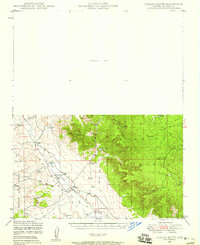 1947 Picacho Butte1958 Print · USGSArizona's high desert ranching country comes into focus in the late 1940s, showcasing the isolated cattle operations and water works of Yavapai County. Genealogists and historians can trace family-named sites like Fritsche Ranch and CV Ranch or locate early infrastructure such as Cotton Dam.2 unique versions available
 - 1948 Map of Ash Fork
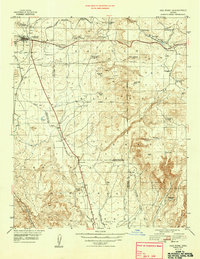 1948 Ash Fork1948 Print · USGSIn the late 1940s, the railroad town of Ashfork served as a gateway to the ranching country at the edge of the Coconino plateau. Researchers can trace the water-management history of the high desert through features like Irishman Dam, McLellan Res, and the Quarter Circle XX Ranch.
 - 1948 Map of Williams
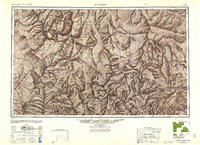 1948 Williams1948 Print · USGSNorthern Arizona is captured here during the post-war era of roadside travel and heavy rail transport along the Santa Fe line. Researchers can trace the path of Route 66 through settlements like Seligman, Valentine, and Hackberry while exploring the vast terrain of the Hualpai Indian Reservation.2 unique versions available
 - 1948 Map of Picacho Butte
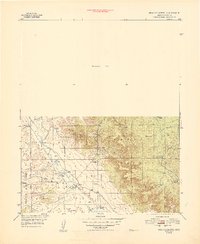 1948 Picacho Butte1948 Print · USGSArizona ranching and forest lands are captured here just after the war, showing the working landscape of Yavapai County. Researchers can trace historic property boundaries and water infrastructure at K4 Farm, CV Ranch, and Mexican Dam.
 - 1949 Map of Ash Fork
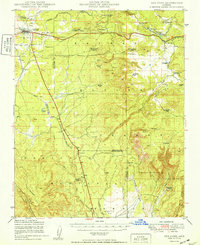 1949 Ash Fork1949 Print · USGSAsh Fork and the surrounding high plateau of northern Arizona are captured here in the late 1940s as rail and ranching dominated the landscape. Genealogists and local historians can trace family-named sites like Brown Place, Evans Ranch, and the railway junction at Sereno.
 - 1950 Map of Picacho Butte
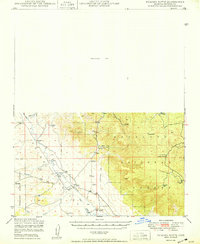 1950 Picacho Butte1950 Print · USGSYavapai County ranching and forest lands are captured here at mid-century, before modernization altered the high-desert range. Researchers can trace historic operations at the K4 Farm and CV Ranch or locate the old Stone Quarry and Mexican Dam.
 - 1954 Map of Williams, 1972 Print
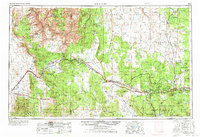 1954 Williams1972 Print · USGSThe high plateau of Northern Arizona is captured here during the mid-fifties, showing the rail-and-road corridor before the interstate era. You can trace family roots through remote railroad stops like Audley and Pica or locate early landmarks such as Grand Canyon Caverns and Frazier Wells.
 - 1956 Map of Williams, 1963 Print
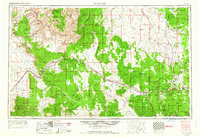 1956 Williams1963 Print · USGSNorthern Arizona in the mid-fifties reveals a landscape shaped by the Atchison Topeka and Santa Fe railroad and the iconic Highway 66. Trace the route of early travelers through Peach Springs, Seligman, and Ash Fork, or find remote sites like the Music Mountain Mine (Gold).3 unique versions available
 - 1960 Map of Williams
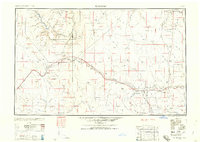 1960 Williams1960 Print · USGSNorthern Arizona in the mid-twentieth century was defined by its massive canyons and the vital rail line connecting its remote ranches. Genealogists and historians can trace the development of Peach Springs, the high-altitude Bill Williams Mountain, and isolated outposts like Diamond Bar Ranch.
 - 1961 Map of Williams
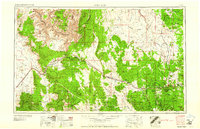 1961 Williams1961 Print · USGSNorthern Arizona in the mid-fifties reveals a high-desert landscape of rail towns and deep canyons along the Atchison Topeka and Santa Fe. Researchers can trace old Route 66 through Peach Springs, Seligman, and Ash Fork, or find remote sites like Music Mountain Mine.
 - 1973 Map of Cathedral Caves, 1976 Print
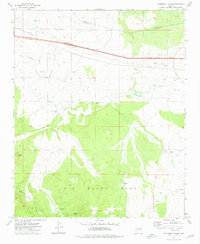 1973 Cathedral Caves1976 Print · USGSYavapai and Coconino counties are surveyed here in the early seventies, capturing a landscape of high mesas and critical water tanks. Trace the Old Railroad Grade and A T & S F lines near landmarks like Cathedral Caves and Smith Butte.
 - 1979 Map of Ash Fork
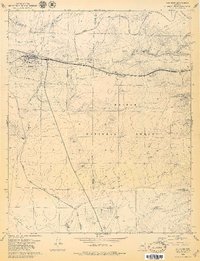 1979 Ash Fork1979 Print · USGSAsh Fork thrived as a critical railway and highway junction in the late seventies. Researchers can trace the local infrastructure and land use through the Atchison Topeka and Santa Fe line, the Cem, and numerous Cinder Pits scattered across the Kaibab National Forest.3 unique versions available
 - 1983 Map of Williams, 1984 Print
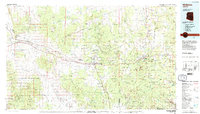 1983 Williams1984 Print · USGSThe high plateaus and ranching country of northern Arizona are captured here in the early eighties as the modern interstate era matured. Researchers can trace the rail corridor of the Atchison Topeka and Santa Fe through Ash Fork, Seligman, and the slopes of Bill Williams Mountain.3 unique versions available
End of results
Showing maps 1-15 of 15
Top cities near Ash Fork
Frequently asked questions
- What are the different types of historical maps available for Ash Fork?
- What is the oldest map of Ash Fork?
- Where can I purchase historical maps of Ash Fork for my home or office?
- Where can I download high-res historical maps of Ash Fork?
- Are there historical topographic maps available for Ash Fork?
- Is there historical aerial imagery available for Ash Fork?
- Where are historical maps of Ash Fork sourced from?