1930s Maps of Ashley County, Arkansas
Explore 11 historic maps of Ashley County from the 1930s. These maps offer a rare glimpse into what life looked like during the 1930s — showing old roads, neighborhoods, homes, and landmarks that have changed or disappeared over time.
Whether you're researching your family's past, planning a metal detecting trip, or studying how Ashley County's landscape evolved across the 1930s, these high-resolution maps are a powerful tool for exploring the history of this region.
- Focus on a specific era: All maps on this page are from the 1930s, giving you a focused view of this time period.
- See what’s changed: Compare century-old streets, trails, and buildings to today's modern landscape using overlays and satellite layers.
- Research with precision: Use these maps for genealogy, historical research, land use analysis, or educational projects.
- View, download, or print: Maps are fully viewable online in high resolution, and can be downloaded or printed for your own records.
Start exploring Ashley County's history through authentic maps from the 1930s. This is your window into the past.
Ashley County, AR maps
(11)- 1934 Map of Ingalls
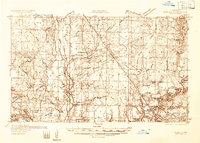 1934 Ingalls1934 Print · USGSBradley County during the mid-1930s shows a landscape of river-bottom camps and rural parish life. Researchers can trace family roots through numerous local landmarks, from Johnsville and Bogalusa Camp to country schools like Eagle Lake Sch and Broad Sch.
 - 1934 Map of Felsenthal, 1954 Print
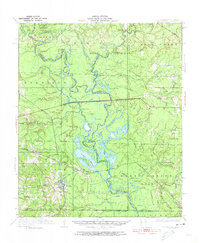 1934 Felsenthal1954 Print · USGSThe Ouachita and Saline River basins are captured here in the early 1930s as logging and rail shaped the Arkansas-Louisiana border. Trace the industrial footprint of the Logging RR and Missouri Pacific RR alongside local centers like Felsenthal, Huttig, and Smith Chapel.2 unique versions available
 - 1935 Map of Mist
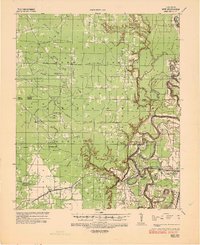 1935 Mist1935 Print · USGSSoutheastern Arkansas during the mid-1930s is revealed here as a landscape of bayous and winding timber rails. Genealogists can trace family footprints at Promised Land Ch & Sch or Grizzle Cem, and map the defunct Abandoned Logging Railroad lines.
 - 1935 Map of Wilmot, 1936 Print
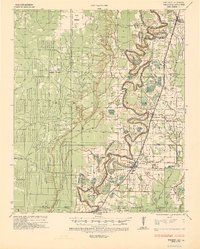 1935 Wilmot1936 Print · USGSSoutheast Arkansas in the mid-1930s shows a landscape defined by the winding Bayou Bartholomew and the growth of river-and-rail towns. Trace the river economy through Ohio Ldg, visit the Bethel Ch, or locate old school sites like Farmer Sch.3 unique versions available
 - 1936 Map of Eudora, 1943 Print
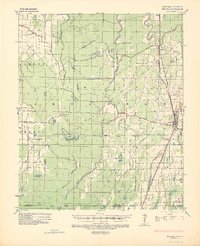 1936 Eudora1943 Print · USGSSoutheast Arkansas and northeast Louisiana are captured here in the mid-1930s, showing a landscape shaped by water management and rail transport. Researchers can trace the early energy infrastructure of the Standard Oil Pipe Line or locate rural landmarks like Holly Ridge Ch and Empire.
 - 1936 Map of Lake Village, 1949 Print
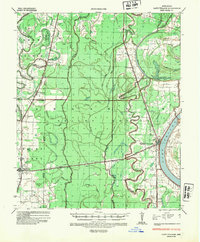 1936 Lake Village1949 Print · USGSThe Arkansas Delta in the mid-1930s is defined by its winding waterways and the rise of the Missouri Pacific railroad. Genealogists and historians can trace old settlements like Jerome, Montrose, and Hudspeth along the shores of Chicot Lake.2 unique versions available
 - 1937 Map of Felsenthal
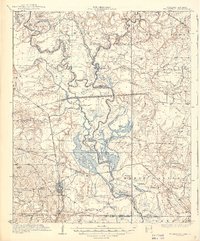 1937 Felsenthal1937 Print · USGSThe Ouachita River bottomlands come to life in the mid-1930s, showing a landscape of logging railroads and river bends. Trace family roots through Lapile Cem, Huttig, and Felsenthal, or locate vanished landmarks like Cooter Sch and Dollar Junction.
 - 1937 Map of Ingalls
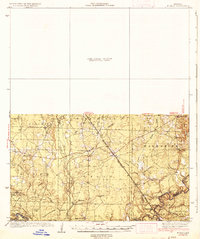 1937 Ingalls1937 Print · USGSSouth Arkansas timber and river country are mapped here in the mid-1930s as rural life centered on the Ouachita River. Researchers can locate vanished landmarks like Pine Island Landing, Thomas Sch, and the riverside Bogalusa Camp.3 unique versions available
 - 1938 Map of Felsenthal
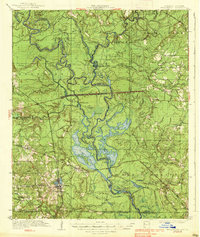 1938 Felsenthal1938 Print · USGSThe river bottoms of south Arkansas and north Louisiana are seen here in the late 1930s, showing a landscape defined by the winding Ouachita River. Genealogists and historians can locate the old townsite of Felsenthal, rural landmarks like Smiths Chapel, and the river landing at Prairie Island Ldg.
 - 1939 Map of Felsenthal
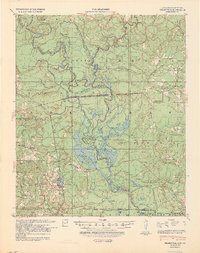 1939 Felsenthal1939 Print · USGSThe river bottomlands of southern Arkansas and northern Louisiana come alive in the late thirties as the timber industry reshapes the landscape. Researchers can trace the sprawling rail lines of the Missouri Pacific, the industrial layout of Huttig, and rural sites like Smith Chapel or the Macedonian Cem.2 unique versions available
 - 1939 Map of Ingalls, 1941 Print
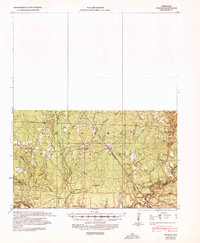 1939 Ingalls1941 Print · USGSSoutheast Arkansas in the late 1930s was a landscape of river landings and ridge-top settlements centered on the Saline River. Genealogists can trace early rural life through landmarks like Palestine Ch, Johnsville, and several family-named schoolhouses.
End of results
Showing maps 1-11 of 11
Top cities of Ashley County
- Crossett historical maps
- Hamburg historical maps
- North Crossett historical maps
- Wilmot historical maps
- Portland historical maps
- Montrose historical maps
See more
Frequently asked questions
- What are the different types of historical maps available for Ashley County?
- What is the oldest map of Ashley County?
- Where can I purchase historical maps of Ashley County for my home or office?
- Where can I download high-res historical maps of Ashley County?
- Are there historical topographic maps available for Ashley County?
- Is there historical aerial imagery available for Ashley County?
- Where are historical maps of Ashley County sourced from?