Old Maps of Crawford County, Arkansas for Hiking & Exploration
Hike through history with 168 historic maps of Crawford County. Explore old trails, ghost towns, and forgotten backroads — perfect for outdoor adventurers and local explorers.
- Rediscover forgotten places: Map out old mining camps, roads, and footpaths that no longer exist on modern maps.
- Layer with modern tools: Combine with LiDAR or satellite views to plan hikes through historical terrain.
- Made for exploration: Popular among hikers, overlanders, and local history lovers.
Use these maps to find adventure and explore the hidden past of Crawford County.
Crawford County, AR maps
(168)- 1879 Map of Cravens
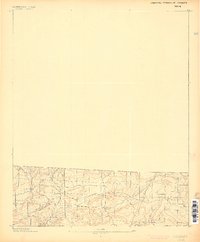 1879 Cravens1879 Print · USGSFranklin County in the late 1800s was a landscape of remote settlements and intricate waterways. Genealogists and local historians can trace the early footprints of Lone Elm and Cravens or follow the paths along Maxwell Creek and White Oak Creek.
 - 1879 Map of Fort Smith
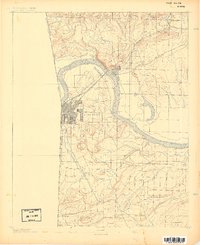 1879 Fort Smith1879 Print · USGSFort Smith and Van Buren stand at the edge of the frontier in the late eighteen-seventies, just as the railroads began to reshape the Arkansas River valley. Trace the early town plats and find rural community anchors like Zenobia P.O., Lillie, and the Ferry crossings.
 - 1887 Map of Van Buren
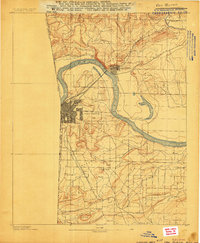 1887 Van Buren1887 Print · USGSThe Arkansas frontier meets the Indian Territory in the late nineteenth century, centered on the growing river hubs of Fort Smith and Van Buren. Genealogists and researchers can locate old post offices like Cavanaugh P.O. and trace the early routes of the Ft. Smith & Southern R. R.
 - 1887 Map of Watalula
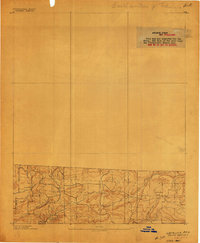 1887 Watalula1887 Print · USGSFranklin, Arkansas, is captured during the late nineteenth century in this rare, unpublished advance sheet. Genealogists and local historians can trace early homesteads near Lone Elm, Cravens, and the winding waters of Maxwell Creek.
 - 1890 Map of Fort Smith
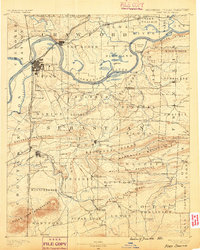 1890 Fort Smith1890 Print · USGSThe Arkansas-Indian Territory border was a landscape of rapid transition in the late nineteenth century. Genealogists and historians can trace early post offices like Jenny Lind P.O. and Oak Bower (Lavaca P.O.) or follow the path of the St. Louis and San Francisco Railroad.7 unique versions available
 - 1898 Map of Winslow #4
 1898 Winslow #41898 Print · USGSCrawford County, Arkansas, appears here during the late nineteenth century as a network of ridge-top settlements and winding creek beds. Researchers can trace the early footprints of Lancaster, Graphic, and Pleasant Hill along the banks of Mulberry Creek.
 - 1898 Map of Winslow #3
 1898 Winslow #31898 Print · USGSCrawford County's rugged upland terrain is captured in the late 1890s just as the railroad began to transform the local economy. Researchers can trace early rural settlements like Uniontown and Cedarville or follow the St. L. & S. F. R. R. along Frog Bayou.
 - 1898 Map of Winslow, 1954 Print
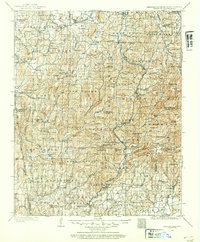 1898 Winslow1954 Print · USGSNorthwest Arkansas and the adjacent Indian Territory are captured here in the late nineteenth century as the railroad began to transform the high Ozarks. Genealogists can trace early homesteads and transport routes like the Quesenbury Road, Rheas Mill, and the mountain town of Winslow.
 - 1901 Map of Winslow
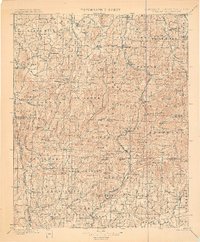 1901 Winslow1901 Print · USGSThe Boston Mountains and the Arkansas border are captured here at the close of the nineteenth century, documenting the critical rail passage through the Ozarks. Genealogists and historians can trace the Frisco Line, the historic Old Wire Road, and early settlements like Cove City and Cane Hill.5 unique versions available
 - 1906 Map of Lavaca
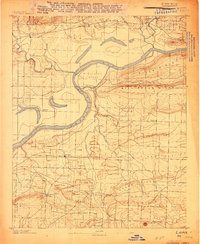 1906 Lavaca1906 Print · USGSThe Arkansas River valley comes to life in the late nineteenth century as railroads and ridges define the growing settlements of Sebastian County. Researchers can trace the original locations of Lavaca, Alma, and Vesta, or locate family-named landmarks like Butler's Knob and Arbuckles Island.
 - 1939 Map of Watalula
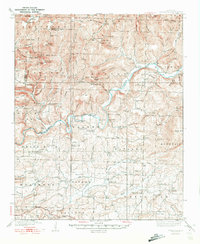 1939 Watalula1939 Print · USGSFranklin and Crawford counties are shown here in the mid-thirties as a landscape of isolated mountain ridges and river-valley settlements. Trace local history through the Wire Road, remote country churches like Low Gap Church, and family cemeteries including Brewer Cem and Harris Cem.3 unique versions available
 - 1943 Map of Fort Smith
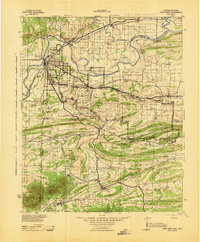 1943 Fort Smith1943 Print · USGSFort Smith and the Arkansas River valley are shown here during the height of the Second World War as the region became a major military hub. Genealogists and researchers can locate several rural schools and churches, such as St Marys School and Pleasant Ridge Church and Cem, alongside industrial sites like the Strip Mine and Smelter.
 - 1943 Map of St. Paul, 1956 Print
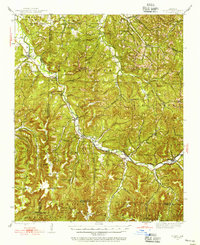 1943 St. Paul1956 Print · USGSThe upper Ozark highlands of Madison County are captured here in the mid-1940s, showing a landscape of isolated mountain schools and river-valley settlements. Researchers can trace the heritage of rural communities through landmarks like St Paul, Hazel Valley Sch, and the Riverside Cem.5 unique versions available
 - 1946 Map of St. Paul
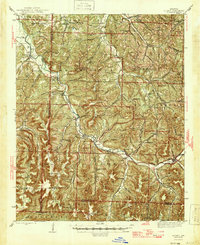 1946 St. Paul1946 Print · USGSMadison County's rugged Ozark interior is captured in the mid-forties, showing a landscape of remote hollows and mountain schools. Genealogists can trace family roots through sites like Liberty Cem, Delaney Creek Sch, and the community of St Paul.2 unique versions available
 - 1946 Map of Fort Smith
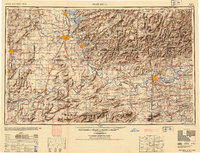 1946 Fort Smith1946 Print · USGSThe Arkansas-Oklahoma borderlands appear here in the mid-forties, as new reservoirs began to transform the river valleys. Genealogists and historians can trace rail-served towns from Muskogee to Fort Smith and locate landmarks like Camp Chaffee.
 - 1947 Map of Lavaca, 1954 Print
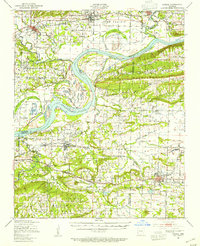 1947 Lavaca1954 Print · USGSThe Arkansas River valley in the late 1940s reveals a landscape of growing energy production and military expansion. Genealogists can trace family roots through Nixon Cem, Harmony Ch, and the streets of Charleston and Lavaca.
 - 1947 Map of Van Buren, 1954 Print
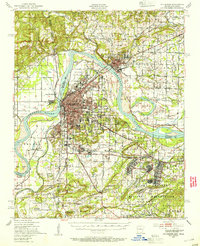 1947 Van Buren1954 Print · USGSThe riverfront cities of Fort Smith and Van Buren are shown in the late 1940s, just as the regional industrial footprint was expanding. Researchers can trace the rail lines of the Missouri Pacific or locate local landmarks like St Scholastica Academy and the Zinc Smelter.
 - 1947 Map of Fort Smith, 1966 Print
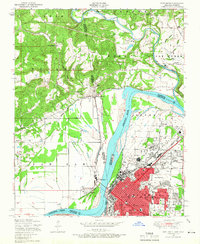 1947 Fort Smith1966 Print · USGSPost-war Arkansas and Oklahoma meet at the river bend during this era of urban expansion and rail dominance. Researchers can trace the development of FORT SMITH neighborhoods and identify local landmarks like St Boniface Church and School and Twin City Hospital.4 unique versions available
 - 1947 Map of Van Buren, 1969 Print
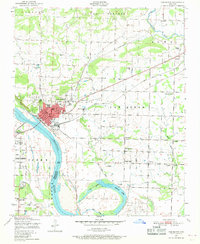 1947 Van Buren1969 Print · USGSVan Buren and the northern reaches of Fort Smith are shown in the late 1940s during a period of heavy industrial activity. Researchers can find numerous strip mines, the zinc smelter, and several country churches including Sunnyside Church.3 unique versions available
 - 1947 Map of Barling, 1971 Print
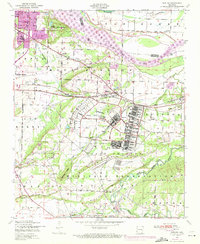 1947 Barling1971 Print · USGSThe Arkansas River valley south of Fort Smith is shown here during a period of significant military and industrial presence. Genealogists and local historians can trace the foundations of Fort Chaffee and find local landmarks like St Marys Ch and Sch, the tuberculosis sanitorium, and the settlement of Jenny Lind.2 unique versions available
 - 1947 Map of Lavaca, 1972 Print
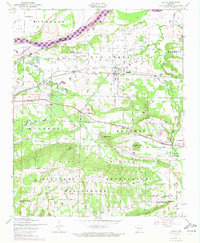 1947 Lavaca1972 Print · USGSSebastian County’s riverfront and military landscapes are captured here during the post-war transition. Genealogists and historians can trace the foundations of Lavaca, the grounds of the Fort Smith Military Reservation, and rural landmarks like Mosark Church and Red Oak Cemetery.2 unique versions available
 - 1948 Map of Mulberry, 1956 Print
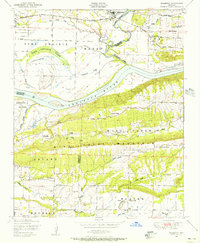 1948 Mulberry1956 Print · USGSCrawford and Franklin counties are captured here in the late 1940s as the riverfront economy shifted between timber and transit. Genealogists can locate family landmarks like Harmony Church, Pleasant View Cemetery, and the Union School along the Arkansas River.4 unique versions available
 - 1948 Map of Alma, 1971 Print
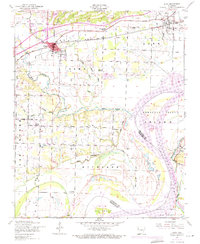 1948 Alma1971 Print · USGSCrawford County settlements and the Arkansas River valley are captured here at mid-century, just as the Ozark Reservoir began to reshape the shoreline. Genealogists can trace family landmarks like Bills Cemetery and Pleasant Home Church or locate the site of an Abandoned mine near Yoestown.2 unique versions available
 - 1951 Map of Fort Smith
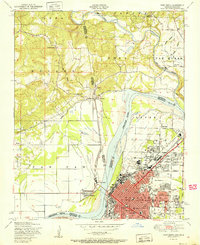 1951 Fort Smith1951 Print · USGSFort Smith and its neighboring Oklahoma borderlands are captured here during a period of significant mid-century growth and industrial connectivity. Researchers can trace the development of urban neighborhoods and rural outposts like Moffett, Dora, and Bluemouse School.2 unique versions available
 - 1951 Map of Van Buren
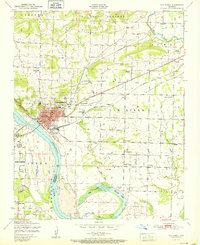 1951 Van Buren1951 Print · USGSCrawford County's river-front industry and rural settlements are captured in the late 1940s, just as the postwar era began to shape the Van Buren landscape. Genealogists and historians can locate family landmarks such as Fairview Cemetery, Wright Town, and the old Zinc smelter.2 unique versions available
Showing maps 1-25 of 168
Top cities of Crawford County
- Van Buren historical maps
- Alma historical maps
- Mulberry historical maps
- Cedarville historical maps
- Kibler historical maps
- Dyer historical maps
See more
Frequently asked questions
- What are the different types of historical maps available for Crawford County?
- What is the oldest map of Crawford County?
- Where can I purchase historical maps of Crawford County for my home or office?
- Where can I download high-res historical maps of Crawford County?
- Are there historical topographic maps available for Crawford County?
- Is there historical aerial imagery available for Crawford County?
- Where are historical maps of Crawford County sourced from?