Old Maps of Lawrence County, Arkansas
Explore 132 old maps of Lawrence County, spanning from 1932 to today. These high-resolution historic maps reveal how streets, neighborhoods, landmarks, and natural features evolved over time — perfect for genealogy, metal detecting, research, and local history exploration.
What you can do with these maps:
- See how Lawrence County changed over time: Compare historical maps to modern-day views to trace roads, homesites, rail lines & more.
- View detailed metadata: Each map includes creators, publishers, year, scale, and archive source.
- Overlay maps with satellite & LiDAR: Visualize the past alongside modern tools to explore terrain & human change.
- Trusted historical sources: Maps sourced from the USGS, Library of Congress, and other archives.
- Access maps your way: View online, download high-res files, or order prints for personal or research use.
Start exploring old maps of Lawrence County to uncover forgotten places, hidden landmarks, and the deep history beneath your feet.
Lawrence County, AR maps
(132)- 1932 Map of Strawberry
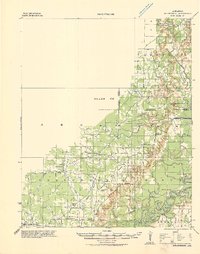 1932 Strawberry1932 Print · USGSThe river bottoms of Northeast Arkansas are captured in the early 1930s, showing the intersection of the Strawberry River and Black River. Researchers can locate historic landmarks like the Pruitts Mill Site, Buck Cem, and local schools including Cord Sch.
 - 1932 Map of Walnut Ridge
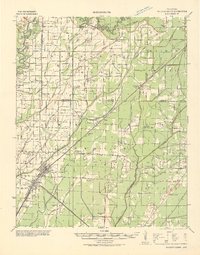 1932 Walnut Ridge1932 Print · USGSLawrence and Randolph counties come alive in the early thirties at the critical rail junction of Walnut Ridge. Genealogists and researchers can trace dozens of rural landmarks, from the Old Walnut Ridge Sch and Hoxie High Sch to local crossings like Indian Ford.
 - 1934 Map of Powhatan
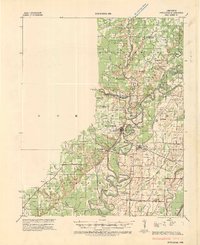 1934 Powhatan1934 Print · USGSLawrence and Randolph counties are mapped here in the early 1930s, showing a river-dependent landscape tied to the Black River. Researchers can trace old ferry crossings like Gibson Ferry and family-named landmarks such as Whitlow Cem and Lauratown.
 - 1935 Map of Powhatan
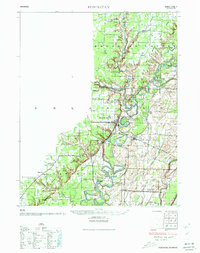 1935 Powhatan1935 Print · USGSThe confluence of the Black and Spring Rivers comes alive in the mid-1930s, documenting a time when river ferries and rail travel defined Lawrence County life. Genealogists can locate family landmarks like Lauderdale Ch Sch & Cem, Gibson Ferry, and the landing at Sissons Ld.4 unique versions available
 - 1935 Map of Sedgwick, 1936 Print
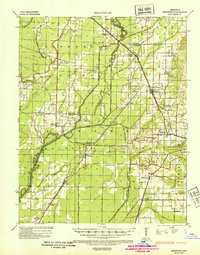 1935 Sedgwick1936 Print · USGSLawrence and Craighead counties are shown here during a period of extensive drainage and rural expansion in the mid-1930s. Genealogists can trace family roots through numerous small landmarks like Three Way Inn, Fifty Six Sch, and Herman Ch & Cem.2 unique versions available
 - 1935 Map of Alicia, 1936 Print
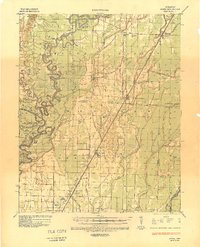 1935 Alicia1936 Print · USGSThe Black River bottomlands of the 1930s are captured here during a period of transition from river landings to rail and highway transit. Researchers can locate numerous family-named landmarks and vanished schools such as Clover Bend Sch, Vandy Cem, and the Old Martin Mill Place.3 unique versions available
 - 1935 Map of Strawberry, 1936 Print
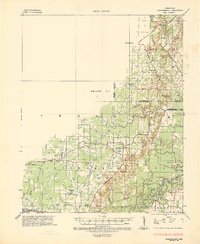 1935 Strawberry1936 Print · USGSNortheast Arkansas in the mid-1930s shows a landscape of upland ridges and river bottomlands at the junction of four counties. Researchers can trace rural family life through many churchyards and schools, from Sulphur Rock up to the Pruitte Mill Site and Saffell.
 - 1935 Map of Walnut Ridge, 1947 Print
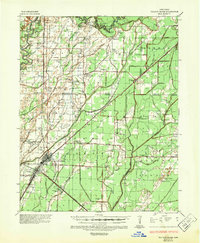 1935 Walnut Ridge1947 Print · USGSWalnut Ridge and Hoxie serve as a vital railroad crossroads during the mid-thirties, where the St. Louis-San Francisco and Missouri Pacific lines meet. Researchers can trace rural family roots through landmarks like Gum Stump Ch & Sch, Whitaker Cem, and the old settlement at Lesterville.2 unique versions available
 - 1940 Map of Gainesville, 1942 Print
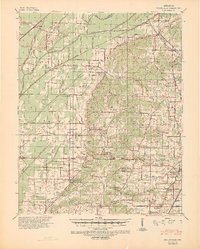 1940 Gainesville1942 Print · USGSGreene County was defined by its ridge and river bottomlands in the early 1940s, as rural communities thrived along the local railroads. Genealogists can trace family names through dozens of landmarks like Jones Ridge Cem, St Johns Ch & Cem, and Greene Co High Sch.2 unique versions available
 - 1941 Map of Strawberry, 1946 Print
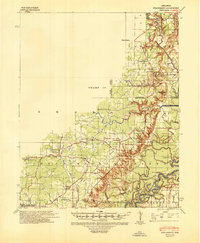 1941 Strawberry1946 Print · USGSThe rural river valleys of northeast Arkansas are shown here during the early 1940s, highlighting a landscape of small schools and post offices. Genealogists can trace family roots through landmarks like Saffell Post Office, Buck Cem, and Harmony Sch.
 - 1953 Map of Memphis, 1966 Print
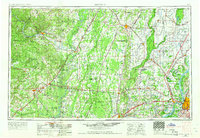 1953 Memphis1966 Print · USGSEastern Arkansas and the Memphis riverfront are shown here during the mid-century period of regional growth and river management. Local historians can trace the paths of the Chicago Rock Island & Pacific RR through Forrest City or locate river landmarks like President's Island.3 unique versions available
 - 1955 Map of Strawberry, 1956 Print
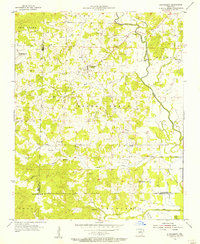 1955 Strawberry1956 Print · USGSThe Arkansas Ozark foothills come alive in the mid-fifties, centered on the Strawberry settlement and its rural surrounds. Genealogists can trace a wealth of family history through local landmarks like Willmuth Cem, Mt Zion Ch, and Saffell.2 unique versions available
 - 1956 Map of Memphis
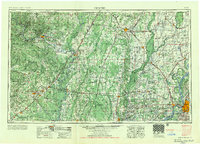 1956 Memphis1956 Print · USGSThe Mississippi Delta and the bluffs of West Tennessee meet in the mid-fifties, showing a landscape defined by massive river systems and rail hubs. Researchers can trace the path of Crowleys Ridge or locate vanished river landings near Centennial Island and Island No 35.
 - 1957 Map of Poplar Bluff, 1968 Print
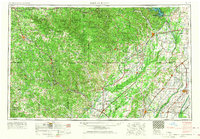 1957 Poplar Bluff1968 Print · USGSThe Missouri-Arkansas border region is captured here as the timber and rail industries shaped the Ozark foothills. Genealogists and historians can trace the Missouri Pacific Railroad through river towns like Pocahontas, Greenville, and Van Buren.3 unique versions available
 - 1958 Map of Gainesville, 1962 Print
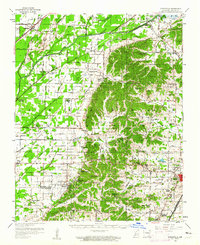 1958 Gainesville1962 Print · USGSGreene County in the late fifties was a landscape of ridges and river bottoms defined by small agricultural settlements and rural schools. Genealogists can trace family footprints across dozens of sites like Jones Ridge Cem, Evening Star Ch, and the community at Stanford.2 unique versions available
 - 1959 Map of Poplar Bluff
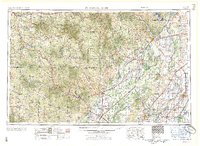 1959 Poplar Bluff1959 Print · USGSThe Missouri Ozarks and Arkansas borderlands meet in this late 1950s study of the region's diverse terrain and rail-fed towns. Researchers can trace the path of the Missouri Pacific Railroad through Poplar Bluff or locate smaller settlements like Birch Tree and Myrtle.
 - 1959 Map of Sedgwick, 1961 Print
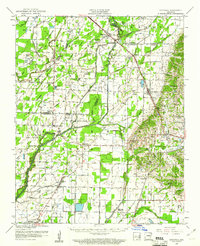 1959 Sedgwick1961 Print · USGSNortheast Arkansas in the late fifties shows a landscape of rail-connected farming towns and river bottomlands. Researchers can trace family history through local sites like Egypt Sch, Arnold Cem, and churches such as Little Brown Ch.
 - 1960 Map of Gainesville
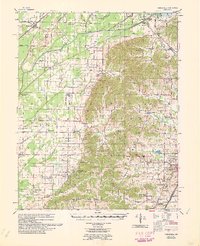 1960 Gainesville1960 Print · USGSNortheast Arkansas in the late fifties shows the sharp contrast between the managed Cache River bottoms and the heights of Crowleys Ridge. Genealogists can locate family landmarks like Bonds Cem, Pruitt Ch, and the original settlement at Gainesville.
 - 1960 Map of Sedgwick
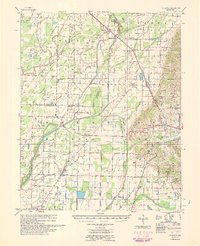 1960 Sedgwick1960 Print · USGSNortheast Arkansas in the late fifties was a landscape of river bottomlands and rail-hub towns like Sedgwick and Bono. Researchers can trace old family burial grounds and country parishes such as Manning Cem, Egypt Sch, and Little Brown Ch.
 - 1960 Map of Poplar Bluff
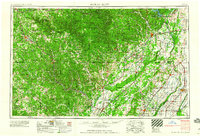 1960 Poplar Bluff1960 Print · USGSSoutheast Missouri and Northeast Arkansas are captured here during the post-war era, showing the transition from the Ozark highlands to the Delta. Genealogists and historians can trace rail corridors like the St. Louis Southwestern RR and remote settlements such as Birch Tree and Warm Springs.
 - 1965 Map of Walnut Ridge SE, 1966 Print
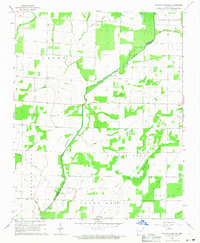 1965 Walnut Ridge SE1966 Print · USGSNortheast Arkansas in the mid-sixties reveals an agricultural landscape shaped by a sophisticated network of drainage ditches and river sloughs. Genealogists and local researchers can trace family roots through sites like Whiskerville, Oak Grove Ch, and the Jenkins Cemetery.3 unique versions available
 - 1965 Map of O'Kean, 1966 Print
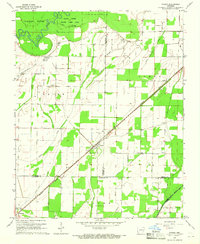 1965 O'Kean1966 Print · USGSRandolph and Lawrence counties are captured here in the mid-1960s, a landscape defined by its winding river bottoms and the Missouri Pacific line. Genealogists can locate family-named sites like Sharum, Frye Cem, and Rickey Chapel.3 unique versions available
 - 1965 Map of Smithville, 1966 Print
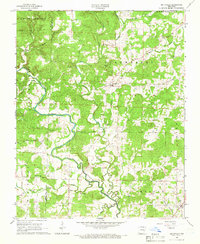 1965 Smithville1966 Print · USGSNortheastern Arkansas in the mid-1960s is defined by its rural river valleys and small crossroads settlements. Genealogists can trace family names at Bratcher Cem and Massey Cem or locate the Union Missionary Ch near Jesup.3 unique versions available
 - 1965 Map of Walnut Ridge, 1966 Print
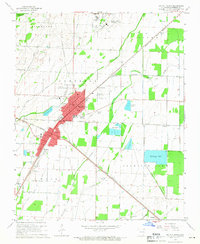 1965 Walnut Ridge1966 Print · USGSThe Lawrence County rail crossroads of Walnut Ridge and Hoxie are captured here in the mid-sixties at the junction of two major railroads. Genealogists and local historians can trace family sites like Whittaker Cem, Manning Cem, and the rural community at Ponders.3 unique versions available
 - 1965 Map of Manson, 1966 Print
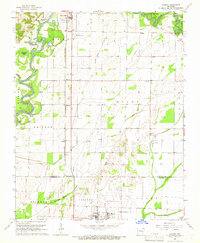 1965 Manson1966 Print · USGSRandolph and Lawrence Counties come alive in this mid-century survey as the river and rail network shaped local commerce. Genealogists and historians can trace family locations near College City, the St Louis-San Francisco railroad, and old burial sites like Mt Zion Cemetery.
Showing maps 1-25 of 132
Top cities of Lawrence County
- Walnut Ridge historical maps
- Hoxie historical maps
- Imboden historical maps
- Black Rock historical maps
- Portia historical maps
- Ravenden historical maps
See more
Frequently asked questions
- What are the different types of historical maps available for Lawrence County?
- What is the oldest map of Lawrence County?
- Where can I purchase historical maps of Lawrence County for my home or office?
- Where can I download high-res historical maps of Lawrence County?
- Are there historical topographic maps available for Lawrence County?
- Is there historical aerial imagery available for Lawrence County?
- Where are historical maps of Lawrence County sourced from?