1960s Maps of Lonoke County, Arkansas
Explore 16 historic maps of Lonoke County from the 1960s. These maps offer a rare glimpse into what life looked like during the 1960s — showing old roads, neighborhoods, homes, and landmarks that have changed or disappeared over time.
Whether you're researching your family's past, planning a metal detecting trip, or studying how Lonoke County's landscape evolved across the 1960s, these high-resolution maps are a powerful tool for exploring the history of this region.
- Focus on a specific era: All maps on this page are from the 1960s, giving you a focused view of this time period.
- See what’s changed: Compare century-old streets, trails, and buildings to today's modern landscape using overlays and satellite layers.
- Research with precision: Use these maps for genealogy, historical research, land use analysis, or educational projects.
- View, download, or print: Maps are fully viewable online in high resolution, and can be downloaded or printed for your own records.
Start exploring Lonoke County's history through authentic maps from the 1960s. This is your window into the past.
Lonoke County, AR maps
(16)- 1960 Map of Little Rock
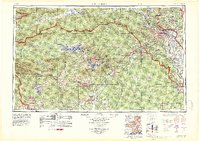 1960 Little Rock1960 Print · USGSCentral Arkansas in the late fifties shows a landscape of growing military bases and massive new reservoirs. Local historians can trace the mid-century expansion of Little Rock and Hot Springs alongside the industrial works at Bauxite and the Pine Bluff Arsenal.
 - 1960 Map of Helena
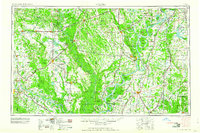 1960 Helena1960 Print · USGSThe Arkansas and Mississippi Delta regions meet along the great river bends during a period of significant agricultural and rail expansion. Genealogists and historians can trace the paths of the Missouri Pacific railroad through Clarendon or locate landings along the Mississippi River and White River.
 - 1963 Map of Beebe, 1964 Print
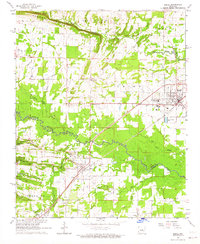 1963 Beebe1964 Print · USGSBeebe and the surrounding Lonoke and White County borderlands are captured here in the early sixties as the railroad era transitioned into the modern age. Genealogists can trace family landmarks like Stony Point Cem, Apple Hill Ch, and Union Valley Ch.3 unique versions available
 - 1963 Map of Mc Rae, 1964 Print
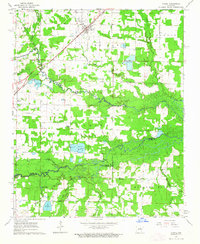 1963 Mc Rae1964 Print · USGSThe rail-and-creek landscape of White County comes into focus in the early sixties as the Missouri Pacific connects McRae and Beebe. Local researchers can trace family roots at Bass Cem or Green Cem and locate community landmarks like Harrison Chapel.3 unique versions available
 - 1963 Map of Mountain Springs, 1964 Print
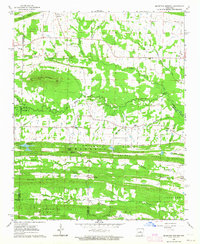 1963 Mountain Springs1964 Print · USGSCentral Arkansas in the early sixties was a landscape of remote ridges and tight-knit rural parishes. Genealogists can trace family names through the Shurley Cem or Barger Cem and locate historic meeting places like Baugh Chapel and Sixteenth Section Ch.3 unique versions available
 - 1963 Map of Sherrill, 1965 Print
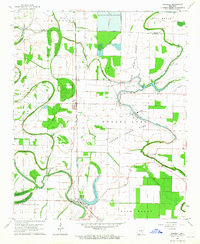 1963 Sherrill1965 Print · USGSThe Arkansas Delta comes to life in the early sixties, showing a landscape defined by the Tucker Prison Farm and the rail-side hamlets of Sherrill and Ferda. Researchers can trace old family burial grounds like Jones Cem and rural spiritual centers such as New Hope Ch along the winding Plum Bayou.2 unique versions available
 - 1964 Map of Russellville
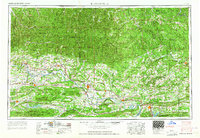 1964 Russellville1964 Print · USGSMid-century Central Arkansas is defined here by the river-valley towns and the surrounding mountain ranges before the full expansion of the interstate system. Genealogists and historians can trace rail-town development along the Missouri Pacific Railroad and locate landmarks like Arkansas Polytechnic College or Petit Jean State Park.
 - 1964 Map of Little Rock
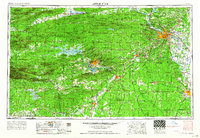 1964 Little Rock1964 Print · USGSCentral Arkansas in the mid-sixties is a landscape of mountain ridges, industrial rail lines, and growing military hubs. Researchers can trace the development of Bauxite and Hot Springs or locate rural landmarks like Sparkman and the Pine Bluff Arsenal.
 - 1964 Map of Hickory Plains, 1965 Print
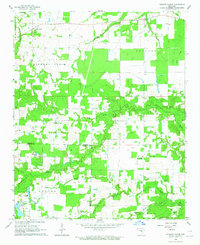 1964 Hickory Plains1965 Print · USGSHickory Plains and the surrounding Arkansas countryside are documented here in the mid-1960s, showing a landscape of family farms and rural junctions. Genealogists can trace family roots through sites like Hickory Plains Cemetery, Walters Chapel, and McBee Cemetery.
 - 1964 Map of Gethsemane, 1965 Print
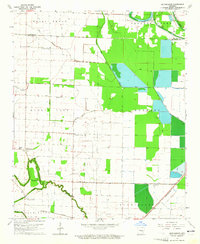 1964 Gethsemane1965 Print · USGSJefferson and Lonoke counties were deeply agricultural in the 1960s, defined by the winding paths of Wabbaseka Bayou and Plum Bayou. Genealogists and local historians can locate old landmarks like McClung Sch, Coleman Chapel Cem, and the St Louis Southwestern rail line.2 unique versions available
 - 1964 Map of Carlisle, 1965 Print
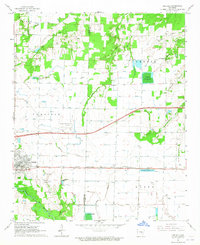 1964 Carlisle1965 Print · USGSLonoke and Prairie Counties appear here during a period of infrastructure expansion in the mid-1960s. Researchers can trace the Chicago Rock Island and Pacific railroad or locate local landmarks like Mt Zion Cemetery and Screeton.
 - 1967 Map of Hazen
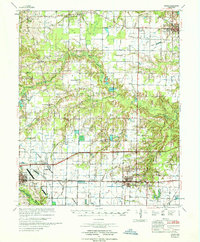 1967 Hazen1967 Print · USGSPrairie and Lonoke Counties come into focus in the mid-1960s as industrial transport and local agriculture intersect. Genealogists and historians can trace family sites at Tucker Cem, New Bethel Ch, and the rail stops along the Chicago Rock Island and Pacific.
 - 1967 Map of Humphrey, 1969 Print
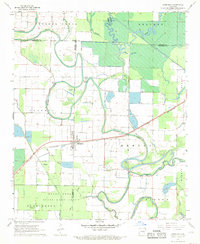 1967 Humphrey1969 Print · USGSSurrounding the tri-county junction of Lonoke, Jefferson, and Arkansas counties in the 1960s, this area showcases the intersection of rail and delta wetlands. Genealogists can trace family footprints near Humphrey and rural landmarks like Bayou Meto Ch or Argo Chapel.3 unique versions available
 - 1969 Map of Humphrey
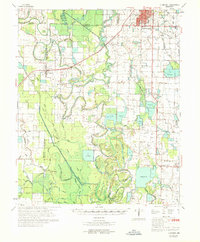 1969 Humphrey1969 Print · USGSSoutheast Arkansas in the late sixties reveals a landscape of rice farming and rail commerce centered on Stuttgart. Trace the routes of the Southwestern Railway or locate rural landmarks like Lodge Corner, Argo Chapel, and Sunshine Cem.
 - 1969 Map of Parkers Corner, 1971 Print
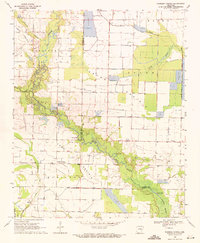 1969 Parkers Corner1971 Print · USGSIn the heart of the Grand Prairie during the late sixties, this area shows a landscape of intensive water management and rural settlement. Researchers can trace family history at Zion Cem or Ray Cem, and locate the crossroads at Parkers Corner near the Base Line.2 unique versions available
 - 1969 Map of Geridge, 1971 Print
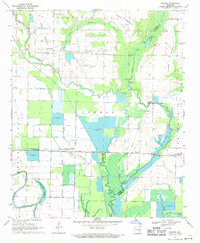 1969 Geridge1971 Print · USGSLonoke and Prairie Counties are captured here in the late sixties, showing a landscape defined by delta agriculture and water management. Researchers can trace family history through sites like Snake Island Ch, Geridge Cem, and the settlement at Seaton Dump.2 unique versions available
End of results
Showing maps 1-16 of 16
Top cities of Lonoke County
- Cabot historical maps
- Lonoke historical maps
- Ward historical maps
- England historical maps
- Carlisle historical maps
- Austin historical maps
See more
Frequently asked questions
- What are the different types of historical maps available for Lonoke County?
- What is the oldest map of Lonoke County?
- Where can I purchase historical maps of Lonoke County for my home or office?
- Where can I download high-res historical maps of Lonoke County?
- Are there historical topographic maps available for Lonoke County?
- Is there historical aerial imagery available for Lonoke County?
- Where are historical maps of Lonoke County sourced from?