Old Maps of Newton County, Arkansas
Explore 193 old maps of Newton County, spanning from 1879 to today. These high-resolution historic maps reveal how streets, neighborhoods, landmarks, and natural features evolved over time — perfect for genealogy, metal detecting, research, and local history exploration.
What you can do with these maps:
- See how Newton County changed over time: Compare historical maps to modern-day views to trace roads, homesites, rail lines & more.
- View detailed metadata: Each map includes creators, publishers, year, scale, and archive source.
- Overlay maps with satellite & LiDAR: Visualize the past alongside modern tools to explore terrain & human change.
- Trusted historical sources: Maps sourced from the USGS, Library of Congress, and other archives.
- Access maps your way: View online, download high-res files, or order prints for personal or research use.
Start exploring old maps of Newton County to uncover forgotten places, hidden landmarks, and the deep history beneath your feet.
Newton County, AR maps
(193)- 1879 Map of Washington
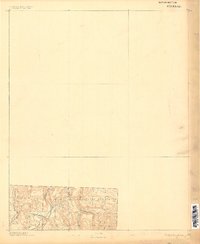 1879 Washington1879 Print · USGSThe Arkansas backcountry in the late 1870s is captured in this focused survey of the Ozark foothills. Researchers can trace the rugged headwaters of Illinois Creek and identify landmarks like Grapevine Mountain and Longs Spr.
 - 1887 Map of Smyrna
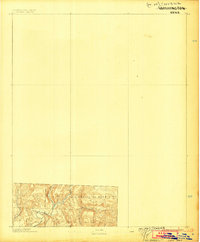 1887 Smyrna1887 Print · USGSIn the late 1880s, the Smyrna area of Pope County was a landscape of steep Ozark elevations and winding waterways. Genealogists and hikers can trace the original paths of Illinois Creek and Hurricane Cr as they flow around the base of Grapevine Mountain.
 - 1889 Map of Treat
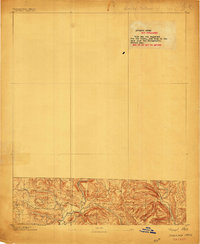 1889 Treat1889 Print · USGSInland Pope County is shown in this rare nineteenth-century advance sheet during the early geological survey of the state. Researchers can trace the original topography around the Laurel settlement and family-named landmarks like Evans Hill and Levi Br.
 - 1889 Map of Marshall #3
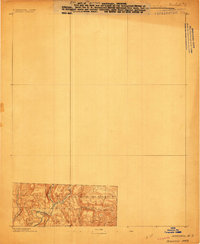 1889 Marshall #31889 Print · USGSThe Arkansas Ozarks come into focus in the late nineteenth century as early surveyors mapped the headwaters of the Illinois Bayou. Researchers can trace the steep elevations of Grapevine Mountain and locate early landmarks like Longs Spr and the East Fork.
 - 1889 Map of Ozone
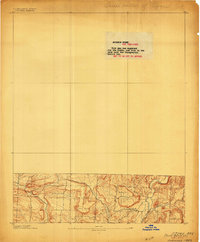 1889 Ozone1889 Print · USGSJohnson County in the late nineteenth century is showcased in this rare advance sheet, featuring the early development of the Ozarks. Genealogists and historians can trace the creek-side settlement of Hagarsville and landmarks like Lick Hill and Grannys Creek.
 - 1892 Map of Marshall
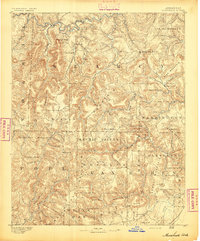 1892 Marshall1892 Print · USGSThe Ozark highlands of Searcy and Van Buren Counties appear here in the early 1890s, characterized by isolated mountain settlements and complex river headwaters. Genealogists can trace early homesteads and family-named landmarks such as Wileys Cove, Hendersons Knob, and Witts Springs.
 - 1893 Map of Yellville
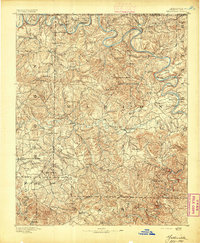 1893 Yellville1893 Print · USGSNorthern Arkansas in the late nineteenth century was a world defined by its rivers and local crossings. You can trace the ancestral ferry routes along the White River and locate settlements with unique local nicknames like Peel (Needmore) and St Joe (Monkey Run).2 unique versions available
 - 1894 Map of Marshall
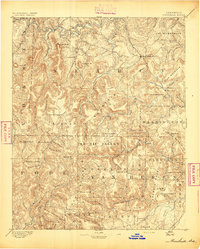 1894 Marshall1894 Print · USGSThe Ozark plateau in the 1890s reveals a sparse network of mountain settlements and family landmarks. Genealogists can locate early community centers like Snow Ball and Witts Springs or trace ancestral lands near Point Peter and Hendersons Knob.
 - 1901 Map of Marshall
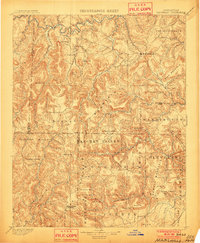 1901 Marshall1901 Print · USGSThe Ozark plateau in the 1890s reveals a rugged network of high ridges and river forks where isolation defined early settlement. Genealogists can trace family roots through upland communities like Snowball, Witts Springs, and Wileys Cove before modern infrastructure reached the Boston Mountain range.4 unique versions available
 - 1903 Map of Yellville
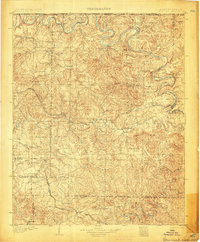 1903 Yellville1903 Print · USGSNorth Central Arkansas in the late nineteenth century is a land of winding river valleys and ridge-top settlements. Genealogists can trace early homesteads and river crossings like Denton Ferry, Yellville, and the remote outposts of Dodd City or St. Joe.
 - 1904 Map of Harrison, 1954 Print
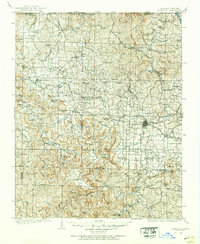 1904 Harrison1954 Print · USGSThe Ozark Mountains of Northwest Arkansas are documented here at the turn of the century, showing a landscape of pioneer settlements and new rail lines. Genealogists can trace early homesteads and commerce at Blantons Mill, the village of Carrollton, and the regional hub of Harrison.
 - 1905 Map of Harrison
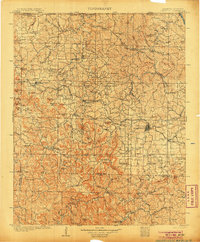 1905 Harrison1905 Print · USGSThe Ozark Plateau at the start of the century was a land of winding mountain railroads and isolated creek-side settlements. Genealogists can trace family footprints across the highlands from Lead Hill to Green Forest, finding early industrial landmarks like Blantons Mill and the Rock Quarry.3 unique versions available
 - 1905 Map of Yellville
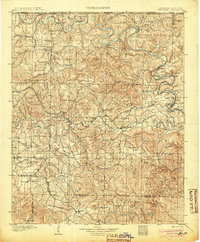 1905 Yellville1905 Print · USGSThe Ozark Mountains and the winding White River define this area at the start of the twentieth century. Genealogists can trace family names through dozens of river crossings and small settlements like Denton Ferry, Rush, and Elixir Springs.3 unique versions available
 - 1906 Map of Batson
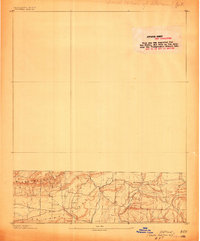 1906 Batson1906 Print · USGSJohnson County highlands come into focus in the early 1900s through this rare advance sheet of the southern Batson area. Local historians can trace the early layout of Harmony, Hunt, and Grace near the waters of the East Fork of Horse Head Creek.
 - 1929 Map of Yellville, 1954 Print
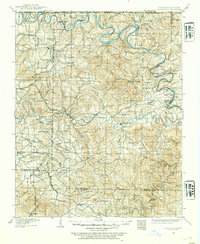 1929 Yellville1954 Print · USGSThe Ozark river valleys and early rail corridors of north-central Arkansas are shown here during the late 1920s. Researchers can trace historic river crossings like Whites Ferry and Moony Ford or locate regional hubs such as Yellville and Cotter.
 - 1932 Map of Treat, 1972 Print
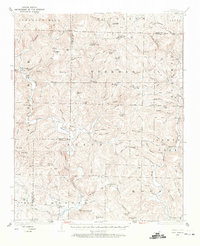 1932 Treat1972 Print · USGSThe Arkansas Ozarks come alive in this early 1930s survey of the Piney Creek highlands. Researchers can trace rural life through numerous one-room schools like Ross Sch and remote outposts like Sand Gap Felsor PO or Fort Douglas.
 - 1933 Map of Mt Judea, 1970 Print
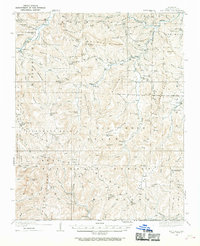 1933 Mt Judea1970 Print · USGSNewton County's mountain communities were still deeply isolated during the early 1930s, connected by winding roads through the Boston Mountains. Genealogists can locate family homesteads near numerous local institutions like Union Hill Sch or the remote Macedonia Sch.
 - 1934 Map of Treat
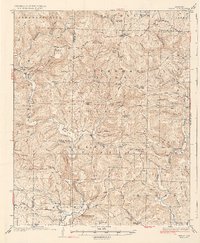 1934 Treat1934 Print · USGSPope County highlands during the early thirties show a rugged network of forest outposts and mountain schools. Researchers can trace the layout of community sites like Sand Gap Pelsor PO, Ross Sch, and the Fairview Fire Tower.3 unique versions available
 - 1934 Map of Ozone, 1975 Print
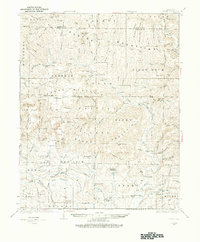 1934 Ozone1975 Print · USGSThe Boston Mountains of Arkansas appear in the mid-1930s as a landscape of isolated mountain settlements and family farms. Researchers can trace genealogical roots at the Gillian Settlement, locate long-gone schools like Mountain Hall Sch, or find rural landmarks including the Devils Knob Fire Tower.
 - 1936 Map of Ozone
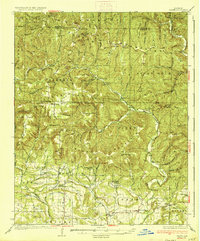 1936 Ozone1936 Print · USGSThe Boston Mountains of Johnson and Newton counties appear in the mid-thirties as a landscape of isolated ridges and winding hollows. Genealogists can trace family roots through the many rural schools and churches, including Murray Chapel Sch, Gillian Settlement, and the Hignite Cem.3 unique versions available
 - 1939 Map of Snowball, 1967 Print
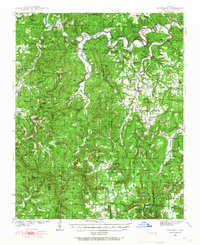 1939 Snowball1967 Print · USGSSearcy and Newton Counties are shown here just before the 1940s, highlighting a landscape of dispersed mountain farmsteads and rural schoolhouses. Genealogists can trace family names through landmarks like Arnold Cem, Witts Springs, and Juanita Sch.2 unique versions available
 - 1940 Map of Mt Judea
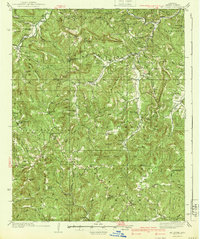 1940 Mt Judea1940 Print · USGSThe high ridges of the Arkansas Ozarks appear here in the early 1940s, showing a landscape of isolated mountain settlements and national forest land. Researchers can find many rural landmarks, from Diamond Cave and Mt Judea to the Smith Cem and Deer Fire Tower.3 unique versions available
 - 1940 Map of Smyrna, 1961 Print
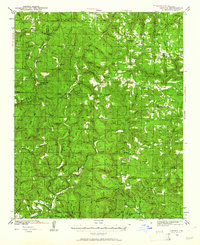 1940 Smyrna1961 Print · USGSThe Arkansas Ozarks around the Pope and Searcy county lines are shown here at a time when small mountain schools and isolated settlements were the heart of the community. Researchers can trace family roots at Old Smyrna Cem or find the sites of vanished homesteads near Lost Corner and Nogo Sch.2 unique versions available
 - 1941 Map of Snowball
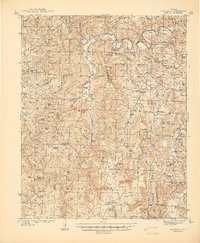 1941 Snowball1941 Print · USGSThe Buffalo River highlands of Searcy and Newton counties are shown here just before the Second World War. Genealogists and local historians can trace family roots through a dense network of country schools and churches, from Snowball to Faith Mission and the Welcome Home Sch.
 - 1942 Map of Snowball
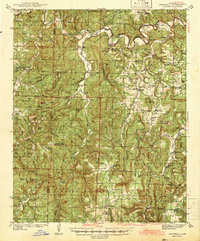 1942 Snowball1942 Print · USGSThe Ozark highlands of Newton and Searcy counties appear here in the late 1930s, showing a landscape defined by the Buffalo River. Genealogists can trace family roots through numerous remote sites like Hendrix Cem, Witt Springs, and Juanita Sch.
Showing maps 1-25 of 193
Top cities of Newton County
Frequently asked questions
- What are the different types of historical maps available for Newton County?
- What is the oldest map of Newton County?
- Where can I purchase historical maps of Newton County for my home or office?
- Where can I download high-res historical maps of Newton County?
- Are there historical topographic maps available for Newton County?
- Is there historical aerial imagery available for Newton County?
- Where are historical maps of Newton County sourced from?