1900s (20th Century) Maps of Newton County, Arkansas
Explore 65 historic maps of Newton County from the 1900s (20th Century). These maps offer a rare glimpse into what life looked like during the 1900s — showing old roads, neighborhoods, homes, and landmarks that have changed or disappeared over time.
Whether you're researching your family's past, planning a metal detecting trip, or studying how Newton County's landscape evolved across the 1900s, these high-resolution maps are a powerful tool for exploring the history of this region.
- Focus on a specific era: All maps on this page are from the 1900s, giving you a focused view of this time period.
- See what’s changed: Compare century-old streets, trails, and buildings to today's modern landscape using overlays and satellite layers.
- Research with precision: Use these maps for genealogy, historical research, land use analysis, or educational projects.
- View, download, or print: Maps are fully viewable online in high resolution, and can be downloaded or printed for your own records.
Start exploring Newton County's history through authentic maps from the 1900s. This is your window into the past.
Newton County, AR maps
(65)- 1901 Map of Marshall
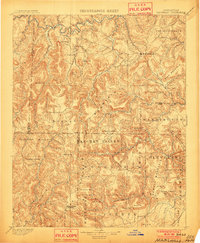 1901 Marshall1901 Print · USGSThe Ozark plateau in the 1890s reveals a rugged network of high ridges and river forks where isolation defined early settlement. Genealogists can trace family roots through upland communities like Snowball, Witts Springs, and Wileys Cove before modern infrastructure reached the Boston Mountain range.4 unique versions available
 - 1903 Map of Yellville
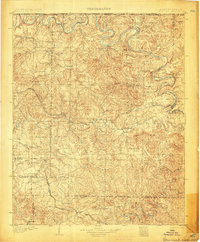 1903 Yellville1903 Print · USGSNorth Central Arkansas in the late nineteenth century is a land of winding river valleys and ridge-top settlements. Genealogists can trace early homesteads and river crossings like Denton Ferry, Yellville, and the remote outposts of Dodd City or St. Joe.
 - 1904 Map of Harrison, 1954 Print
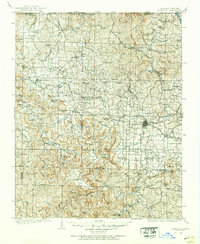 1904 Harrison1954 Print · USGSThe Ozark Mountains of Northwest Arkansas are documented here at the turn of the century, showing a landscape of pioneer settlements and new rail lines. Genealogists can trace early homesteads and commerce at Blantons Mill, the village of Carrollton, and the regional hub of Harrison.
 - 1905 Map of Harrison
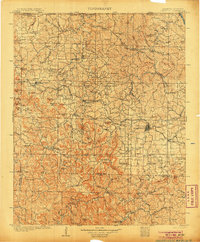 1905 Harrison1905 Print · USGSThe Ozark Plateau at the start of the century was a land of winding mountain railroads and isolated creek-side settlements. Genealogists can trace family footprints across the highlands from Lead Hill to Green Forest, finding early industrial landmarks like Blantons Mill and the Rock Quarry.3 unique versions available
 - 1905 Map of Yellville
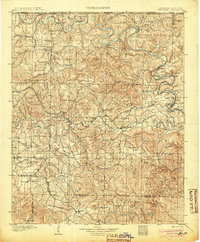 1905 Yellville1905 Print · USGSThe Ozark Mountains and the winding White River define this area at the start of the twentieth century. Genealogists can trace family names through dozens of river crossings and small settlements like Denton Ferry, Rush, and Elixir Springs.3 unique versions available
 - 1906 Map of Batson
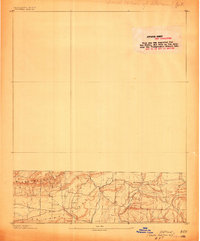 1906 Batson1906 Print · USGSJohnson County highlands come into focus in the early 1900s through this rare advance sheet of the southern Batson area. Local historians can trace the early layout of Harmony, Hunt, and Grace near the waters of the East Fork of Horse Head Creek.
 - 1929 Map of Yellville, 1954 Print
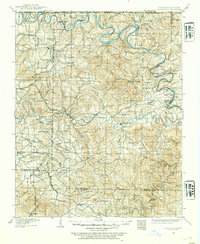 1929 Yellville1954 Print · USGSThe Ozark river valleys and early rail corridors of north-central Arkansas are shown here during the late 1920s. Researchers can trace historic river crossings like Whites Ferry and Moony Ford or locate regional hubs such as Yellville and Cotter.
 - 1932 Map of Treat, 1972 Print
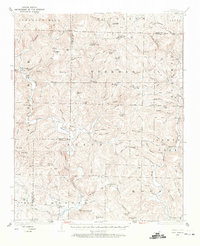 1932 Treat1972 Print · USGSThe Arkansas Ozarks come alive in this early 1930s survey of the Piney Creek highlands. Researchers can trace rural life through numerous one-room schools like Ross Sch and remote outposts like Sand Gap Felsor PO or Fort Douglas.
 - 1933 Map of Mt Judea, 1970 Print
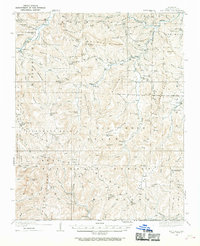 1933 Mt Judea1970 Print · USGSNewton County's mountain communities were still deeply isolated during the early 1930s, connected by winding roads through the Boston Mountains. Genealogists can locate family homesteads near numerous local institutions like Union Hill Sch or the remote Macedonia Sch.
 - 1934 Map of Treat
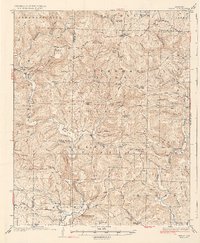 1934 Treat1934 Print · USGSPope County highlands during the early thirties show a rugged network of forest outposts and mountain schools. Researchers can trace the layout of community sites like Sand Gap Pelsor PO, Ross Sch, and the Fairview Fire Tower.3 unique versions available
 - 1934 Map of Ozone, 1975 Print
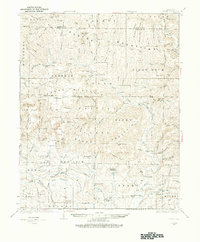 1934 Ozone1975 Print · USGSThe Boston Mountains of Arkansas appear in the mid-1930s as a landscape of isolated mountain settlements and family farms. Researchers can trace genealogical roots at the Gillian Settlement, locate long-gone schools like Mountain Hall Sch, or find rural landmarks including the Devils Knob Fire Tower.
 - 1936 Map of Ozone
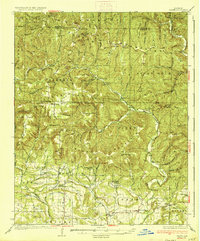 1936 Ozone1936 Print · USGSThe Boston Mountains of Johnson and Newton counties appear in the mid-thirties as a landscape of isolated ridges and winding hollows. Genealogists can trace family roots through the many rural schools and churches, including Murray Chapel Sch, Gillian Settlement, and the Hignite Cem.3 unique versions available
 - 1939 Map of Snowball, 1967 Print
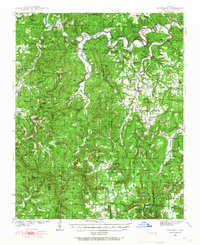 1939 Snowball1967 Print · USGSSearcy and Newton Counties are shown here just before the 1940s, highlighting a landscape of dispersed mountain farmsteads and rural schoolhouses. Genealogists can trace family names through landmarks like Arnold Cem, Witts Springs, and Juanita Sch.2 unique versions available
 - 1940 Map of Mt Judea
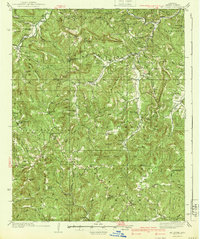 1940 Mt Judea1940 Print · USGSThe high ridges of the Arkansas Ozarks appear here in the early 1940s, showing a landscape of isolated mountain settlements and national forest land. Researchers can find many rural landmarks, from Diamond Cave and Mt Judea to the Smith Cem and Deer Fire Tower.3 unique versions available
 - 1940 Map of Smyrna, 1961 Print
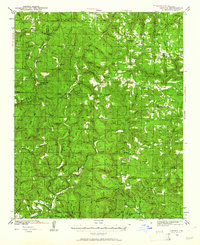 1940 Smyrna1961 Print · USGSThe Arkansas Ozarks around the Pope and Searcy county lines are shown here at a time when small mountain schools and isolated settlements were the heart of the community. Researchers can trace family roots at Old Smyrna Cem or find the sites of vanished homesteads near Lost Corner and Nogo Sch.2 unique versions available
 - 1941 Map of Snowball
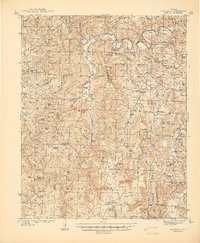 1941 Snowball1941 Print · USGSThe Buffalo River highlands of Searcy and Newton counties are shown here just before the Second World War. Genealogists and local historians can trace family roots through a dense network of country schools and churches, from Snowball to Faith Mission and the Welcome Home Sch.
 - 1942 Map of Snowball
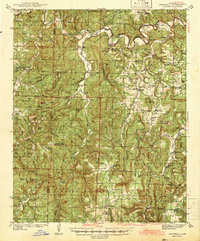 1942 Snowball1942 Print · USGSThe Ozark highlands of Newton and Searcy counties appear here in the late 1930s, showing a landscape defined by the Buffalo River. Genealogists can trace family roots through numerous remote sites like Hendrix Cem, Witt Springs, and Juanita Sch.
 - 1943 Map of Smyrna
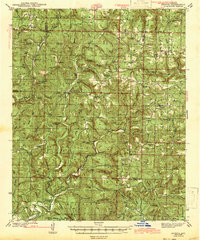 1943 Smyrna1943 Print · USGSThe Boston Mountains of Pope and Van Buren counties appear in the early 1940s as a landscape of isolated ridges and headwater creeks. Genealogists and historians can trace the foundations of rural life at Old Smyrna Cem, Union Hill Sch, and the remote settlement of Nogo.
 - 1945 Map of Harrison
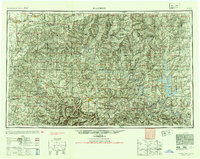 1945 Harrison1945 Print · USGSThe Ozark and Boston Mountains straddle the Missouri-Arkansas border during the mid-forties, showing a landscape of forest ridges and river valleys. Genealogists and historians can trace rail-connected towns like Monett and West Plains or early lake developments at Bull Shoals Res and Norfork Lake.
 - 1949 Map of Harrison
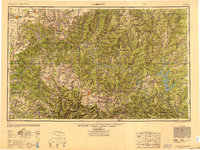 1949 Harrison1949 Print · USGSThe Ozark highlands of northern Arkansas and southern Missouri are shown just after the war, when the White River still followed its original course. Genealogists and historians can trace rail lines like the Missouri & Arkansas RR and locate rural hubs like Harrison, Eureka Springs, and Mountain Home.
 - 1949 Map of Snowball
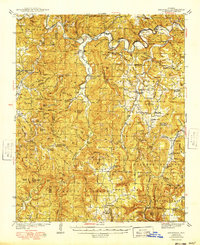 1949 Snowball1949 Print · USGSThe northern Arkansas highlands of the late 1940s are shown here in detail, from the banks of the Buffalo River to the small upland villages. Researchers can trace rural lineages through numerous landmarks like Dodson Cem, Snowball, and the Wasson Sch.
 - 1954 Map of Harrison
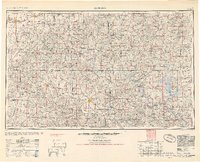 1954 Harrison1954 Print · USGSThe Ozarks and Boston Mountains meet during a period of massive river engineering in the mid-fifties. Researchers can trace the early shorelines of Bull Shoals Lake and Table Rock Reservoir or locate inland towns like Berryville and Harrison.
 - 1956 Map of Russellville
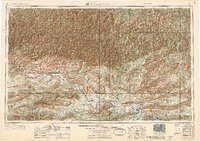 1956 Russellville1956 Print · USGSThe Arkansas River valley and the surrounding Boston Mountains are captured here in the mid-fifties, showing a landscape of small timber towns and new reservoirs. Genealogists can trace family roots through upland settlements like Pelsor and Witts Springs or locate the campus of Arkansas Polytechnic College.2 unique versions available
 - 1958 Map of Harrison, 1973 Print
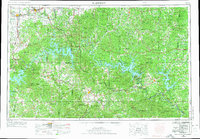 1958 Harrison1973 Print · USGSThe Ozark and Boston Mountains appear in this mid-century survey as the great White River impoundments were reshaping the region. Researchers can trace the rail lines of the St Louis-San Francisco Ry and locate early settlements like Berryville and Gainesville.
 - 1964 Map of Russellville
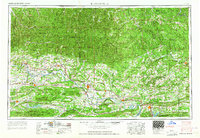 1964 Russellville1964 Print · USGSMid-century Central Arkansas is defined here by the river-valley towns and the surrounding mountain ranges before the full expansion of the interstate system. Genealogists and historians can trace rail-town development along the Missouri Pacific Railroad and locate landmarks like Arkansas Polytechnic College or Petit Jean State Park.
Showing maps 1-25 of 65
Top cities of Newton County
Frequently asked questions
- What are the different types of historical maps available for Newton County?
- What is the oldest map of Newton County?
- Where can I purchase historical maps of Newton County for my home or office?
- Where can I download high-res historical maps of Newton County?
- Are there historical topographic maps available for Newton County?
- Is there historical aerial imagery available for Newton County?
- Where are historical maps of Newton County sourced from?