Old Maps of Randolph County, Arkansas for Academic Research
Study the evolution of Randolph County with 122 high-resolution historic maps. Whether you're teaching, researching, or modeling changes in land use, these maps provide essential visual documentation of urban, environmental, and geographic change.
- Analyze long-term change: Track patterns in development, transportation, and natural features.
- Ideal for environmental or urban studies: Support academic projects with primary historical map data.
- Use in the classroom or lab: Educators and researchers rely on these maps to bring historical context to life.
These maps are a powerful tool for teaching, research, and visualizing how Randolph County has changed over the decades.
Randolph County, AR maps
(122)- 1932 Map of Walnut Ridge
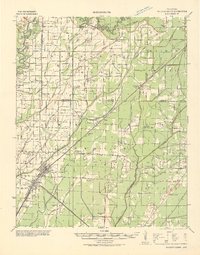 1932 Walnut Ridge1932 Print · USGSLawrence and Randolph counties come alive in the early thirties at the critical rail junction of Walnut Ridge. Genealogists and researchers can trace dozens of rural landmarks, from the Old Walnut Ridge Sch and Hoxie High Sch to local crossings like Indian Ford.
 - 1934 Map of Powhatan
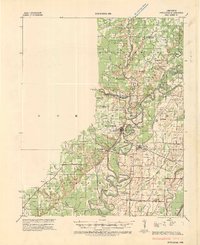 1934 Powhatan1934 Print · USGSLawrence and Randolph counties are mapped here in the early 1930s, showing a river-dependent landscape tied to the Black River. Researchers can trace old ferry crossings like Gibson Ferry and family-named landmarks such as Whitlow Cem and Lauratown.
 - 1935 Map of Powhatan
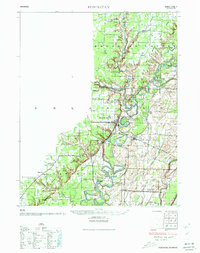 1935 Powhatan1935 Print · USGSThe confluence of the Black and Spring Rivers comes alive in the mid-1930s, documenting a time when river ferries and rail travel defined Lawrence County life. Genealogists can locate family landmarks like Lauderdale Ch Sch & Cem, Gibson Ferry, and the landing at Sissons Ld.4 unique versions available
 - 1935 Map of Knobel, 1938 Print
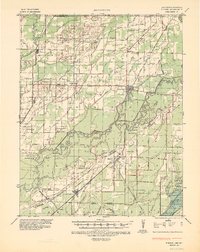 1935 Knobel1938 Print · USGSDuring the mid-1930s, the Arkansas-Missouri borderlands were defined by the rail lines and river bends of the Black River valley. Researchers can trace family roots through Peach Orchard, Hopewell Ch, and cemeteries like Al McNaner Cem.
 - 1935 Map of Reyno, 1938 Print
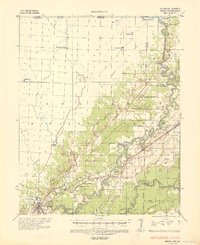 1935 Reyno1938 Print · USGSRandolph and Clay counties are shown in the mid-1930s, documenting a river-dependent economy as the Ozarks meet the alluvial valley. Researchers can trace historic river crossings like Biggers Ferry and rural sites such as Johnson Cem and Cochrum Sch.3 unique versions available
 - 1935 Map of Walnut Ridge, 1947 Print
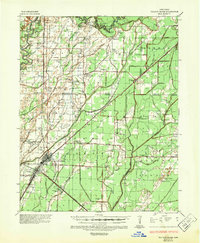 1935 Walnut Ridge1947 Print · USGSWalnut Ridge and Hoxie serve as a vital railroad crossroads during the mid-thirties, where the St. Louis-San Francisco and Missouri Pacific lines meet. Researchers can trace rural family roots through landmarks like Gum Stump Ch & Sch, Whitaker Cem, and the old settlement at Lesterville.2 unique versions available
 - 1941 Map of Knobel, 1946 Print
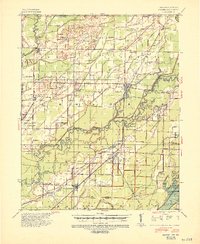 1941 Knobel1946 Print · USGSClay County at the onset of the 1940s is defined by the winding Black River and the critical rail junctions that sustained its small towns. Researchers can trace family roots through numerous rural landmarks like Masterson Cem, Brazil Sch & Ch, and the river crossing at Bennetts Ferry Bridge.2 unique versions available
 - 1957 Map of Poplar Bluff, 1968 Print
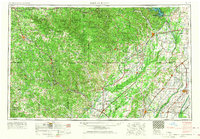 1957 Poplar Bluff1968 Print · USGSThe Missouri-Arkansas border region is captured here as the timber and rail industries shaped the Ozark foothills. Genealogists and historians can trace the Missouri Pacific Railroad through river towns like Pocahontas, Greenville, and Van Buren.3 unique versions available
 - 1959 Map of Poplar Bluff
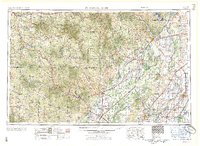 1959 Poplar Bluff1959 Print · USGSThe Missouri Ozarks and Arkansas borderlands meet in this late 1950s study of the region's diverse terrain and rail-fed towns. Researchers can trace the path of the Missouri Pacific Railroad through Poplar Bluff or locate smaller settlements like Birch Tree and Myrtle.
 - 1960 Map of Poplar Bluff
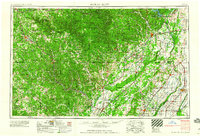 1960 Poplar Bluff1960 Print · USGSSoutheast Missouri and Northeast Arkansas are captured here during the post-war era, showing the transition from the Ozark highlands to the Delta. Genealogists and historians can trace rail corridors like the St. Louis Southwestern RR and remote settlements such as Birch Tree and Warm Springs.
 - 1964 Map of Datto, 1965 Print
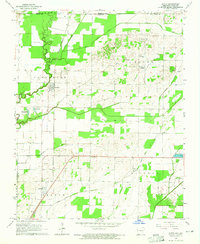 1964 Datto1965 Print · USGSIn the mid-1960s, the Arkansas-Missouri border was a landscape of fertile bottomlands and evolving drainage systems. Genealogists can trace family roots at Hitt Cem and Grassyhead Ch or follow the St Louis-San Francisco rail line through Success.2 unique versions available
 - 1964 Map of Peach Orchard, 1965 Print
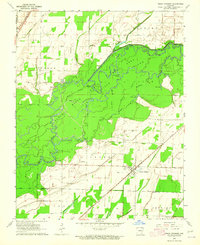 1964 Peach Orchard1965 Print · USGSNortheast Arkansas in the mid-sixties is defined here by the winding channels of the Black River and the industrial backbone of two major railroads. Genealogists can locate family landmarks like Pirtle Ch, Allen Cem, and the small community of Brookings tucked along the riverbanks.3 unique versions available
 - 1965 Map of O'Kean, 1966 Print
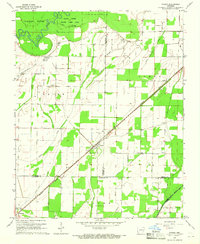 1965 O'Kean1966 Print · USGSRandolph and Lawrence counties are captured here in the mid-1960s, a landscape defined by its winding river bottoms and the Missouri Pacific line. Genealogists can locate family-named sites like Sharum, Frye Cem, and Rickey Chapel.3 unique versions available
 - 1965 Map of Manson, 1966 Print
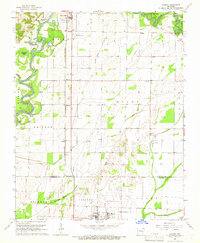 1965 Manson1966 Print · USGSRandolph and Lawrence Counties come alive in this mid-century survey as the river and rail network shaped local commerce. Genealogists and historians can trace family locations near College City, the St Louis-San Francisco railroad, and old burial sites like Mt Zion Cemetery.
 - 1966 Map of Ravenden Springs, 1967 Print
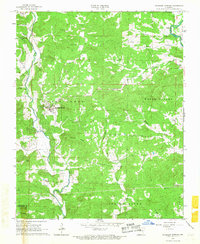 1966 Ravenden Springs1967 Print · USGSRavenden Springs and the surrounding Ozark foothills are captured here in the mid-1960s, showing a landscape of small farms and family-led communities. Genealogists can trace deep local roots through several family burial grounds, including Wells Cem, Janes Cem, and Brown Cem.2 unique versions available
 - 1966 Map of Ravenden Springs SE, 1967 Print
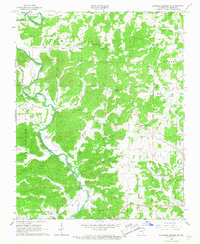 1966 Ravenden Springs SE1967 Print · USGSRandolph County's river valleys and timbered ridges are captured here in the mid-sixties, showing the rural communities along the Eleven Point River. Genealogists and local researchers can trace family landmarks like McIlroy Cem, Stony Point Ch, and the crossing at Black Ferry Bridge.2 unique versions available
 - 1966 Map of Imboden, 1967 Print
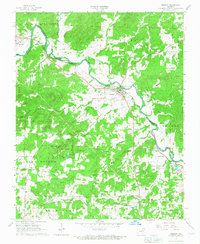 1966 Imboden1967 Print · USGSIn the mid-1960s, the riverside town of Imboden thrived along the St Louis - San Francisco rail line. Researchers can trace family history through numerous rural sites like Annieville, Pleasant Grove Ch, and the Nation Cem.2 unique versions available
 - 1966 Map of Pocahontas, 1967 Print
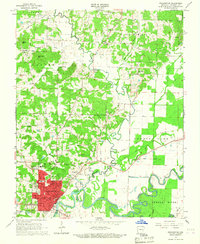 1966 Pocahontas1967 Print · USGSRandolph County's river-driven landscape is captured here in the mid-sixties as the Black River and Fourche River meet at Pocahontas. Genealogists can locate family sites like the Masonic Cemetery, Friendship Cem, and rural outposts like Stokes.2 unique versions available
 - 1967 Map of Knobel
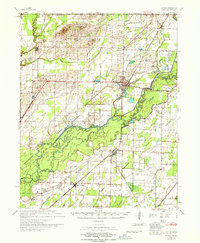 1967 Knobel1967 Print · USGSNortheast Arkansas in the late 1960s reveals a landscape of river-bottom settlements and a sophisticated network of agricultural drainage. Trace the family roots of early residents near Corning, Success, and Knobel, or locate family sites at Richwoods Cem and Browns Chapel.
 - 1967 Map of Warm Springs, 1969 Print
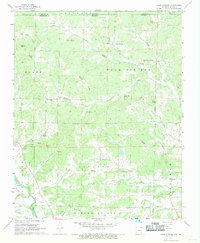 1967 Warm Springs1969 Print · USGSThe Missouri-Arkansas border region comes alive in the late sixties, showcasing a landscape of Ozark springs and remote homesteads. Genealogists can trace family names through Upshaw Cem and Roach Cem or locate the quiet crossroads of Hamil and Tyer.2 unique versions available
 - 1968 Map of Walnut Ridge
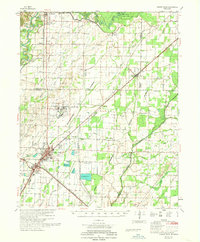 1968 Walnut Ridge1968 Print · USGSNortheast Arkansas in the late sixties reveals a landscape of industrial rail hubs and complex river drainage systems. Genealogists can trace family roots through rural landmarks like Surridge School, Rickey Chapel, and the Whittaker Cemetery near Hoxie.
 - 1968 Map of Hardy NE, 1969 Print
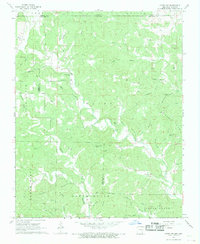 1968 Hardy NE1969 Print · USGSRandolph County, Arkansas, and the Missouri state line meet in this late 1960s survey of the Ozark foothills. Researchers can trace family history through numerous rural burial sites like James Cem and Davis Cem or locate community centers like English Bluff Ch.2 unique versions available
 - 1968 Map of Wirth, 1969 Print
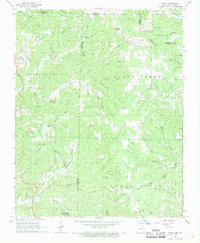 1968 Wirth1969 Print · USGSThe borderlands of Sharp and Fulton County come to life in the late 1960s, showing a rural landscape of winding hollows and small family settlements. Genealogists can locate several remote burial grounds and churches, including Ed Collins Cemetery, Bethel Cemetery, and Union Hill Church.2 unique versions available
 - 1968 Map of Supply, 1969 Print
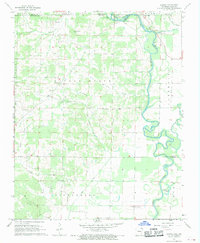 1968 Supply1969 Print · USGSThe Arkansas-Missouri borderlands come into focus in the late sixties as a network of small settlements and river bottoms. Researchers can locate family landmarks like Supply Ch, Ingram Cem, and the old community at Pitman.2 unique versions available
 - 1968 Map of Maynard, 1969 Print
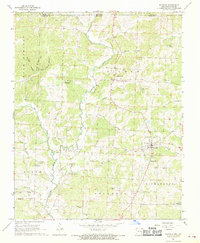 1968 Maynard1969 Print · USGSThe Fourche River valley and the town of Maynard are captured here in the late sixties as they appeared just south of the Missouri line. Genealogists can trace family landmarks and rural homesteads near Middlebrook, Barnett Cem, and Siloam Ch.
Showing maps 1-25 of 122
Top cities of Randolph County
- Pocahontas historical maps
- Reyno historical maps
- Maynard historical maps
- Biggers historical maps
- O'Kean historical maps
- Ravenden Springs historical maps
Frequently asked questions
- What are the different types of historical maps available for Randolph County?
- What is the oldest map of Randolph County?
- Where can I purchase historical maps of Randolph County for my home or office?
- Where can I download high-res historical maps of Randolph County?
- Are there historical topographic maps available for Randolph County?
- Is there historical aerial imagery available for Randolph County?
- Where are historical maps of Randolph County sourced from?