Old Maps of Olancha, California for Hiking & Exploration
Hike through history with 48 historic maps of Olancha. Explore old trails, ghost towns, and forgotten backroads — perfect for outdoor adventurers and local explorers.
- Rediscover forgotten places: Map out old mining camps, roads, and footpaths that no longer exist on modern maps.
- Layer with modern tools: Combine with LiDAR or satellite views to plan hikes through historical terrain.
- Made for exploration: Popular among hikers, overlanders, and local history lovers.
Use these maps to find adventure and explore the hidden past of Olancha.
Olancha, CA maps
(48)- 1905 Map of Olancha, 1957 Print
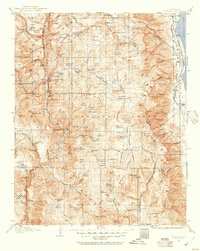 1905 Olancha1957 Print · USGSThe high Sierra and Owens Valley meet in this 1905 survey, showing the early rail lines and remote outposts before modern infrastructure reached the Kern River. Researchers can trace the path of the Southern Pacific RR through Cartago or locate the remote Kern Canyon Ranger Station.
 - 1907 Map of Olancha
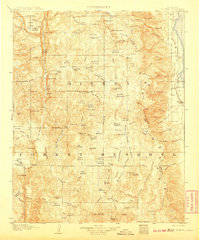 1907 Olancha1907 Print · USGSThe Sierra Nevada high country at the turn of the century shows a wilderness of meadows and peaks before the modern park era. Trace early trails and remote camps like Funston Camp, Siberian Outpost, and the lake-front settlement of Olancha.9 unique versions available
 - 1908 Map of Ballarat
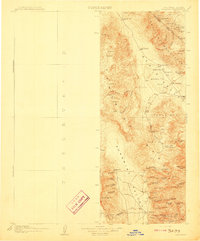 1908 Ballarat1908 Print · USGSInyo County was a frontier of mining and survival in the early 1900s, where water and ore dictated the settlement patterns. Researchers can locate remote camps like Skidoo and Harrisburg, or trace the vital network of desert water at Stovepipe Wells and Warm Sulphur Spring.
 - 1913 Map of Ballarat
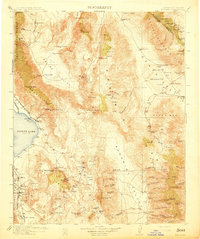 1913 Ballarat1913 Print · USGSThe high desert of Inyo County is documented here during a period of intense mining and early water development. Genealogists and desert historians can trace the foundations of Ballarat, the Southern Pacific RR line, and active sites like Skidoo or the Cerro Gordo Mines.7 unique versions available
 - 1948 Map of Death Valley
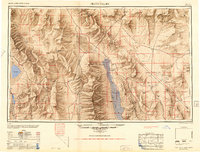 1948 Death Valley1948 Print · USGSIn the late 1940s, this desert frontier was defined by isolated mining camps and military restricted zones. Researchers can trace the routes between Furnace Creek Ranch and Rhyolite, or locate remote sites like the Modoc Mine and Ballarat.2 unique versions available
 - 1948 Map of Fresno
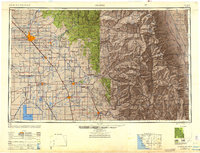 1948 Fresno1948 Print · USGSThe San Joaquin Valley and the High Sierra met during a period of rapid post-war growth and industrial expansion. Genealogists and researchers can trace family lines through small rail towns like Calwa City, find early aviation sites at Fresno-Chandler, or locate the Fresno Copper Mine.
 - 1951 Map of Keeler, 1952 Print
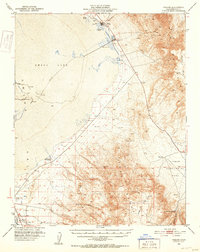 1951 Keeler1952 Print · USGSOwens Lake and the Inyo Mountains are captured here in the early fifties during a period of intense mineral extraction. Trace the industrial footprint of the Southern Pacific at Keeler or locate the Sierra Talc Mine and Dirty Socks (Hot Spring).4 unique versions available
 - 1951 Map of Haiwee Reservoir, 1952 Print
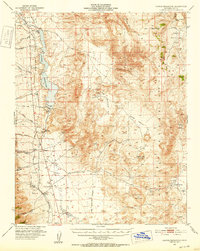 1951 Haiwee Reservoir1952 Print · USGSInyo County in the early fifties is defined here by the engineering of the Los Angeles City Aqueduct and the mining claims of the high flats. Genealogists and historians can locate family sites like Tunawee Ranch or trace the early paths to Coso Hot Springs and the Beebe Mine.4 unique versions available
 - 1954 Map of Death Valley, 1966 Print
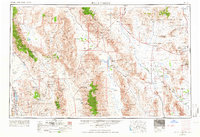 1954 Death Valley1966 Print · USGSInyo County and the Nevada borderlands are shown during the mid-twentieth century as mining history met the atomic age. Researchers can trace the legacy of desert boomtowns and remote camps like Rhyolite, Darwin Mines, and the isolated Clay Camp.3 unique versions available
 - 1955 Map of Fresno
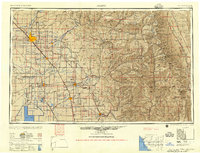 1955 Fresno1955 Print · USGSThe Central Valley and High Sierra meet in this mid-fifties study of California’s agricultural and wilderness heart. Researchers can trace the rail-side growth of Sanger, Selma, and Reedley or locate high-altitude landmarks like Mt Whitney and Hume Lake.
 - 1956 Map of Death Valley
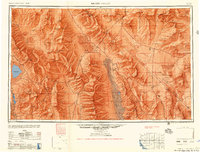 1956 Death Valley1956 Print · USGSInyo County and the Nevada borderlands appear in the mid-fifties as a rugged landscape of mining camps and military reservations. Genealogists and historians can trace the foundations of Furnace Creek Ranch, the desert roads to Ballarat, and active mining sites like the Lila C Mine.
 - 1956 Map of Fresno
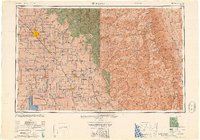 1956 Fresno1956 Print · USGSThe Central Valley and High Sierra meet in this mid-fifties survey of a rapidly developing California interior. Researchers can trace the rail-and-water networks of Visalia, the footprint of Tulare Lake, and the remote heights of Sequoia National Park.
 - 1956 Map of Monache Mtn, 1961 Print
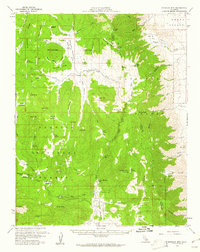 1956 Monache Mtn1961 Print · USGSIn the mid-fifties, this pocket of the Sierra Nevada near the Tulare and Inyo county line was a hub for high-country camps and seasonal grazing. Researchers can trace the layout of Sam Lewis Camp, the remote Landing Strip at Monache Meadows, and the paths through Haiwee Pass.3 unique versions available
 - 1956 Map of Olancha, 1961 Print
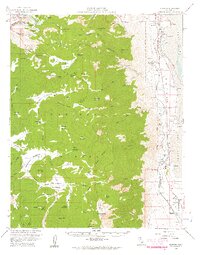 1956 Olancha1961 Print · USGSThe Owens Lake basin was a center of industrial transport and mountain resource management in the mid-fifties. Researchers can trace the Southern Pacific RR past soda evaporators to the high camps at Golden Trout Camp and Brown Cow Camp.4 unique versions available
 - 1957 Map of Death Valley
 1957 Death Valley1957 Print · USGSThe High Desert in the mid-fifties reveals a landscape of extreme elevations and deep-seated mining history, from the Panamint Range to the Amargosa River. Trace the remnants of the Tonopah & Tidewater RR and remote sites like Ballarat or the Skidoo Mine.
 - 1958 Map of Death Valley
 1958 Death Valley1958 Print · USGSThe High Desert and Death Valley during the mid-fifties reveal a stark landscape of mining camps and new military ranges. Historians can trace the lineage of remote outposts like Ballarat, the Skidoo Mine, and the historic Cerro Gordo Mine.
 - 1958 Map of Fresno
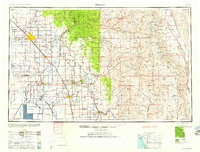 1958 Fresno1958 Print · USGSThe Central Valley and High Sierra meet in this mid-century survey of the California heartland. Researchers can trace the rail-and-road network connecting Fresno and Visalia or locate high-country landmarks like Mt Whitney and Sequoia National Park.
 - 1960 Map of Fresno
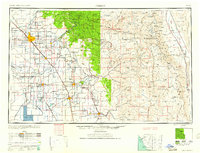 1960 Fresno1960 Print · USGSThe San Joaquin Valley's mid-century agricultural boom meets the high peaks of the Sierra Nevada in this detailed survey. Genealogists and historians can trace the rail-driven growth of Fresno, Tulare, and Visalia or locate family roots in smaller towns like Raisin City and Calwa City.2 unique versions available
 - 1961 Map of Death Valley
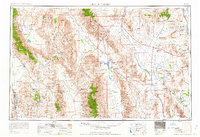 1961 Death Valley1961 Print · USGSDeath Valley and the Nevada borderlands are shown in the early sixties as a landscape of military testing and historic mining. Genealogists and researchers can locate remote settlements like Rhyolite, active operations at Darwin Mines, and cold-war sites such as the Nevada Proving Grounds.
 - 1962 Map of Fresno, 1968 Print
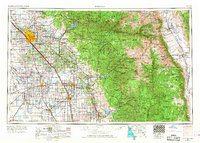 1962 Fresno1968 Print · USGSThe Central Valley and High Sierra meet in this mid-century survey, capturing the region's massive irrigation systems and mountain wilderness. Researchers can trace the rail corridors of the Southern Pacific and locate landmarks like the Tulare Lake Bed and Mount Whitney.3 unique versions available
 - 1964 Map of Death Valley
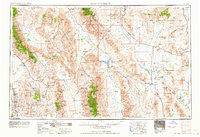 1964 Death Valley1964 Print · USGSThe California-Nevada borderlands are shown here in the mid-1960s, a landscape defined by extreme geography and strategic military testing. Researchers can locate remote mining sites like Skidoo Mines or trace the early tourist footprint at Stovepipe Wells Hotel.
 - 1965 Map of Death Valley
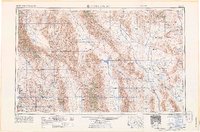 1965 Death Valley1965 Print · USGSThe California-Nevada borderlands are captured here in the mid-1960s, showing the high-desert transition from mining camps to military proving grounds. Researchers can locate remote settlements like Skidoo and Ballarat or trace the old Tonopah and Tidewater Railroad.
 - 1966 Map of Fresno
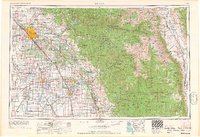 1966 Fresno1966 Print · USGSCentral California in the mid-1960s showcases a high-production agricultural valley rising into the granite peaks of the High Sierra. Researchers can trace irrigation networks, rail spurs like the Southern Pacific, and landmarks from Mount Whitney to the Lemoore Naval Air Station.
 - 1978 Map of Three Rivers, 1994 Print
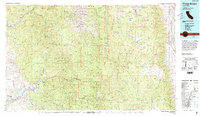 1978 Three Rivers1994 Print · USGSTulare County's dramatic ascent from the San Joaquin Valley to the High Sierra is captured here during the late seventies. Researchers can trace the layout of the Tule River Indian Reservation and locate early mountain outposts like Camp Nelson or Globe.2 unique versions available
 - 1982 Map of Haiwee Reservoirs, 1983 Print
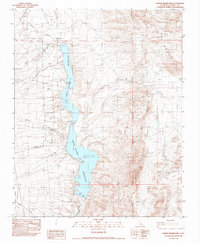 1982 Haiwee Reservoirs1983 Print · USGSThe Owens Valley water system is showcased in the early eighties, highlighting the essential infrastructure of the Los Angeles Aqueduct. Trace the engineering of the North Haiwee Dam and locate local mining sites like the Jack Henry Mine and McCloud Mine.
Showing maps 1-25 of 48
Top neighborhoods of Olancha
Frequently asked questions
- What are the different types of historical maps available for Olancha?
- What is the oldest map of Olancha?
- Where can I purchase historical maps of Olancha for my home or office?
- Where can I download high-res historical maps of Olancha?
- Are there historical topographic maps available for Olancha?
- Is there historical aerial imagery available for Olancha?
- Where are historical maps of Olancha sourced from?