1900s (20th Century) Maps of Prowers County, Colorado
Explore 44 historic maps of Prowers County from the 1900s (20th Century). These maps offer a rare glimpse into what life looked like during the 1900s — showing old roads, neighborhoods, homes, and landmarks that have changed or disappeared over time.
Whether you're researching your family's past, planning a metal detecting trip, or studying how Prowers County's landscape evolved across the 1900s, these high-resolution maps are a powerful tool for exploring the history of this region.
- Focus on a specific era: All maps on this page are from the 1900s, giving you a focused view of this time period.
- See what’s changed: Compare century-old streets, trails, and buildings to today's modern landscape using overlays and satellite layers.
- Research with precision: Use these maps for genealogy, historical research, land use analysis, or educational projects.
- View, download, or print: Maps are fully viewable online in high resolution, and can be downloaded or printed for your own records.
Start exploring Prowers County's history through authentic maps from the 1900s. This is your window into the past.
Prowers County, CO maps
(44)- 1952 Map of Lamar West, 1954 Print
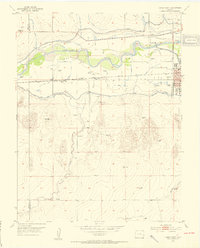 1952 Lamar West1954 Print · USGSThe river valley west of Lamar was a vital corridor for both historic wagon routes and modern irrigation during the early fifties. Genealogists and historians can trace the Old Santa Fe Trail alongside local landmarks like Dry Creek School and Crawford Cem.4 unique versions available
 - 1952 Map of Carlton, 1954 Print
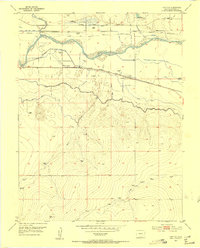 1952 Carlton1954 Print · USGSThe Arkansas River valley in Prowers County was a vital agricultural and transport corridor in the early fifties. Genealogists can locate family landmarks like Center Farm, the Carlton School, and the path of the Old Santa Fe Trail.
 - 1953 Map of Holly West, 1954 Print
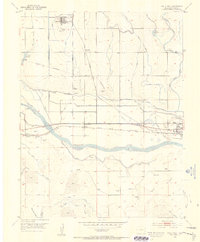 1953 Holly West1954 Print · USGSSoutheast Colorado in the early fifties shows a landscape shaped by the Arkansas River and the legacy of the western frontier. Trace the Old Santa Fe Trail as it passes through Amity, locate the Hartman Cemetery, and see the rail-side Grain Elevator at Hartman.4 unique versions available
 - 1953 Map of Granada, 1954 Print
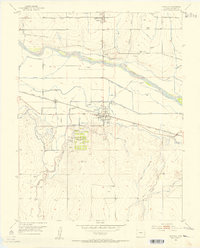 1953 Granada1954 Print · USGSThe High Plains of Prowers County are shown in the early fifties, detailing a landscape defined by irrigation and railroad transit. Researchers can find Camp Amache (Aband), the Granada Cem, and small railroad sidings like Koen and Warwick.3 unique versions available
 - 1953 Map of Lamar East, 1954 Print
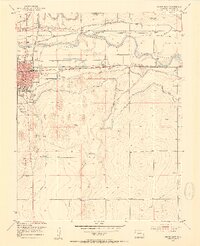 1953 Lamar East1954 Print · USGSThe Arkansas River valley in the early fifties shows a landscape of vital irrigation and railroad history. Trace the route of the Santa Fe Trail and find local landmarks like Riverside Cemetery, Clay Creek School, and the Lamar city limits.5 unique versions available
 - 1953 Map of Holly East, 1954 Print
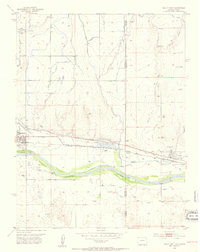 1953 Holly East1954 Print · USGSThe Arkansas River valley at the Colorado-Kansas border was a vital transit corridor in the early fifties. Historians can trace the Old Santa Fe Trail past the Site of Old Trail City and the rail-side towns of Holly and Coolidge.4 unique versions available
 - 1954 Map of Lamar, 1964 Print
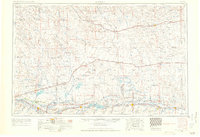 1954 Lamar1964 Print · USGSSoutheastern Colorado and the Kansas borderlands appear here in the mid-fifties, dominated by the vital Arkansas River irrigation network. Researchers can trace the development of river towns like Lamar and La Junta alongside the Amity Cemetery and several major reservoirs.3 unique versions available
 - 1955 Map of Holly NE, 1956 Print
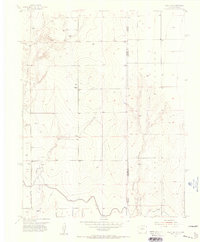 1955 Holly NE1956 Print · USGSThe Colorado-Kansas state line is captured here in the mid-1950s, showing a high-plains landscape shaped by vital irrigation. Genealogists and researchers can trace the path of the Amity Canal, locate a School (Aband), and explore the terrain of Coolidge Ridge.3 unique versions available
 - 1955 Map of Granada NW, 1956 Print
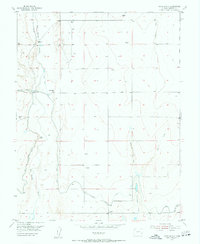 1955 Granada NW1956 Print · USGSThe Prowers County high plains in the mid-1950s show an environment defined by irrigation and early aviation. Researchers can trace the water systems of the Amity Canal and find local landmarks like Tenmile Point and the Goodale Sch.2 unique versions available
 - 1955 Map of Granada NE, 1956 Print
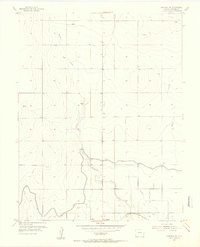 1955 Granada NE1956 Print · USGSSoutheast Colorado at the height of the post-war ranching era reveals a landscape shaped by irrigation and rail. Genealogists and historians can locate the Sunnyslope Cemetery, the settlement of Bristol, and the route of the Atchison Topeka and Santa Fe railroad.3 unique versions available
 - 1955 Map of Holly NW, 1956 Print
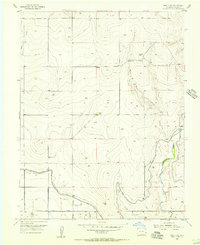 1955 Holly NW1956 Print · USGSSoutheast Colorado at mid-century reveals a landscape defined by ranching and an expansive irrigation network. Genealogists and historians can trace the Klama Ranch, the Cramblet Ranch, and the path of the Amity Canal through the prairie.2 unique versions available
 - 1955 Map of May Valley, 1956 Print
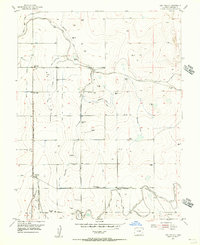 1955 May Valley1956 Print · USGSThe High Plains of Prowers County appear here at a mid-century peak of rural development, dominated by a sophisticated network of irrigation canals and local rail stops. Researchers can trace the heritage of vanished school districts like Hopewell Sch and the rail-side community at Kornman.
 - 1955 Map of Wiley, 1956 Print
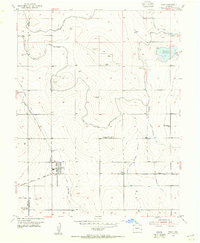 1955 Wiley1956 Print · USGSIn the mid-1950s, the irrigation-dependent plains of Prowers and Bent Counties centered on the railroad town of Wiley. Researchers can trace the development of the region's water rights and schools like Cactus View Sch (Aban'd) and West Riverview Sch.2 unique versions available
 - 1955 Map of La Junta, 1966 Print
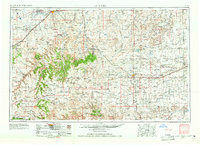 1955 La Junta1966 Print · USGSSoutheastern Colorado during the mid-fifties is captured here as a sprawling network of ranching outposts and rail sidings. Researchers can locate vanished landmarks like the Sunderland School, trace the isolated Lycan Post Office, or find the Bomb target (abandoned) on the western plains.3 unique versions available
 - 1958 Map of La Junta
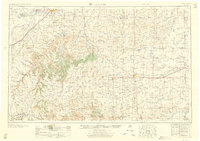 1958 La Junta1958 Print · USGSSoutheast Colorado and the Kansas borderlands appear in the late fifties as a landscape of isolated ranching outposts and vital rail junctions. Researchers can trace the lineage of vanished post offices and rural school sites like the Lycan Post Office and Sunderland School.2 unique versions available
 - 1958 Map of Lamar
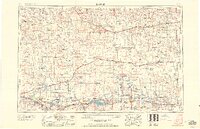 1958 Lamar1958 Print · USGSThe High Plains of Eastern Colorado and Western Kansas in the late fifties reveal a landscape tied to the Arkansas River and the rails. Trace the heritage of the river valley through Fort Lyon, the Atchison Topeka and Santa Fe RR, and rural landmarks like Kendrick Church.2 unique versions available
 - 1966 Map of Durkee Creek NE, 1967 Print
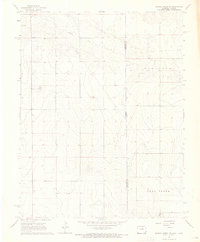 1966 Durkee Creek NE1967 Print · USGSThe high plains of the Prowers and Hamilton county line appear in the mid-1960s, showing the quiet landscape along the Colorado-Kansas border. Researchers can trace land use patterns through the Canal system, the flow of Bear Creek, and numerous rural wells.
 - 1966 Map of Two Butte Springs, 1967 Print
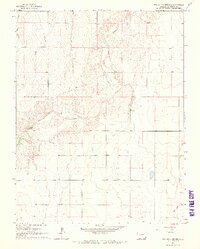 1966 Two Butte Springs1967 Print · USGSProwers County in the mid-1960s reveals a quiet landscape of high plains drainage and vital water sources. Researchers can trace land use through field lines and locate the important Two Butte Springs, Two Butte Creek, and Plum Creek.2 unique versions available
 - 1966 Map of Durkee Creek NW, 1967 Print
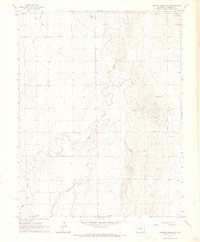 1966 Durkee Creek NW1967 Print · USGSSoutheast Colorado rangeland comes into focus in the mid-1960s, showing a landscape defined by seasonal water and shifting terrain. Researchers can trace the path of Two Butte Creek, locate the Lamar Canal, and study the vast areas of Shifting Sand near Plum Creek.
 - 1966 Map of Durkee Creek SE, 1967 Print
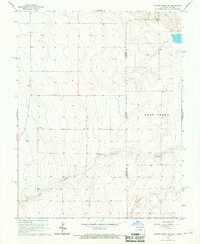 1966 Durkee Creek SE1967 Print · USGSThe Colorado-Kansas state line at the edge of Prowers and Hamilton counties is captured here in the mid-1960s. Genealogists and researchers can trace the drainages of Bear Creek and Dry Creek or locate the remote Garder Cem and various landmark Wells.
 - 1967 Map of Neenoshe Reservoir, 1971 Print
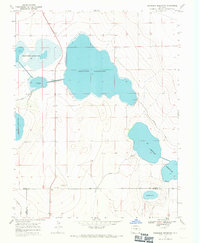 1967 Neenoshe Reservoir1971 Print · USGSSoutheast Colorado water management is on full display in the late sixties as reservoirs and irrigation canals define the Kiowa County landscape. Trace the intricate network of the Neenoshe Reservoir system, the Landing Strip, and the Pawnee Canal.
 - 1968 Map of La Junta
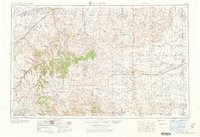 1968 La Junta1968 Print · USGSSoutheastern Colorado and the high plains appear in remarkable detail during the late 1960s, showing the intersection of irrigation, ranching, and rail. Genealogists can trace family footprints at the Lycan Post Office, Konantz Cem, and across numerous named cattle ranches.
 - 1968 Map of Sheridan Lake SE, 1971 Print
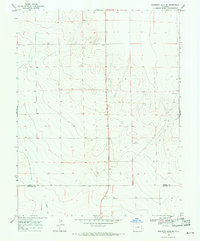 1968 Sheridan Lake SE1971 Print · USGSEastern Colorado's high plains near the turn of the 1970s reveal a landscape of remote ranching and utility infrastructure. Researchers can trace the Kiowa and Prowers county line and locate water-critical sites like Buffalo Creek and several Water Tanks.
 - 1968 Map of Chivington SE, 1971 Print
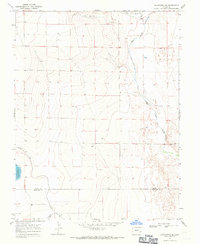 1968 Chivington SE1971 Print · USGSEastern Colorado in the late sixties shows a landscape defined by water management and resource extraction. Trace the routes of the Comanche Canal and Pawnee Canal or locate local industrial sites like the Gravel Pits.
 - 1968 Map of North Plum Creek NE, 1971 Print
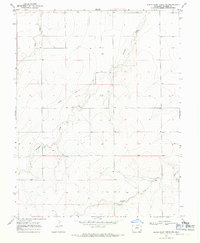 1968 North Plum Creek NE1971 Print · USGSProwers County's high plains terrain is documented here in the late sixties, showcasing the transit corridors of Eastern Colorado. Researchers can trace the path of the Santa Fe Granada Trail or locate features like Durkee and the Plum Creek drainage.
Showing maps 1-25 of 44
Top cities of Prowers County
- Lamar historical maps
- Holly historical maps
- Granada historical maps
- Wiley historical maps
- Hartman historical maps
Frequently asked questions
- What are the different types of historical maps available for Prowers County?
- What is the oldest map of Prowers County?
- Where can I purchase historical maps of Prowers County for my home or office?
- Where can I download high-res historical maps of Prowers County?
- Are there historical topographic maps available for Prowers County?
- Is there historical aerial imagery available for Prowers County?
- Where are historical maps of Prowers County sourced from?