Old Maps of Delaware
Explore 542 old maps of Delaware, spanning from 1890 to today. These high-resolution historic maps reveal how streets, neighborhoods, landmarks, and natural features evolved over time — perfect for genealogy, metal detecting, research, and local history exploration.
What you can do with these maps:
- See how Delaware changed over time: Compare historical maps to modern-day views to trace roads, homesites, rail lines & more.
- View detailed metadata: Each map includes creators, publishers, year, scale, and archive source.
- Overlay maps with satellite & LiDAR: Visualize the past alongside modern tools to explore terrain & human change.
- Trusted historical sources: Maps sourced from the USGS, Library of Congress, and other archives.
- Access maps your way: View online, download high-res files, or order prints for personal or research use.
Start exploring old maps of Delaware to uncover forgotten places, hidden landmarks, and the deep history beneath your feet.
Delaware maps
(542)- 1890 Map of Salem
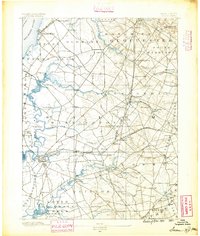 1890 Salem1890 Print · USGSSouth Jersey at the height of the Victorian era is captured here, showing the dense network of rail lines and creek-side landings. Genealogists and historians can trace family-named sites like Avis Mills, Hancock's Bridge, and Sharptown.2 unique versions available
 - 1890 Map of Maurice Cove
 1890 Maurice Cove1890 Print · USGSCumberland County’s shoreline in the late nineteenth century is a complex landscape of tidal creeks and maritime infrastructure. Researchers can trace the early rail terminus at Port Norris or locate offshore hazards like Dead Man's Shoal and Egg Island Light.
 - 1890 Map of Bay Side
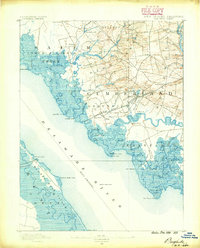 1890 Bay Side1890 Print · USGSCoastal Cumberland and Salem counties were defined by tidal marshes and new rail connections in the late 1880s. Genealogists and historians can trace old property lines near Maskell's Mill, locate the Cohansey Light Old Light, and follow the path of the New Jersey Southern Railroad.
 - 1891 Map of Maurice Cove
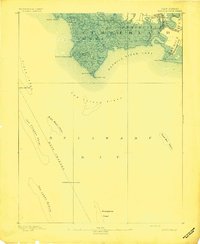 1891 Maurice Cove1891 Print · USGSCumberland County's coastal marshlands and the Delaware Bay oyster industry are captured here during the late Victorian era. Researchers can trace the dual rail lines serving Port Norris or locate offshore hazards like Dead Man Shoal and Egg Island Light.3 unique versions available
 - 1894 Map of Bay Side
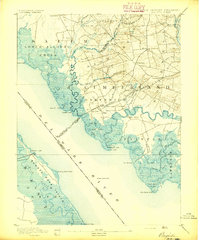 1894 Bay Side1894 Print · USGSThe Delaware Bayshore was a landscape of tidal marshes and remote landings in the late nineteenth century. Genealogists can trace family names and livelihoods through Laning Wharf, the milling sites at Maskell Mill, and maritime outposts like Ship John Light.5 unique versions available
 - 1894 Map of Chester, 1954 Print
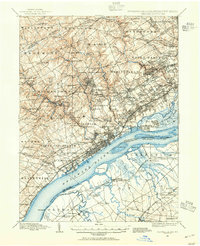 1894 Chester1954 Print · USGSThe Delaware River corridor near Chester was a hive of rail activity and water-powered industry at the close of the century. Genealogists and historians can trace family-named mills such as Llewellyn Mills or visit the campus of the Williamson School and the borough of Media.2 unique versions available
 - 1896 Map of Chester
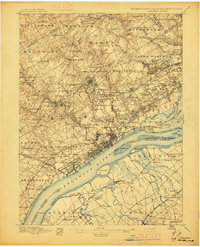 1896 Chester1896 Print · USGSThe industrial corridor along the Delaware River thrives at the close of the nineteenth century as railroads and mills reshape the landscape. Genealogists can trace early homesteads and institutions like the Williamson School, Sharon Academy, and Sycamore Mills.
 - 1898 Map of Salem
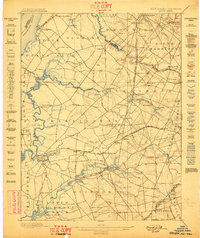 1898 Salem1898 Print · USGSSouthwestern New Jersey at the close of the nineteenth century shows a complex web of rural river settlements and early rail junctions. Trace the paths of the West Jersey and Seashore railroad and locate historical sites like Berry Chapel or Avis Mills.4 unique versions available
 - 1898 Map of Elkton
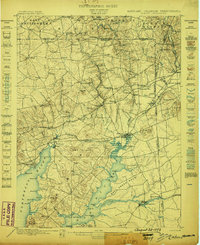 1898 Elkton1898 Print · USGSMaryland's Upper Chesapeake shoreline and the Pennsylvania borderlands come alive in this survey of late-Victorian Cecil County. Genealogists and historians can trace the early waterfront at Elkton Landing, find the Pivot Bridge on the canal, and locate vanished rail stops at Singerly and Bacon Hill.
 - 1898 Map of Chester
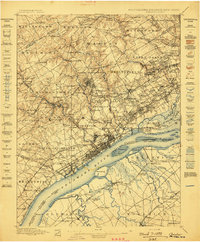 1898 Chester1898 Print · USGSThe Delaware River shoreline at the end of the nineteenth century reveals a landscape of industrial riverfronts and emerging mill towns. Genealogists and historians can trace family roots through numerous small settlements and institutions like Village Green, Booth Corner, and the Williamson School.10 unique versions available
 - 1899 Map of Vineland
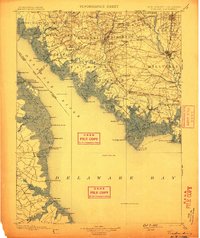 1899 Vineland1899 Print · USGSCumberland and Salem counties come alive in the late nineteenth century, showcasing a thriving coastal economy of rail lines and river ports. Genealogists and researchers can trace family lands near Maskells Mill, the oyster docks of Bivalve, or the rural junction at New England Cross Roads.3 unique versions available
 - 1899 Map of Dover
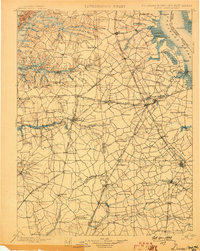 1899 Dover1899 Print · USGSDelaware and Maryland river country thrived in the late nineteenth century as a network of landings and rail lines. Trace old wharves at Cassidy Ldg., explore the area around Bohemia Mills, or locate maritime landmarks like Bombay Hook Light.2 unique versions available
 - 1900 Map of Elkton
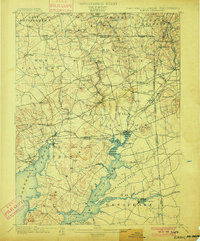 1900 Elkton1900 Print · USGSMaryland's tidewater and rail corridors meet at the turn of the century in this detailed survey of Cecil County. Genealogists can trace family roots through old settlements like McClellandville and Singerly or locate ancestors near the Pivot Bridge.7 unique versions available
 - 1900 Map of Cecilton
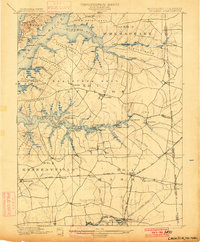 1900 Cecilton1900 Print · USGSUpper Chesapeake life at the turn of the century was defined by the deep tidal necks of the Sassafras River. You can trace old steamboat landings like Wilson Point Whf. and rural rail stops along the Baltimore and Delaware Bay R. R.6 unique versions available
 - 1901 Map of Camden
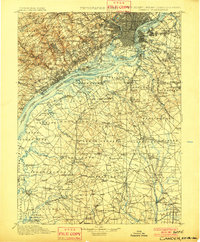 1901 Camden1901 Print · USGSThe Delaware River valley at the turn of the century shows a bustling corridor of early industrial growth and established mill towns. Researchers can trace the heritage of local industry at Sycamore Mills or locate early settlements like Penns Grove and Village Green.3 unique versions available
 - 1901 Map of Salisbury
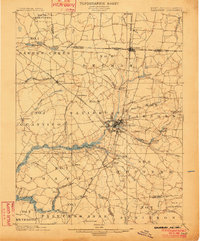 1901 Salisbury1901 Print · USGSWicomico County at the turn of the century centered on the steamboat and rail traffic through Salisbury. Trace historic family-named locations and rural infrastructure like Fooks School, Minksville, and the steam route at Shad Pt.4 unique versions available
 - 1901 Map of Ocean City
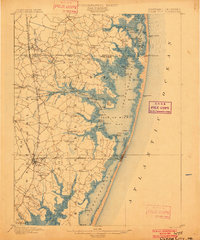 1901 Ocean City1901 Print · USGSThe Maryland and Delaware coastlines were still largely defined by maritime labor and new rail lines at the turn of the century. You can trace the early streets of Ocean City and Berlin or locate landmarks like the Fenwick Island Lighthouse and Muskrattown.5 unique versions available
 - 1901 Map of West Chester, 1958 Print
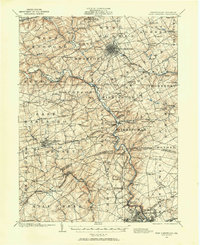 1901 West Chester1958 Print · USGSSettled hills and river valleys between Pennsylvania and Delaware are captured here in the early twentieth century. Trace the industrial landscape from West Chester down to Wilmington, finding landmarks like the Henry Clay Factory and Dutton Mill.
 - 1902 Map of Pittsville
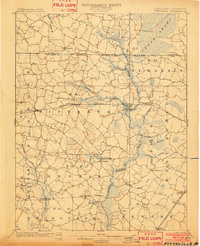 1902 Pittsville1902 Print · USGSEastern Shore life at the turn of the century is centered on the Baltimore Chesapeake and Atlantic rail line and the Pocomoke River. Genealogists can locate family-named sites like Tilghman Pond and Hearns or trace the old rail stop at Ironshire Station.4 unique versions available
 - 1904 Map of West Chester
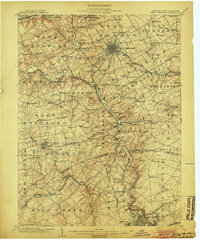 1904 West Chester1904 Print · USGSChester County at the dawn of the 1900s reveals a thriving network of rail-connected villages and early industrial sites along the Brandywine Creek. Researchers can trace old family lands near Dutton Mill, the House of Refuge, and the vanished stops of the West Chester Br. railroad.8 unique versions available
 - 1904 Map of Coatesville, 1960 Print
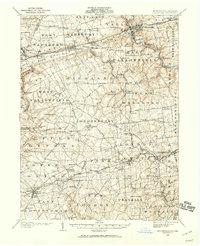 1904 Coatesville1960 Print · USGSChester County at the turn of the century shows a bustling corridor of industry and education nestled between the Valley Hills and Mine Ridge. Trace the early development of Lincoln University, the rail hubs at Coatesville, and rural landmarks like Faggs Manor Ch.
 - 1904 Map of Wilmington, 1961 Print
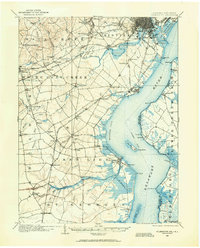 1904 Wilmington1961 Print · USGSDelaware’s coastal industrial corridor and river defenses are captured here at the turn of the century. Genealogists and historians can trace old transit lines like the Maryland and Delaware Electric RR or locate landmarks such as Fort Delaware and Coochs Bridge.
 - 1905 Map of Barclay
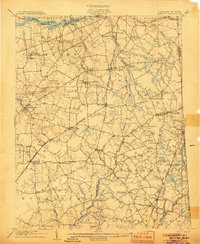 1905 Barclay1905 Print · USGSUpper Delmarva at the start of the twentieth century was a landscape of rail-connected farming towns and river landings. Trace family roots and old property lines near Sudlersville, the Ashland Hayden P O, and the Benedictine Convent.3 unique versions available
 - 1906 Map of Dover
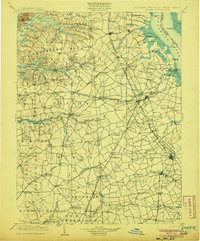 1906 Dover1906 Print · USGSCentral Delaware and Maryland's Eastern Shore appear at the start of the twentieth century, focused on the bustling rail-and-river economy. Genealogists can trace old family landing sites and crossroads villages like Bohemia Mills, Deakyneville Ldg., and Seven Hickories.3 unique versions available
 - 1906 Map of Coatesville
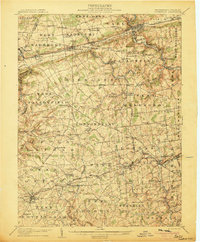 1906 Coatesville1906 Print · USGSChester County during the first decade of the 1900s reveals a landscape defined by industrial expansion and established rural hamlets. Researchers can trace the early footprint of Lincoln University and follow historic turnpikes through settlements like Faggs Manor, Parkesburg, and Ercildoun.8 unique versions available
Showing maps 1-25 of 542
Top cities of Delaware
- Wilmington historical maps
- Dover historical maps
- Newark historical maps
- Hockessin historical maps
- Smyrna historical maps
- Middletown historical maps
See more
Top counties of Delaware
Frequently asked questions
- What are the different types of historical maps available for Delaware?
- What is the oldest map of Delaware?
- Where can I purchase historical maps of Delaware for my home or office?
- Where can I download high-res historical maps of Delaware?
- Are there historical topographic maps available for Delaware?
- Is there historical aerial imagery available for Delaware?
- Where are historical maps of Delaware sourced from?