1950s Maps of Saint Johns County, Florida
Explore 16 historic maps of Saint Johns County from the 1950s. These maps offer a rare glimpse into what life looked like during the 1950s — showing old roads, neighborhoods, homes, and landmarks that have changed or disappeared over time.
Whether you're researching your family's past, planning a metal detecting trip, or studying how Saint Johns County's landscape evolved across the 1950s, these high-resolution maps are a powerful tool for exploring the history of this region.
- Focus on a specific era: All maps on this page are from the 1950s, giving you a focused view of this time period.
- See what’s changed: Compare century-old streets, trails, and buildings to today's modern landscape using overlays and satellite layers.
- Research with precision: Use these maps for genealogy, historical research, land use analysis, or educational projects.
- View, download, or print: Maps are fully viewable online in high resolution, and can be downloaded or printed for your own records.
Start exploring Saint Johns County's history through authentic maps from the 1950s. This is your window into the past.
Saint Johns County, FL maps
(16)- 1952 Map of Orangedale, 1956 Print
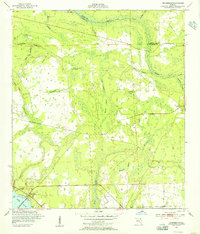 1952 Orangedale1956 Print · USGSAlong the eastern bank of the St. Johns River in the early fifties, this area shows a landscape of riverfront crossings and deep hammock wetlands. Genealogists and local historians can trace the early footprints of Orangedale and Pine Bluff or locate historical sites like Blacks Ford and Ruins.2 unique versions available
 - 1952 Map of Orange Park, 1956 Print
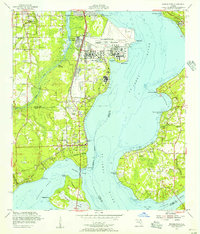 1952 Orange Park1956 Print · USGSOrange Park and Mandarin sit on opposite shores of the St. Johns River in the early fifties, caught between their agricultural roots and military growth. Genealogists and historians can trace family sites at Magnolia Cem, Bethel Ch, and the sprawling Jacksonville Naval Air Station.
 - 1952 Map of South Ponte Vedra Beach, 1956 Print
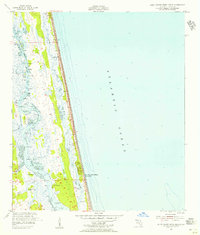 1952 South Ponte Vedra Beach1956 Print · USGSThe St. Johns County coastline is captured in the early 1950s, showing the narrow barrier strand and its transition into the vast Tolomato River marshes. Genealogists and historians can trace old river access points like Cook Landing, Spanish Landing, and the seaside Flowing Well.5 unique versions available
 - 1952 Map of Durbin, 1956 Print
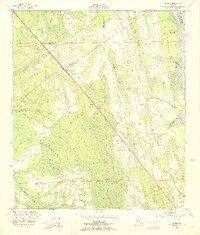 1952 Durbin1956 Print · USGSCoastal St. Johns County appears here in the early fifties, where the railroad and the Intracoastal Waterway dictate the local geography. Genealogists and historians can trace the small rail stops at Durbin and Hilden or locate the Lookout Tower and Ninemile Road.3 unique versions available
 - 1952 Map of Mickler Landing, 1956 Print
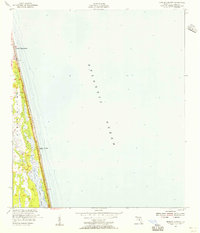 1952 Mickler Landing1956 Print · USGSThe coastal strip of St. Johns County is captured here in the early fifties, showing the initial growth of beachfront communities. Genealogists and historians can trace the early layout of Ponte Vedra Beach, the access at Mickler Landing, and the route of highway A1A.
 - 1952 Map of Palm Valley, 1956 Print
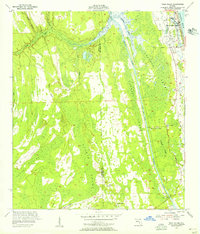 1952 Palm Valley1956 Print · USGSCoastal St. Johns County in the early fifties shows a landscape of developing beach communities and vast, untouched wetlands. Trace the early layout of Ponte Vedra Beach or explore the interior near Palm Valley Landing and the winding reaches of Durbin Swamp.2 unique versions available
 - 1952 Map of Bayard, 1956 Print
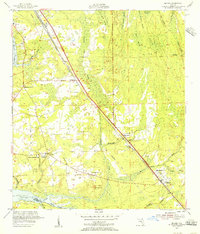 1952 Bayard1956 Print · USGSCoastal Duval County in the early fifties shows a landscape of expansive swamps and emerging highway settlements. Researchers can trace the roots of local communities through landmarks like Julington Cem, Allen Chapel, and the Stockade near Pablo Creek.
 - 1952 Map of Fleming Island, 1956 Print
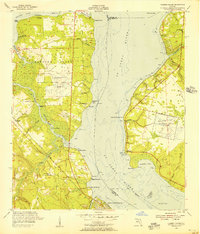 1952 Fleming Island1956 Print · USGSThe St. Johns River corridor shows a transition toward modern aviation and infrastructure in the 1950s. Genealogists and local historians can trace family-named points and community hubs like St Margaret Ch, Hibernia, and the early Fleming Island Airfield.4 unique versions available
 - 1954 Map of Daytona Beach, 1974 Print
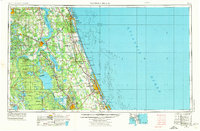 1954 Daytona Beach1974 Print · USGSNortheast Florida is captured in the mid-1950s, showing the transition from river-based commerce to coastal tourism. Researchers can trace the Florida East Coast rail lines and find historic sites like Castillo de San Marcos Nat Mon and Palatka.
 - 1956 Map of Dinner Island NE, 1960 Print
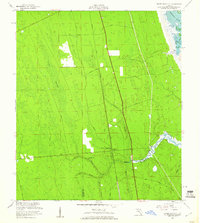 1956 Dinner Island NE1960 Print · USGSThe coastal wetlands of St. Johns and Flagler Counties are captured here in the mid-fifties, just as the modern era met the old Florida landscape. Genealogists and local historians can trace legacy routes like the Old Kings Road and locate rural landmarks such as Pellicer Creek Cem and Midway Ch.4 unique versions available
 - 1956 Map of Matanzas Inlet, 1960 Print
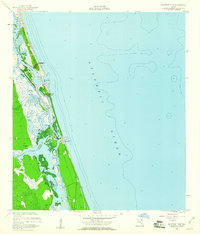 1956 Matanzas Inlet1960 Print · USGSAlong the Atlantic coast in the mid-1950s, this area preserves the strategic landscape surrounding the Matanzas Inlet. Researchers can trace the early layout of Summer Haven and Marineland, or explore the historical site of Ft Matanzas on the Matanzas River.4 unique versions available
 - 1956 Map of St. Augustine, 1961 Print
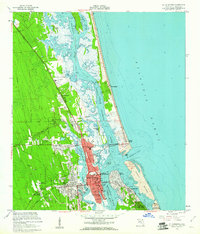 1956 St. Augustine1961 Print · USGSSt. Augustine and its surrounding barrier islands are documented in detail during the mid-fifties. Researchers can trace the layout of historic districts and landmarks like the Castillo De San Marcos National Mon, the Bridge of Lions, and Anastasia State Park.4 unique versions available
 - 1956 Map of St. Augustine Beach, 1961 Print
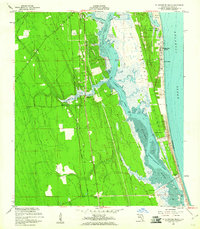 1956 St. Augustine Beach1961 Print · USGSCoastal St. Johns County comes alive in the mid-fifties, showing a landscape defined by the shifting sands and tidal marshes between the rivers and the sea. Researchers can trace family sites at San Lorenzo Cem, explore the early footprint of St Augustine Beach, and follow the Florida East Coast Railroad through the Florida pine flatwoods.5 unique versions available
 - 1957 Map of Jacksonville, 1967 Print
 1957 Jacksonville1967 Print · USGSCoastal Florida and Georgia meet in the late fifties, showcasing a landscape of naval aviation, deep-water terminals, and barrier island communities. Researchers can trace the mid-century footprints of NAS Jacksonville, find small communities like Franklintown, and locate the historic Fort Clinch State Park.3 unique versions available
 - 1958 Map of Daytona Beach
 1958 Daytona Beach1958 Print · USGSThe Florida coast and St. Johns River valley are captured in the late 1950s, showing a landscape defined by citrus-belt rail towns and Atlantic shorelines. Genealogists can trace family roots through riverside settlements like Palatka and Welaka or coastal hubs like Daytona Beach.2 unique versions available
 - 1959 Map of Jacksonville
 1959 Jacksonville1959 Print · USGSNortheast Florida and Southeast Georgia are seen here in the late fifties, dominated by the maritime activity of the St Johns River and the Atlantic coast. Researchers can trace the mid-century layout of Jacksonville and identify sprawling military sites like Camp Blanding Military Reservation and Kings Bay Ammunition Terminal.
End of results
Showing maps 1-16 of 16
Top cities of Saint Johns County
- Fruit Cove historical maps
- Ponte Vedra Beach historical maps
- Saint Augustine historical maps
- Saint Augustine Beach historical maps
- Saint Augustine South historical maps
- Saint Augustine Shores historical maps
See more
Frequently asked questions
- What are the different types of historical maps available for Saint Johns County?
- What is the oldest map of Saint Johns County?
- Where can I purchase historical maps of Saint Johns County for my home or office?
- Where can I download high-res historical maps of Saint Johns County?
- Are there historical topographic maps available for Saint Johns County?
- Is there historical aerial imagery available for Saint Johns County?
- Where are historical maps of Saint Johns County sourced from?