Old Maps of Trenton, Georgia for Metal Detecting
Plan your next treasure hunt with 47 historic maps of Trenton. Find old homesites, ghost towns, trails, and gathering spots that may be lost to time — perfect for identifying promising metal detecting locations.
- Locate forgotten sites: Uncover places like long-lost settlements, abandoned rail lines, or gathering spots.
- Plan better hunts: Use map overlays combined with LiDAR or satellite views to narrow in on historically rich areas.
- Made for detectorists: Thousands of hobbyists use these maps to discover relics, coins, and hidden history.
Use these historic maps to boost your research and find new opportunities beneath the surface of Trenton.
Trenton, GA maps
(47)- 1886 Map of Ringgold
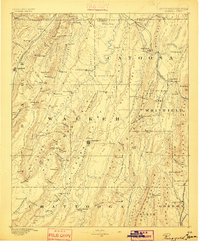 1886 Ringgold1886 Print · USGSNorthwest Georgia in the 1880s was a landscape of industrial river valleys and steep ridges defined by early rail lines. Local historians can trace family-named landmarks like Gilreath's Mill, the Trion Factory textile site, and the rural stop at Tap's Store.
 - 1886 Map of Stevenson
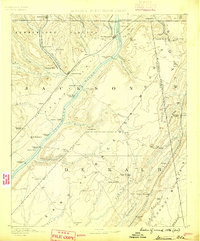 1886 Stevenson1886 Print · USGSNortheast Alabama at the peak of the railroad era shows a landscape tied to the river and the rails. Genealogists can trace family landmarks like Coffey's Store or locate river crossings such as Caperton Ferry and Snodgrass Ferry.
 - 1892 Map of Ringgold
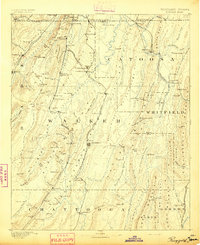 1892 Ringgold1892 Print · USGSNorth Georgia and the Tennessee border are mapped here in the late nineteenth century as the region transitioned into a post-war rail and tourism hub. Researchers can trace the early National Park boundaries, industrial Coal Mines, and vanished stops like High Point or Lisbon Sta..9 unique versions available
 - 1892 Map of Stevenson
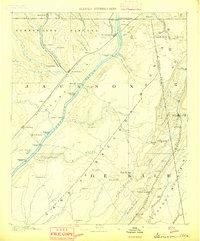 1892 Stevenson1892 Print · USGSNortheast Alabama and the Tennessee border in the 1890s reveal a landscape of mountain coves and vital river crossings. Genealogists and historians can trace rail junctions at Stevenson, river landings like Coffey's Ferry, and landmarks like Nickajack Cave.
 - 1895 Map of Stevenson
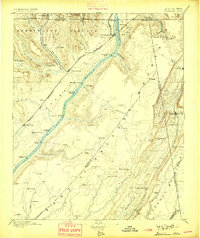 1895 Stevenson1895 Print · USGSThe Tennessee River valley and surrounding plateaus were a hub of rail and river commerce at the close of the century. Genealogists can trace family crossings at Island Creek Ferry or locate old communities like Bellefonte, Stevenson, and Valley Head.6 unique versions available
 - 1935 Map of Durham
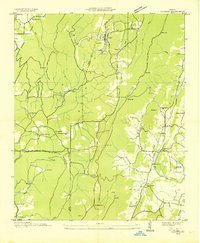 1935 Durham1935 Print · USGSNorthwest Georgia's industrial and rural landscape is documented here during the mid-1930s as mining and rail commerce defined the region. Researchers can trace the heritage of Durham and Cassandra through sites like Coal Mines, Prospect Sch, and Fuggett Ch.
 - 1936 Map of Trenton
 1936 Trenton1936 Print · USGSThe Georgia and Alabama borderlands are captured here in the mid-1930s as mountain life met the era's emerging highway and rail networks. Genealogists can locate family landmarks like Sand Mtn Academy, Hanna Cem, and the community of Rising Fawn.
 - 1936 Map of Shellmound
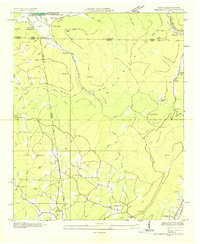 1936 Shellmound1936 Print · USGSThe tristate borderlands of Georgia, Alabama, and Tennessee are captured here in the mid-1930s before the flooding of the Guntersville Reservoir. Genealogists can locate family landmarks like Stephens Cem, Burnett Chapel, and several local schools like Poplar Spring Sch.
 - 1936 Map of Hooker
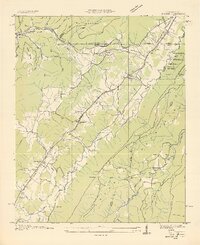 1936 Hooker1936 Print · USGSNorthwest Georgia and neighboring Tennessee appear here in the mid-thirties, showing a landscape defined by mountain gaps and river valleys. Researchers can trace the path of Southern Railway through Morganville or locate family sites like Bethlehem Cem and Slygo Ch.
 - 1945 Map of Shellmound
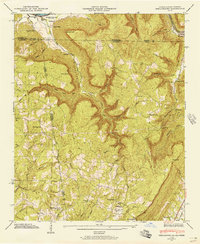 1945 Shellmound1945 Print · USGSThe tri-state border of Tennessee, Alabama, and Georgia was a landscape of remote hollows and mountain gaps at the close of the 1940s. Genealogists can trace family roots through Murphy Cem and Free Home Ch, or locate vanished crossroads at Cole City and Stephensville.2 unique versions available
 - 1945 Map of Hooker, 1954 Print
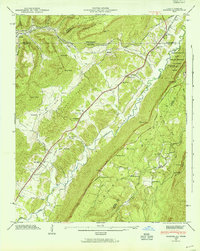 1945 Hooker1954 Print · USGSThe Georgia-Tennessee borderlands appear here in the mid-1940s, showing the intersection of heavy rail and mountain terrain. Genealogists can trace family landmarks like Sarah Chapel, West Brow Sch, and the Dickens Cem along the slopes of Lookout Mountain.2 unique versions available
 - 1946 Map of Shellmound, 1947 Print
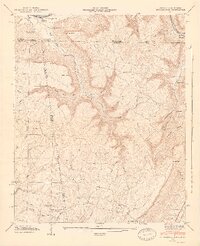 1946 Shellmound1947 Print · USGSSand Mountain and the Tennessee River valley meet in this post-war tri-state survey of the Georgia, Alabama, and Tennessee borders. Researchers can trace rural life and ancestry through sites like State Line Cem, Shanty Town Ch, and the Shellmound Sta along the rail line.2 unique versions available
 - 1946 Map of Hooker, 1947 Print
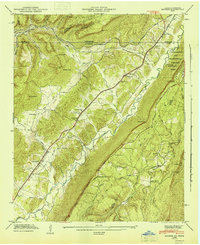 1946 Hooker1947 Print · USGSLookout Valley in the mid-1940s served as a vital rail corridor through the gaps of the Appalachians between Georgia and Tennessee. Genealogists can trace family footprints at Sarah Chapel, North Dade Sch, and Magill Cem along the winding course of Lookout Creek.2 unique versions available
 - 1946 Map of Trenton, 1947 Print
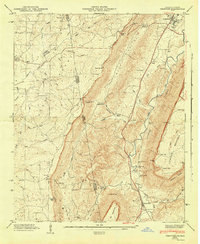 1946 Trenton1947 Print · USGSNorthwest Georgia and the Alabama borderlands are captured here in the mid-1940s, showing the ridge-and-valley landscape of Dade and DeKalb counties. Researchers can trace rural lineages through numerous landmarks like Countess Cem, Rising Fawn, and Byrds Chapel.5 unique versions available
 - 1946 Map of Durham, 1959 Print
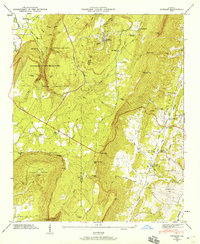 1946 Durham1959 Print · USGSNorthwest Georgia's high plateau and valley floor are captured here in the years following the war. Researchers can locate family landmarks such as Durham, Old Lookout Cem, and the Lookout Mtn Rural Sch.3 unique versions available
 - 1947 Map of Durham
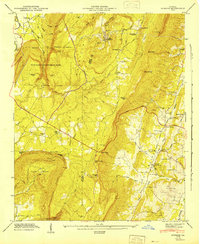 1947 Durham1947 Print · USGSNorthwest Georgia's mountain landscape was defined by coal and canyons in the years following World War II. Researchers can locate family landmarks such as Mc Kaig Cem and New Salem Ch, or trace the rail lines serving Durham.2 unique versions available
 - 1955 Map of Rome
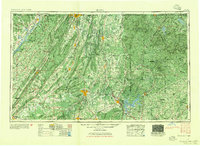 1955 Rome1955 Print · USGSThe tri-state borderlands of Georgia, Alabama, and Tennessee appear in the mid-fifties as a landscape of ridge-and-valley industry and river navigation. Genealogists can trace family footprints near Chattanooga, the iron works of Gadsden, and textile towns like Trion or Summerville.
 - 1958 Map of Rome, 1966 Print
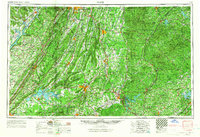 1958 Rome1966 Print · USGSNorthwest Georgia and neighboring Tennessee and Alabama are captured here in the late fifties, showcasing a landscape of high ridges and river valleys. Researchers can trace historic rail lines like the Seaboard Air Line RR and explore the bounds of Cloudland Canyon State Park or Fort Oglethorpe.3 unique versions available
 - 1961 Map of Rome
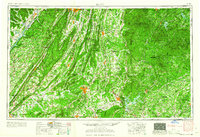 1961 Rome1961 Print · USGSNorthwest Georgia and neighboring Tennessee and Alabama are shown here at a moment of significant mid-century growth. Researchers can trace the rail networks of the Central of Georgia or locate landmarks within Chickamauga and Chattanooga Nat Military Park.
 - 1963 Map of Rome
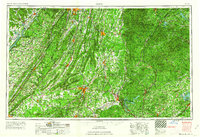 1963 Rome1963 Print · USGSThe tri-state corner of Georgia, Alabama, and Tennessee is captured here during a period of massive reservoir expansion and post-war growth. Genealogists and historians can trace the rail corridors of the Southern Ry or locate landmarks like Fort Oglethorpe and Cloudland Canyon State Park.
 - 1970 Map of Hooker, 1972 Print
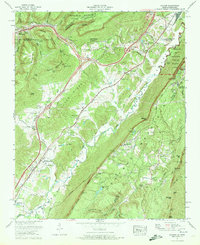 1970 Hooker1972 Print · USGSThe Tennessee-Georgia borderlands come to life in the early seventies, where the massive profiles of Lookout Mountain and Raccoon Mountain meet. Genealogists and local historians can trace family-named sites like Bates Cem, Sarah Chapel, and the small community of New England.
 - 1970 Map of New Home, 1972 Print
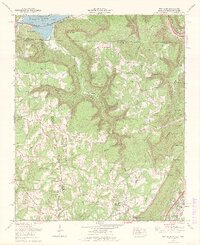 1970 New Home1972 Print · USGSThe tri-state border of Georgia, Alabama, and Tennessee comes alive in the early seventies as the Tennessee River valley meets the coal-rich ridges. Genealogists and historians can trace family roots at Reeves Cem or Stephens Cem, and locate landmarks like Nickajack Cave and Cole City.2 unique versions available
 - 1981 Map of Chickamauga, 1982 Print
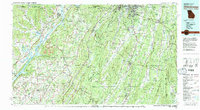 1981 Chickamauga1982 Print · USGSThe tri-state border region of Georgia, Alabama, and Tennessee comes into focus during the early eighties, defined by the towering ridges of the Appalachians. Historians can trace the preserved grounds of Chickamauga and Chattanooga National Military Park and old rail stops like Rising Fawn or Sulphur Springs.2 unique versions available
 - 1982 Map of Hooker, 1983 Print
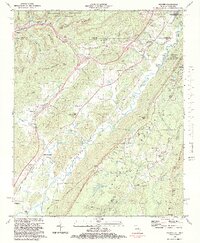 1982 Hooker1983 Print · USGSThe northern reaches of Georgia's mountain country are captured here in the early eighties, where deep valleys and rail lines define the settlements. Genealogists can trace family names through numerous landmarks like Haswell Cem, Slygo Ch, and New England.2 unique versions available
 - 1982 Map of New Home, 1983 Print
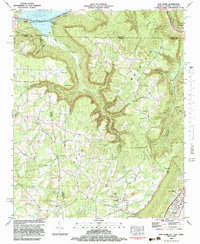 1982 New Home1983 Print · USGSThe tri-state border region of Georgia, Alabama, and Tennessee is captured here in the early eighties, centered on the heights of SAND MOUNTAIN. Researchers can trace old mountain roads and industrial footprints, from Strip Mines to landmarks like Nickajack Cave and Cole City.2 unique versions available
Showing maps 1-25 of 47
Top cities near Trenton
- Chattanooga historical maps
- LaFayette historical maps
- Rossville historical maps
- South Pittsburg historical maps
- Jasper historical maps
- Chickamauga historical maps
See more
Frequently asked questions
- What are the different types of historical maps available for Trenton?
- What is the oldest map of Trenton?
- Where can I purchase historical maps of Trenton for my home or office?
- Where can I download high-res historical maps of Trenton?
- Are there historical topographic maps available for Trenton?
- Is there historical aerial imagery available for Trenton?
- Where are historical maps of Trenton sourced from?