1960s Maps of Franklin County, Idaho
Explore 28 historic maps of Franklin County from the 1960s. These maps offer a rare glimpse into what life looked like during the 1960s — showing old roads, neighborhoods, homes, and landmarks that have changed or disappeared over time.
Whether you're researching your family's past, planning a metal detecting trip, or studying how Franklin County's landscape evolved across the 1960s, these high-resolution maps are a powerful tool for exploring the history of this region.
- Focus on a specific era: All maps on this page are from the 1960s, giving you a focused view of this time period.
- See what’s changed: Compare century-old streets, trails, and buildings to today's modern landscape using overlays and satellite layers.
- Research with precision: Use these maps for genealogy, historical research, land use analysis, or educational projects.
- View, download, or print: Maps are fully viewable online in high resolution, and can be downloaded or printed for your own records.
Start exploring Franklin County's history through authentic maps from the 1960s. This is your window into the past.
Franklin County, ID maps
(28)- 1960 Map of Ogden
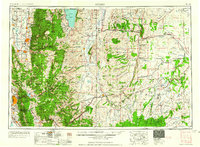 1960 Ogden1960 Print · USGSIn the mid-1950s, this region of the American West balanced military expansion with frontier history along the Union Pacific RR. Genealogists and historians can trace old settlements like Fort Bridger, the residential growth of Washington Terrace, and industrial sites from the Hill AFB complex to the coal mines of Kemmerer.
 - 1962 Map of Brigham City
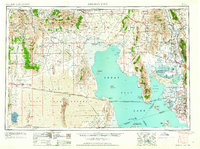 1962 Brigham City1962 Print · USGSNorthern Utah in the early sixties reveals a landscape of vast salt flats and growing towns along the Wasatch Front. Researchers can trace the Southern Pacific line past the Golden Spike Monument or locate landmarks like Indian Cave and Donner-Reed Pass.
 - 1962 Map of Preston
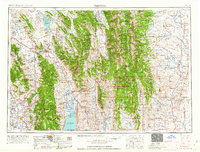 1962 Preston1962 Print · USGSSoutheast Idaho and the Wyoming borderlands are captured here in the early sixties, a time of thriving agricultural valleys and mountain ranching. Researchers can trace the Union Pacific rail lines and find legacy settlements like Montpelier, Afton, and Preston.
 - 1964 Map of Richmond, 1966 Print
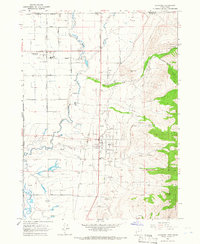 1964 Richmond1966 Print · USGSThe northern Cache Valley comes alive in the mid-1960s, showing the agricultural heartland along the Idaho-Utah border. Genealogists and local historians can trace family land near Lewiston, the Sugar Refinery, and the Union Pacific rail lines.
 - 1964 Map of Clarkston, 1966 Print
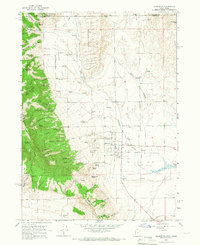 1964 Clarkston1966 Print · USGSSettled at the foot of the western mountains in the 1960s, this area around Clarkston shows a transition from high forest to fertile valley floor. Genealogists and historians can locate the local Cem, the Gravel Pit, and family-named landmarks like Myler Grove and Archibald Hollow.2 unique versions available
 - 1964 Map of Trenton, 1966 Print
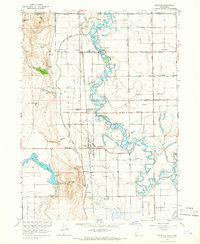 1964 Trenton1966 Print · USGSThe Cache Valley at the height of the mid-century shows a landscape of river-fed agriculture and rail-side settlements along the Utah-Idaho border. Local researchers can trace the historic Union Pacific tracks through Trenton or locate the Cornish Cem and Newton Reservoir.2 unique versions available
 - 1968 Map of Malad Summit, 1971 Print
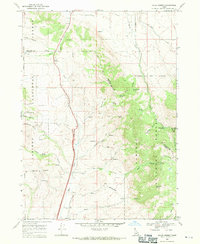 1968 Malad Summit1971 Print · USGSThe high pass at Malad Summit served as a vital corridor through the Idaho mountains during the late 1960s. Researchers can locate remote resource sites like a Mill and Mine, and trace old routes through the Caribou National Forest via a pack trail.2 unique versions available
 - 1968 Map of Oxford, 1971 Print
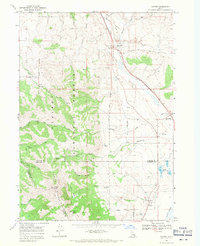 1968 Oxford1971 Print · USGSThe Marsh Valley corridor comes to life in this late 1960s survey, showing the vital transit and water networks of southern Idaho. Trace family roots at the Oxford Cem and explore the historic geography of Red Rock Pass and Swanlake.
 - 1968 Map of Clifton, 1971 Print
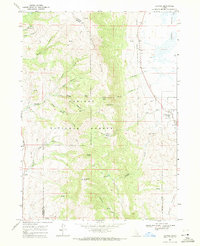 1968 Clifton1971 Print · USGSIn the late sixties, the ranching country near Clifton remained a world of mountain basins and complex water rights. Genealogists and local historians can trace the paths of the Pack Trail through North Fork Mine Hollow or locate high-elevation landmarks like Weston Peak and Davis Basin.3 unique versions available
 - 1968 Map of Weston Canyon, 1971 Print
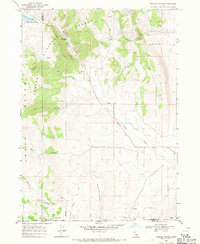 1968 Weston Canyon1971 Print · USGSFranklin and Oneida counties meet in this late-1960s survey of the Idaho-Utah borderlands, where mountain canyons give way to high-desert flats. Genealogists and historians can locate remote landmarks like Standing Rock, Weston Creek Reservoir, and the Washboards.2 unique versions available
 - 1969 Map of Tony Grove Creek, 1973 Print
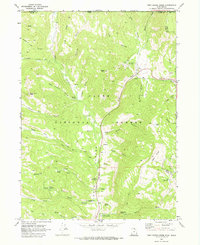 1969 Tony Grove Creek1973 Print · USGSHigh in the Cache National Forest during the late sixties, this survey captures the intersection of mountainous recreation and resource history. Trace the trails leading to the Amazon Mine, explore the Beaver Mtn Ski Area, or locate the Tony Grove Memorial Guard Station.
 - 1969 Map of Midnight Mtn, 1973 Print
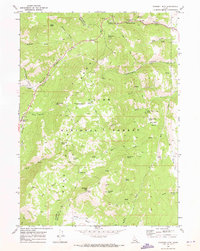 1969 Midnight Mtn1973 Print · USGSThe Bear Lake Range in the late sixties reveals a landscape of high-country basins and deep canyons along the Bear Lake and Franklin county line. Trace historic routes via the PACK TRAIL and JEEP TRAIL to remote landmarks like Midnight Mtn, Midnight Lake, and Danish Flat.
 - 1969 Map of Egan Basin, 1973 Print
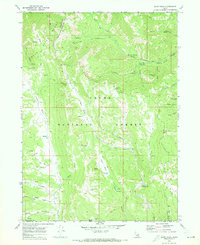 1969 Egan Basin1973 Print · USGSThe high Bear River Range at the Idaho-Utah border is shown here in the late sixties, where the Cache National Forest landscape remains wild and roadless. Researchers can trace historic access routes like Danish Pass or locate geological features such as Minnetonka Cave and the Sinks.2 unique versions available
 - 1969 Map of Treasureton, 1973 Print
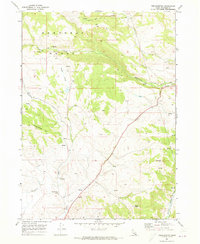 1969 Treasureton1973 Print · USGSThe high country of Franklin County in the late sixties reveals a landscape of irrigation canals and mountain passes. Trace family roots at the Treasureton Cemetery or follow the route of the Bear River near Oneida Station and Battle Creek.2 unique versions available
 - 1969 Map of Mink Creek, 1973 Print
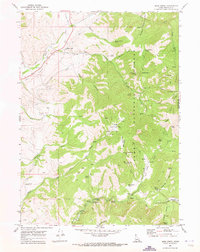 1969 Mink Creek1973 Print · USGSFranklin County's high country is captured here in the late sixties, where the small settlement of Mink Creek meets the western edge of the Cache National Forest. Local history researchers can trace water infrastructure like the Station Creek Tunnel and Siphon, or find family sites near the Mink Creek Cem and Cub River Guard Sta.2 unique versions available
 - 1969 Map of North Canyon, 1973 Print
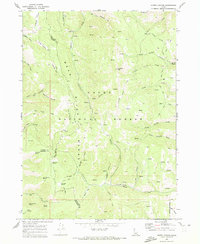 1969 North Canyon1973 Print · USGSSoutheast Idaho's backcountry in the late sixties reveals a network of high-altitude basins and vital water sources within the Cache National Forest. Researchers can trace old mountain routes like the pack trails through Swainston Hollow or locate historic watering points like Bear Wallow Spring.2 unique versions available
 - 1969 Map of Weston, 1973 Print
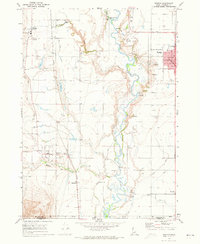 1969 Weston1973 Print · USGSFranklin County's irrigation and rail network are on full display in the late 1960s, centered on the growing hubs of Preston and Weston. Researchers can trace the Union Pacific line past local landmarks like the Little Santa Anita Racetrack and the Historical Monument near Dayton.2 unique versions available
 - 1969 Map of Paris Peak, 1973 Print
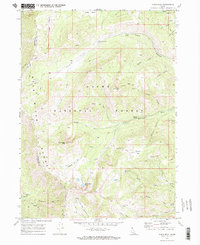 1969 Paris Peak1973 Print · USGSThe Bear River Range in the late sixties reveals a landscape defined by high-altitude trails and the summits of the Cache National Forest. Trace historical mountain access via the German Dugway, locate the Paris Ice Cave, and follow the High Line Trail.2 unique versions available
 - 1969 Map of Banida, 1973 Print
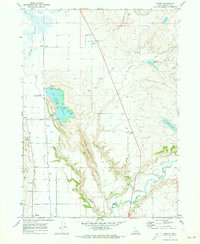 1969 Banida1973 Print · USGSFranklin County's irrigation and rail landscape is captured here in the late sixties as agricultural development shaped the valley. Genealogists and local historians can trace family roots through small settlements like Banida and Dayton or locate the Pioneer Women Historical Monument and Wayland Hot Springs.
 - 1969 Map of Cottonwood Peak, 1973 Print
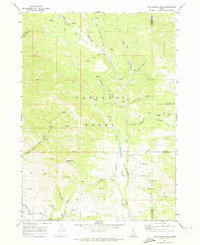 1969 Cottonwood Peak1973 Print · USGSThe Portneuf Range and its high-elevation canyons define this corner of Idaho in the late sixties. Researchers can trace historic water routes and mountain access trails from Cottonwood Peak to the Treasureton Canal and the cattle-grazing grounds of Hog Wallow.2 unique versions available
 - 1969 Map of Franklin, 1973 Print
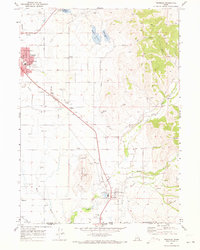 1969 Franklin1973 Print · USGSFranklin and Preston were established agricultural hubs in the late sixties, tied together by the Union Pacific Railroad. You can trace old family roots and rural infrastructure through Whitney School, the Fairview Cemetery, and the Upper Canal.
 - 1969 Map of Naomi Peak, 1973 Print
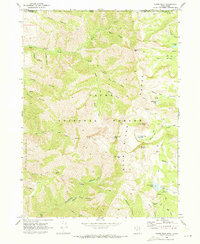 1969 Naomi Peak1973 Print · USGSThe high Bear River Range at the Idaho-Utah border is captured here in the late sixties, showing the wilderness of the Cache National Forest. Trace backcountry routes to Naomi Peak, alpine waters like White Pine Lake, and high camps at Tony Grove Lake.4 unique versions available
 - 1969 Map of Thatcher, 1973 Print
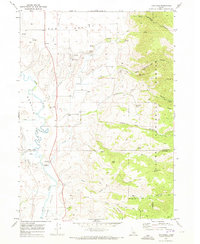 1969 Thatcher1973 Print · USGSCaribou County as it appeared in the late sixties reveals the transition from the irrigated fields of Gentile Valley to high national forest ridges. Researchers can locate the Lago Cem, Central High Sch, and family landmarks like Mickelson Spring or Bitton Spring.2 unique versions available
 - 1969 Map of Mapleton, 1973 Print
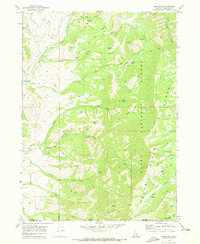 1969 Mapleton1973 Print · USGSFranklin County's high-mountain borderlands come into focus at the end of the sixties, where the valley floor meets the high peaks. Genealogists and historians can trace the irrigation network and early settlements of Mapleton and Cherryville, or locate family-named landmarks like Chatterton Spring and Paul Jones Spring.3 unique versions available
 - 1969 Map of Oneida Narrows Reservoir, 1973 Print
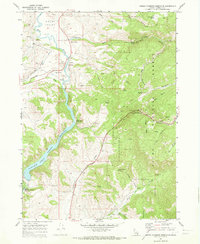 1969 Oneida Narrows Reservoir1973 Print · USGSFranklin County's river-driven economy is on full display in the late sixties as the Bear River feeds the Oneida Narrows Reservoir. Genealogists and historians can trace the Cleveland Cem, the Hale Mine, and local landmarks like Maple Grove Hot Springs.
Showing maps 1-25 of 28
Top cities of Franklin County
- Preston historical maps
- Franklin historical maps
- Dayton historical maps
- Weston historical maps
- Clifton historical maps
- Oxford historical maps
Frequently asked questions
- What are the different types of historical maps available for Franklin County?
- What is the oldest map of Franklin County?
- Where can I purchase historical maps of Franklin County for my home or office?
- Where can I download high-res historical maps of Franklin County?
- Are there historical topographic maps available for Franklin County?
- Is there historical aerial imagery available for Franklin County?
- Where are historical maps of Franklin County sourced from?