Old Maps of Douglas County, Illinois for Metal Detecting
Plan your next treasure hunt with 126 historic maps of Douglas County. Find old homesites, ghost towns, trails, and gathering spots that may be lost to time — perfect for identifying promising metal detecting locations.
- Locate forgotten sites: Uncover places like long-lost settlements, abandoned rail lines, or gathering spots.
- Plan better hunts: Use map overlays combined with LiDAR or satellite views to narrow in on historically rich areas.
- Made for detectorists: Thousands of hobbyists use these maps to discover relics, coins, and hidden history.
Use these historic maps to boost your research and find new opportunities beneath the surface of Douglas County.
Douglas County, IL maps
(126)- 1935 Map of Arcola
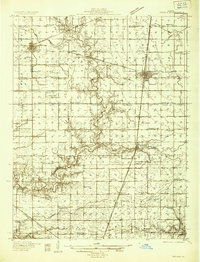 1935 Arcola1935 Print · USGSCentral Illinois farming communities thrived along the Illinois Central and Pennsylvania rail lines in the 1930s. Genealogists can trace family roots through numerous rural landmarks like Yoder Cem, Quinn Chapel, and Pulltight Sch.3 unique versions available
 - 1936 Map of Oakland
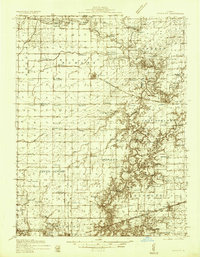 1936 Oakland1936 Print · USGSColes and Douglas Counties in the mid-1930s exhibit a landscape deeply connected by the Embarrass River and the Pennsylvania railroad. Genealogists can trace hundreds of small family landmarks, from Patsy Mitchell Cem to the scores of local schoolhouses like Boneset Sch and Seven Hickory Sch.5 unique versions available
 - 1940 Map of Arcola
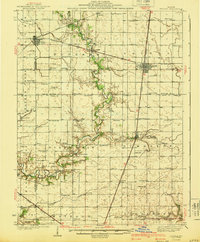 1940 Arcola1940 Print · USGSThe Douglas and Coles County borderlands come alive in this pre-war portrait of central Illinois agricultural life. Researchers can trace dozens of rural school sites such as Pulltight Sch and Little Red Sch, alongside old rail corridors like the Illinois Central.
 - 1942 Map of Oakland
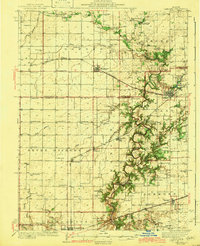 1942 Oakland1942 Print · USGSCentral Illinois prairie life is captured here in the early 1940s as the rail-and-river economy flourished. You can trace family roots at the Patsy Mitchell Cem or locate old schoolhouses like Jack Oak Sch and Seven Hickory Sch.2 unique versions available
 - 1946 Map of Kansas, 1977 Print
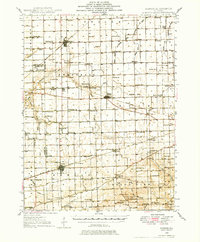 1946 Kansas1977 Print · USGSThe intersection of the New York Central and Chicago and St Louis railroads defines this Illinois prairie landscape shortly after the war. Researchers can trace rural lineages through numerous country schools and cemeteries like College Sch, Shields Cem, and Redmon.
 - 1949 Map of Kansas
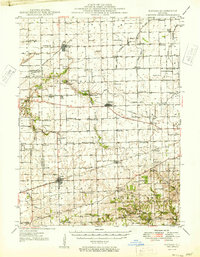 1949 Kansas1949 Print · USGSEastern Illinois at the end of the 1940s reveals a robust landscape of rail-connected towns and country schools. Genealogists can trace family names at Shields Cem or locate community hubs like Embarrass Ch and the settlement of Redmon.2 unique versions available
 - 1950 Map of Tuscola, 1952 Print
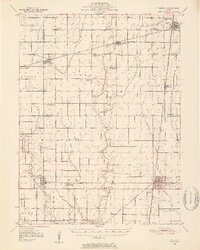 1950 Tuscola1952 Print · USGSMid-century Douglas and Champaign Counties are mapped here at a time when the rural school system was fading into history. Genealogists can trace family roots through numerous markers like Stewart Sch, Macedonia Ch, and Bailey Memorial Cem.4 unique versions available
 - 1953 Map of Indianapolis, 1965 Print
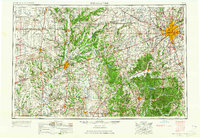 1953 Indianapolis1965 Print · USGSCentral Indiana and the Illinois borderlands are captured in the mid-sixties, showing the growth of Indianapolis and its industrial rail corridors. Genealogists and historians can trace the development of outlying towns like Zionsville or Beech Grove and find landmarks such as Atterbury AAF and Turkey Run State Park.4 unique versions available
 - 1956 Map of Indianapolis
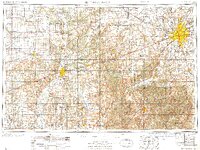 1956 Indianapolis1956 Print · USGSCentral Indiana in the mid-fifties is captured during a period of industrial growth and military presence. Genealogists and historians can trace the rail networks of the New York Central or locate regional landmarks like Fort Benjamin Harrison and Camp Atterbury.
 - 1956 Map of Newman, 1957 Print
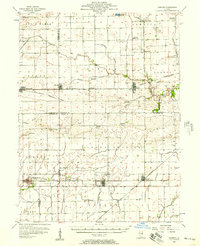 1956 Newman1957 Print · USGSThe borderlands of Champaign and Douglas counties are seen here in the mid-fifties, when small-town rail depots still served as the region's heartbeat. Genealogists can trace family names through rural landmarks like Stutler Cem, Fairfield Ch, and the small community of Maizetown.2 unique versions available
 - 1956 Map of Villa Grove, 1957 Print
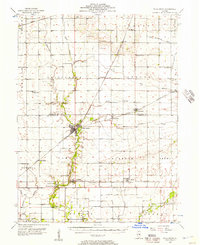 1956 Villa Grove1957 Print · USGSVilla Grove and the rural townships of Douglas and Champaign Counties are shown in the mid-1950s, a period defined by small-town rail commerce and fertile prairie farmland. Genealogists can locate family landmarks like Patterson Springs, Lynn Grove Cem, and St Mary Sch.2 unique versions available
 - 1957 Map of Indianapolis
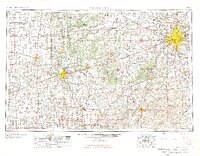 1957 Indianapolis1957 Print · USGSCentral Indiana in the mid-fifties is captured here as a crossroads of major rail lines and nascent federal highways. Genealogists and historians can trace family-named ridges like Poplar Ridge or locate strategic sites like Camp Atterbury and Speedway.2 unique versions available
 - 1958 Map of Decatur, 1971 Print
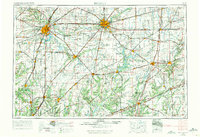 1958 Decatur1971 Print · USGSCentral Illinois in the mid-twentieth century shows a landscape defined by industrial rail hubs and the creation of large reservoirs. Researchers can trace historic corridors like the Penn Central or locate landmarks such as Lincoln Log Cabin State Park and Lake Springfield.3 unique versions available
 - 1961 Map of Decatur
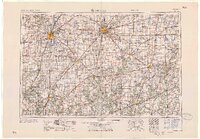 1961 Decatur1961 Print · USGSCentral Illinois in the late fifties was a bustling corridor of rail lines and prairie commerce centered on the state capital. Genealogists and historians can trace the intricate connections between Springfield, Decatur, and dozens of smaller settlements like Nokomis and Arcola.2 unique versions available
 - 1962 Map of Indianapolis
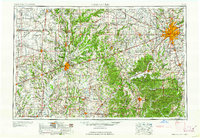 1962 Indianapolis1962 Print · USGSCentral Indiana and the Illinois borderlands are captured here in the early sixties, showing the region's dense rail networks and growing urban centers. Genealogists and historians can locate family-named landmarks and institutions like Crown Hill Cem, Indiana University, and the Indianapolis Motor Speedway.
 - 1975 Map of Tuscola NE, 1977 Print
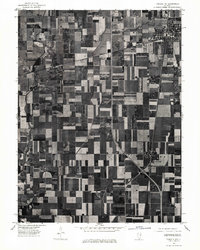 1975 Tuscola NE1977 Print · USGSChampaign County at the mid-point of the 1970s is shown in this detailed aerial perspective of its agricultural and rail landscape. Genealogists and local historians can trace farmstead footprints and the street grids of Tolono, Sadorus, and Pesotum.
 - 1975 Map of Tuscola NW, 1977 Print
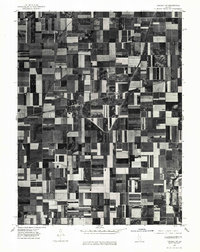 1975 Tuscola NW1977 Print · USGSMid-1970s agricultural patterns and rural settlements are revealed in this aerial survey of the Illinois prairie. Genealogists and land historians can trace property lines and farmstead locations surrounding Ivesdale and the banks of the Kaskaskia River.
 - 1975 Map of Tuscola SW, 1977 Print
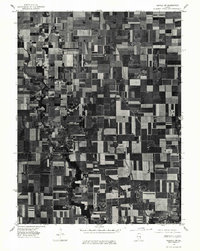 1975 Tuscola SW1977 Print · USGSMid-century Illinois farmland is captured in sharp detail during the autumn of 1975, showing the structured grid of the heartland. Genealogists and local historians can trace the exact footprints of homes and buildings in Atwood and Garrett or follow the banks of the Kaskaskia River.
 - 1975 Map of Tuscola SE, 1977 Print
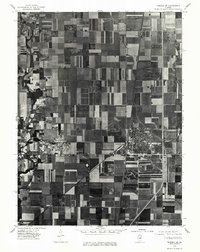 1975 Tuscola SE1977 Print · USGSDouglas County agriculture and the growing town of Tuscola are seen in clear aerial detail during the mid-1970s. Researchers can trace the railway through Hayes and examine the wooded banks of the Kankaskia river across this rectangular farm landscape.
 - 1982 Map of Villa Grove, 1983 Print
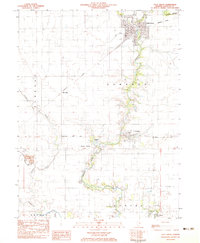 1982 Villa Grove1983 Print · USGSDouglas County in the early eighties centers on the river-and-rail corridor connecting Villa Grove and Camargo. Genealogists and local historians can trace family plots at Hammett Cem and Broadus Cem or locate the old Quarry along Hackett Branch.
 - 1982 Map of Villa Grove NW, 1983 Print
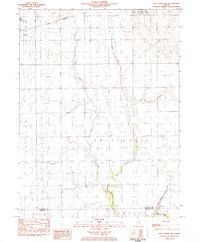 1982 Villa Grove NW1983 Print · USGSThe Champaign and Douglas County line comes alive in the early eighties as the local rail-and-river economy persists. Trace family roots and rural landmarks from Jessee Cem to the tracks of the Norfolk and Western in Philo and Tolono.
 - 1982 Map of Brocton, 1983 Print
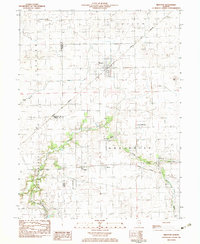 1982 Brocton1983 Print · USGSThe village of Brocton and its neighboring hamlets of Isabel and Borton are captured in the early 1980s as vital rail-and-river communities. Researchers can trace the agricultural landscape through family-named landmarks like Zimmerman Cem, Scott Cem, and the Ewing Landing Strip.
 - 1982 Map of Longview, 1983 Print
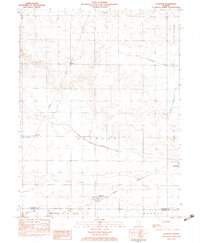 1982 Longview1983 Print · USGSChampaign and Douglas Counties in the early eighties show a landscape of productive prairie farmland and tight-knit rail towns. Researchers can trace family history through local sites like Immaculate Conception Ch, St John Cem, and the village of Longview.
 - 1982 Map of Murdock, 1983 Print
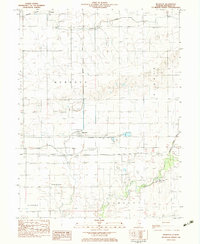 1982 Murdock1983 Print · USGSDouglas County’s prairie landscape was a crossroads of industry and agriculture in the early eighties. Genealogists and historians can trace rail-side developments in Murdock and Fairland, or locate rural landmarks like Wesley Chapel and the old Albin Cem.
 - 1982 Map of Hindsboro, 1983 Print
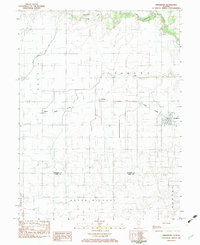 1982 Hindsboro1983 Print · USGSDouglas and Coles counties are shown in the early eighties as the agricultural landscape of East Central Illinois continued to modernize. Researchers can trace rural lineages through the locations of Hindsboro, Kemp, and the Mt Gilead Ch near the Embarras River.
Showing maps 1-25 of 126
Top cities of Douglas County
- Tuscola historical maps
- Arcola historical maps
- Villa Grove historical maps
- Newman historical maps
- Camargo historical maps
- Hindsboro historical maps
See more
Frequently asked questions
- What are the different types of historical maps available for Douglas County?
- What is the oldest map of Douglas County?
- Where can I purchase historical maps of Douglas County for my home or office?
- Where can I download high-res historical maps of Douglas County?
- Are there historical topographic maps available for Douglas County?
- Is there historical aerial imagery available for Douglas County?
- Where are historical maps of Douglas County sourced from?