Old Maps of Grundy County, Illinois for Academic Research
Study the evolution of Grundy County with 122 high-resolution historic maps. Whether you're teaching, researching, or modeling changes in land use, these maps provide essential visual documentation of urban, environmental, and geographic change.
- Analyze long-term change: Track patterns in development, transportation, and natural features.
- Ideal for environmental or urban studies: Support academic projects with primary historical map data.
- Use in the classroom or lab: Educators and researchers rely on these maps to bring historical context to life.
These maps are a powerful tool for teaching, research, and visualizing how Grundy County has changed over the decades.
Grundy County, IL maps
(122)- 1892 Map of Morris
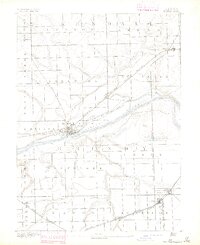 1892 Morris1892 Print · USGSGrundy County thrives as a transportation nexus in the 1890s, where the legendary canal system meets a growing web of iron rails. Trace early industrial footprints in Coal City or follow the path of the Illinois and Michigan Canal through Morris.3 unique versions available
 - 1892 Map of Marseilles
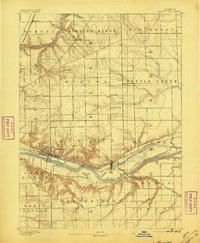 1892 Marseilles1892 Print · USGSLaSalle County at the close of the nineteenth century showcases a bustling corridor of river commerce and rail expansion. Trace the historic path of the Illinois and Michigan Canal through Marseilles or locate early settlements like Norway and Stavanger.3 unique versions available
 - 1892 Map of Wilmington
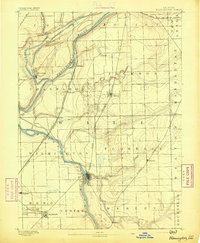 1892 Wilmington1892 Print · USGSWill County at the end of the nineteenth century is defined by its strategic river confluences and a rapidly expanding rail network. Genealogists and local historians can trace the early footprints of Wilmington and Braidwood, or find vanished rail stops like Blodget and Drummond.3 unique versions available
 - 1916 Map of Marseilles
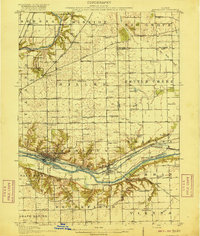 1916 Marseilles1916 Print · USGSThe Illinois River valley in the early twentieth century shows a busy network of canals, electric railways, and rural schools. Trace the early layout of Marseilles, the Michigan Canal, and dozens of local landmarks like Norway and the Fox River Academy.4 unique versions available
 - 1918 Map of Wilmington
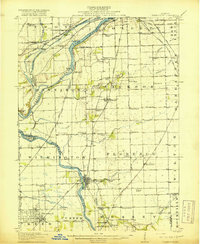 1918 Wilmington1918 Print · USGSWill County in the late teens is a landscape shaped by the convergence of major rivers and several historic rail lines. Genealogists and historians can trace numerous rural schoolhouses like Red Brick School and Schweizer School alongside river towns such as Wilmington and Channahon.5 unique versions available
 - 1918 Map of Morris
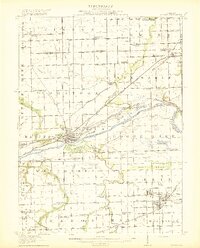 1918 Morris1918 Print · USGSGrundy County at the end of the Great War is a landscape defined by the Illinois River and a bustling coal industry. Researchers can trace historic school districts like Jugtown School, the path of the Michigan and Illinois Canal, and early mining settlements such as Carbon Hill and Eileen.3 unique versions available
 - 1923 Map of Herscher, 1959 Print
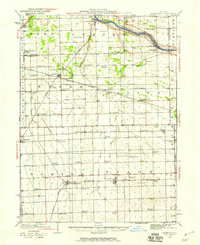 1923 Herscher1959 Print · USGSKankakee and Will Counties in the early twenties show a landscape defined by busy rail junctions and a dense network of rural school districts. Genealogists and researchers can locate family-named landmarks and infrastructure like the Lehigh Stone Co Quarry, Appel Siding, and Essex Center School.2 unique versions available
 - 1925 Map of Herscher
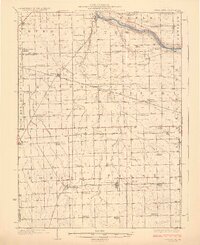 1925 Herscher1925 Print · USGSKankakee and Grundy counties appear here during the 1920s as a thriving corridor of railroads and rural schools. Genealogists can trace family names through landmarks like Yates School, Clarke City, and the Lehigh Stone Co Quarry.2 unique versions available
 - 1940 Map of Marseilles, 1958 Print
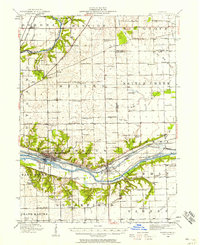 1940 Marseilles1958 Print · USGSLaSalle and Grundy counties appear here during the transition from the canal era to the railway age. Genealogists and local historians can trace family-named school sites like Ness School and Barry School or locate the village of Stavanger.
 - 1948 Map of Dwight, 1965 Print
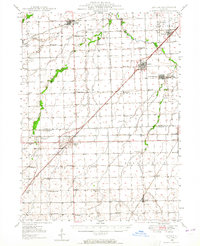 1948 Dwight1965 Print · USGSLivingston and Grundy counties appear here just after the war, showing a region of dense rural settlements and early coal mining activity. Genealogists can locate family names via numerous country schools like Goodfarm Sch and landmarks such as the State Reformatory for Women.
 - 1950 Map of Dwight
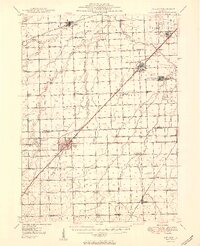 1950 Dwight1950 Print · USGSNortheastern Illinois at mid-century shows a landscape shaped by coal mining and a dense network of rural school districts. Genealogists can trace family footprints through dozens of local landmarks like Round Grove Cemetery, Goodfarm School, and the State Reformatory for Women.2 unique versions available
 - 1953 Map of Morris, 1955 Print
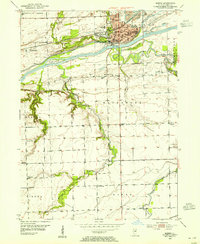 1953 Morris1955 Print · USGSMorris and the surrounding Grundy County river lands were thriving in the early fifties as industry and transit intersected along the Illinois River. Genealogists and local historians can trace rural school locations like Stein Sch and Haymond Sch, or locate family sites near Zion Ch and the Evergreen Cem.3 unique versions available
 - 1953 Map of Lisbon, 1955 Print
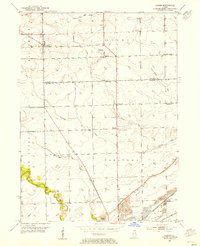 1953 Lisbon1955 Print · USGSKendall and Grundy Counties were still defined by their rural character and rail-linked industry in the early fifties. Genealogists can locate several family-named landmarks and country schools including Porter Sch, Cryder Cem, and the Gore Sch.3 unique versions available
 - 1953 Map of Coal City, 1955 Print
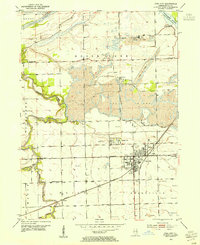 1953 Coal City1955 Print · USGSGrundy County mining operations and rail hubs are caught in detail during the early fifties. Researchers can trace the industrial landscape through strip mines and mine dumps near settlements like Carbon Hill, Coal City, and Eileen.5 unique versions available
 - 1954 Map of Minooka, 1955 Print
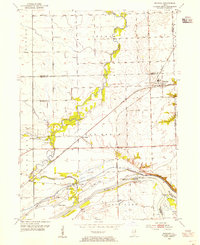 1954 Minooka1955 Print · USGSThe rail-and-river crossroads at Minooka are captured here in the 1950s, documenting a landscape shaped by three major rivers and heavy industry. Genealogists and researchers can locate St Marys Cem, trace the canal to the Aux Sable Lock, or find family-named sites like Walley Sch.4 unique versions available
 - 1954 Map of Wilmington, 1955 Print
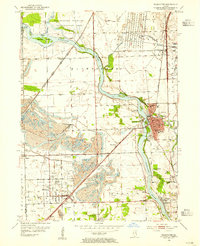 1954 Wilmington1955 Print · USGSWill County’s river-driven industry and coal mining heritage are captured here in the mid-fifties as the landscape transitioned between wilderness and extraction. Genealogists can locate family names at Mt Olive Cem or trace the early community footprints of Wilmington, Braidwood, and Lorenzo.4 unique versions available
 - 1954 Map of Channahon, 1955 Print
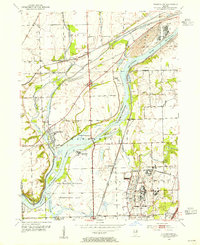 1954 Channahon1955 Print · USGSWill County at mid-century reveals a landscape shaped by major river junctions and the legacy of the canal era. Researchers can trace historical property lines and infrastructure through Channahon, finding detail on landmarks like Willard Grove Cem, Smith Bridge, and the Schweizer Sch.4 unique versions available
 - 1954 Map of Morris, 1960 Print
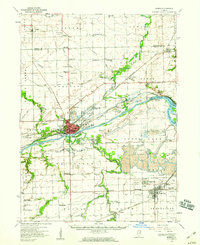 1954 Morris1960 Print · USGSGrundy County in the mid-fifties is a landscape of industrial transition, where coal mining and river navigation drive local growth. Researchers can trace the extensive Strip Mine works around Coal City or locate family roots at Evergreen Cem and Sulphur Springs Sch.2 unique versions available
 - 1954 Map of Wilmington, 1960 Print
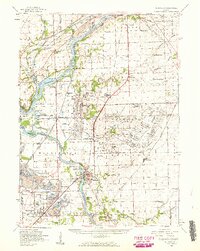 1954 Wilmington1960 Print · USGSWill and Grundy counties in the mid-fifties show a landscape of industrial convergence where major railroads meet the state's storied canal systems. Researchers can trace the Old Indian Boundary or locate family sites like the Soldiers Widows Home and Willard Grove Cem.3 unique versions available
 - 1958 Map of Odell, 1959 Print
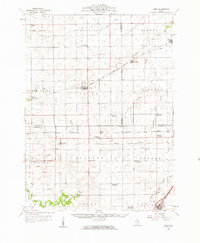 1958 Odell1959 Print · USGSPrairie townships in Livingston and LaSalle counties show their mid-century transition as rural schools consolidate. Trace family roots at St Patricks Cem, the village of Ransom, or the defunct McGreevy Sch (Abandoned).
 - 1958 Map of Aurora, 1969 Print
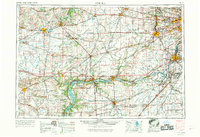 1958 Aurora1969 Print · USGSNorthern Illinois in the late fifties shows a landscape of powerful river industry and expanding transport corridors. Genealogists and historians can trace the development of Aurora and Joliet or locate sites like the Elwood Ordnance Plant and Starved Rock.3 unique versions available
 - 1961 Map of Aurora
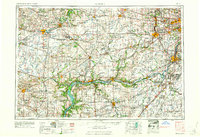 1961 Aurora1961 Print · USGSNorthern Illinois at the height of the post-war era reveals a landscape of massive industrial works and thriving river towns. Genealogists and historians can trace the paths of the Lincoln Highway or locate long-standing landmarks like the Green River Ordnance Plant and Starved Rock State Park.
 - 1970 Map of Seneca, 1972 Print
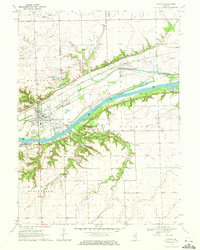 1970 Seneca1972 Print · USGSThe Seneca riverfront and its industrial corridor are captured here during the 1970s. Researchers can trace the path of the Illinois and Michigan Canal (Abandoned) and locate the U.S. Govt Reservation and the village of Langham.2 unique versions available
 - 1970 Map of Stavanger, 1972 Print
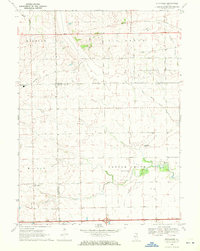 1970 Stavanger1972 Print · USGSThe rural prairie lands of Grundy and LaSalle counties are shown in detail as they appeared in the early seventies. Genealogists can locate family names at Holderman and Hoge Cem or trace the local community near Stavanger and the Nettle Creek Sch.
 - 1973 Map of Essex, 1975 Print
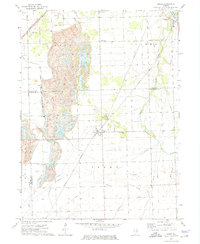 1973 Essex1975 Print · USGSIn the early 1970s, the landscape around the Grundy and Kankakee county line was shaped by heavy industry and rail. Genealogists and historians can trace the local cemetery sites and industrial hubs like Strip Mine, Clarke City, and Custer Park.3 unique versions available
Showing maps 1-25 of 122
Top cities of Grundy County
- Morris historical maps
- Wauponsee historical maps
- Gardner historical maps
- Mazon historical maps
- South Wilmington historical maps
- Carbon Hill historical maps
See more
Frequently asked questions
- What are the different types of historical maps available for Grundy County?
- What is the oldest map of Grundy County?
- Where can I purchase historical maps of Grundy County for my home or office?
- Where can I download high-res historical maps of Grundy County?
- Are there historical topographic maps available for Grundy County?
- Is there historical aerial imagery available for Grundy County?
- Where are historical maps of Grundy County sourced from?